Clear Sky Science · en
Screening oral health in older adults: accuracy of the Oral Health Screener for use within the interRAI
Why Mouth Care Matters in Old Age
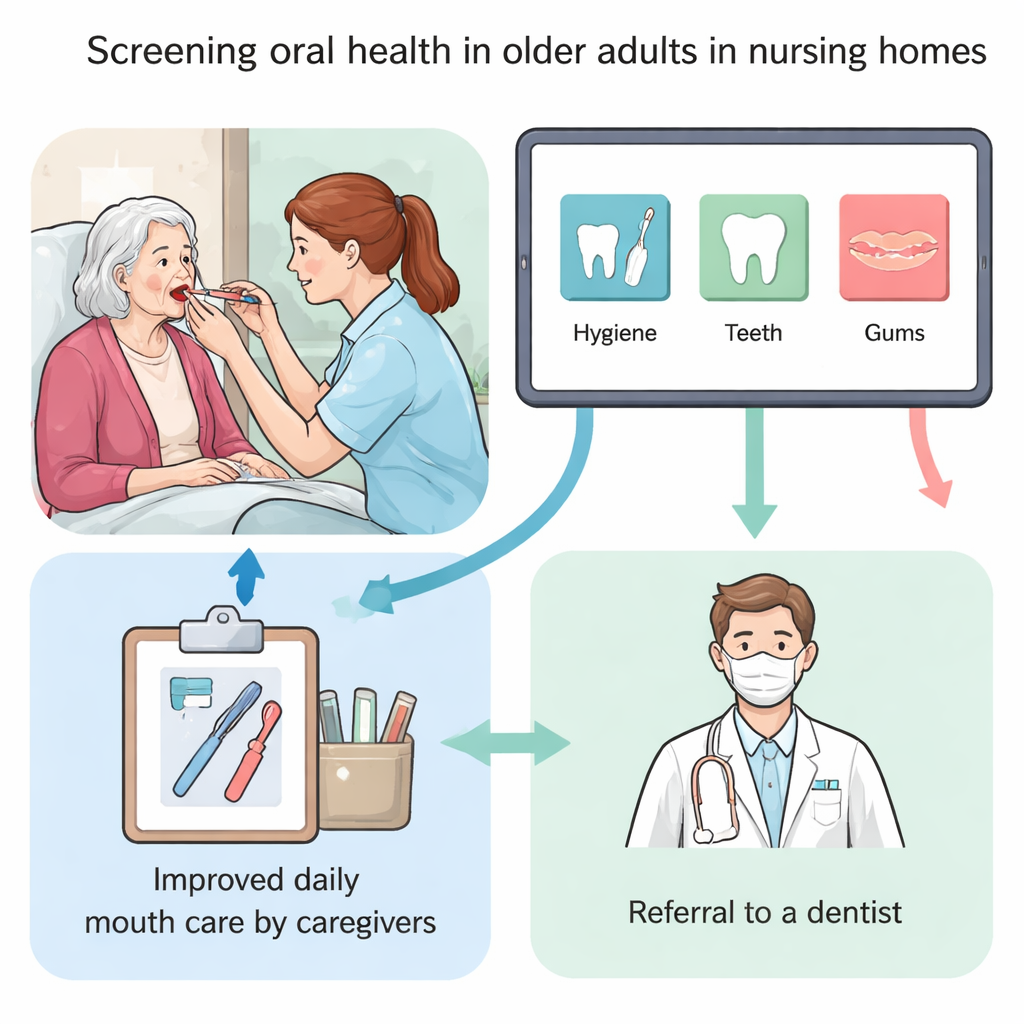
As people grow older and move into nursing homes, everyday tasks like brushing their teeth or cleaning their dentures can become difficult. When mouth care slips, problems such as tooth decay, sore gums, and infections can quietly build up, affecting comfort, nutrition, and overall health. Yet many facilities have limited access to dentists. This study examines whether a simple checklist, the Oral Health Screener (OHS), can help non‑dental caregivers spot common mouth problems early so that residents get help before trouble escalates.
A Simple Checklist for Complex Mouth Problems
The Oral Health Screener is part of a broader geriatric assessment used in nursing homes. It was redesigned so that nurses and care aides, not just dentists, can use it. The tool asks staff to look at nine aspects of oral health; this study focused on three visual checks that matter most in older residents who still have natural teeth: overall cleanliness of the mouth, the condition of the teeth themselves, and the health of the gums. Each of these is scored in a simple way—either acceptable or poor—so that busy caregivers can complete the assessment quickly during routine care.
Putting the Screener to the Test
To find out how well the screener works, researchers invited 458 residents from 11 nursing homes in Flanders, Belgium, to take part; about half still had their own teeth. Specially trained dentists or a dental hygienist examined each dentate resident in their room. First, they filled out the same three OHS items that caregivers would use. Then they carried out more detailed dental exams using established scoring systems that measure mouth cleanliness, deep tooth decay, and gum inflammation. By comparing the simple OHS ratings to these more precise measures, the team could judge how often the screener correctly flagged real problems and how often it gave false alarms.
What the Study Found in Nursing Home Mouths
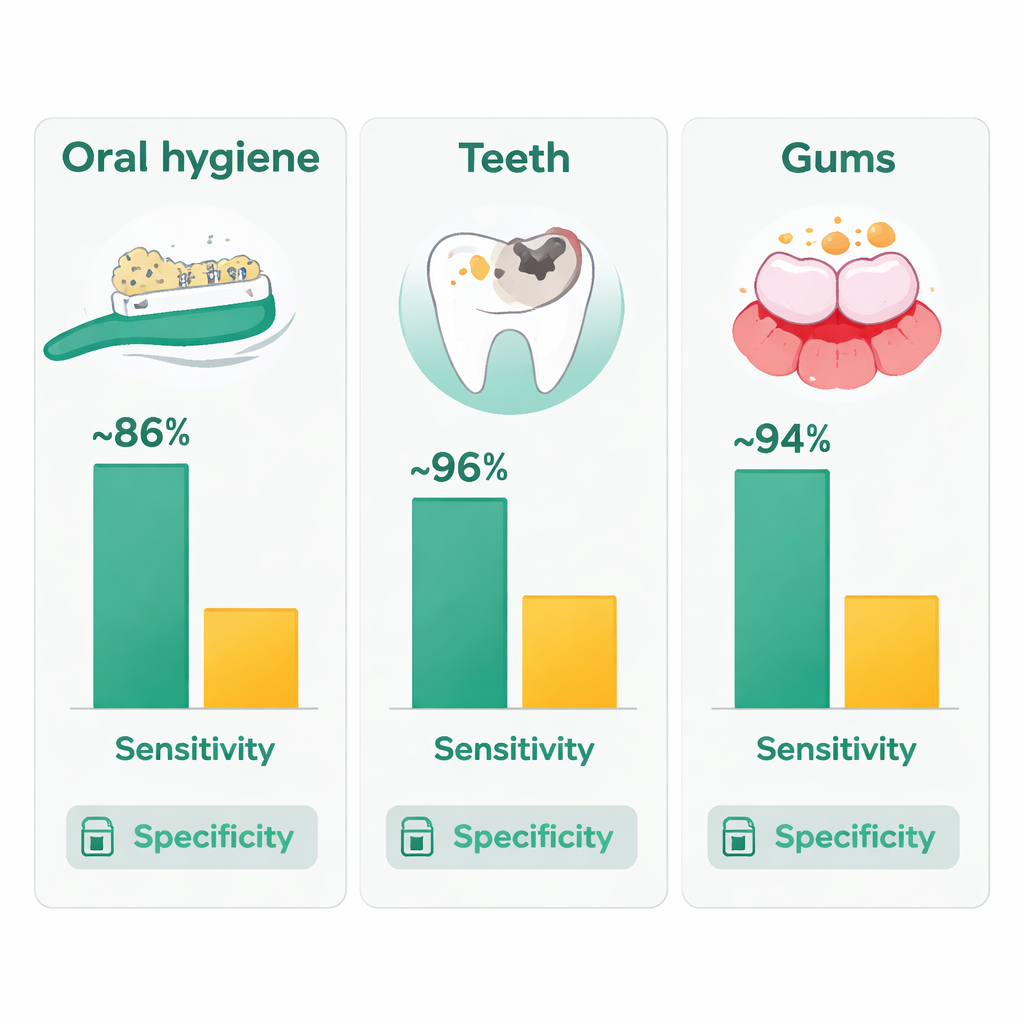
The examinations confirmed that poor oral health was common. More than four out of five residents had unacceptably dirty teeth, nearly half had severe untreated tooth decay reaching the inner pulp, and over two thirds had unhealthy gums. Against this backdrop, the OHS performed well as an early warning tool. The teeth item was especially strong: it correctly picked up about 96% of residents with serious decay and correctly reassured about three quarters of those without it. The gums item also did well, correctly identifying 94% of residents with gum problems. The oral hygiene item detected most people with dirty teeth, but it was less reliable at ruling the problem out, in part because the detailed dental index examines more tooth surfaces than the quick screener does.
How These Numbers Help Caregivers Act
For day‑to‑day decisions in a nursing home, the practical meaning of these numbers matters more than the statistics themselves. A positive score on the teeth or gums items strongly increases the chance that a resident truly has severe decay or gum disease, justifying a referral to a dentist. A clean score on the teeth item, on the other hand, makes it very unlikely that the resident has serious untreated decay, which can help prioritize scarce dental resources. For oral hygiene, a poor score is a solid signal that mouth care needs to be stepped up, but a good score does not guarantee that everything is fine—staff may still need to keep a close eye on brushing and cleaning routines.
What This Means for Residents and Their Families
The study shows that three quick questions about mouth cleanliness, teeth, and gums can correctly classify more than eight out of ten nursing home residents, even when used by non‑dentists. The screener is not meant to replace a full dental exam, but to make sure potential problems are noticed instead of hidden behind closed lips. When used regularly, it can trigger earlier brushing help from caregivers and more timely dentist visits, reducing pain, infections, and difficulties with eating and speaking. For families and residents, this means that a simple checklist, built into routine care, can be a powerful ally in protecting comfort and quality of life in old age.
Citation: Vandenbulcke, P.A.I., de Almeida Mello, J., Schoebrechts, E. et al. Screening oral health in older adults: accuracy of the Oral Health Screener for use within the interRAI. Sci Rep 16, 6233 (2026). https://doi.org/10.1038/s41598-026-35517-2
Keywords: nursing home oral health, older adults dentistry, oral health screening, gum disease and tooth decay, caregiver mouth care