Clear Sky Science · en
Prenatal exposure to oral glucocorticoids and risk of long-term neurodevelopmental disorders
Medicines in Pregnancy and Childhood Minds
Many pregnant people need medicines to stay healthy, but families often wonder whether those drugs might affect their baby’s brain in the long run. This study looks at a common group of medications called oral glucocorticoids—often prescribed for asthma, autoimmune diseases, or other inflammatory problems—and asks a simple but important question: do these pills, when taken during pregnancy, slightly raise the chances that a child will later be diagnosed with learning, behavior, or emotional difficulties?
A Nationwide Look at Mothers and Children
To explore this question, researchers used South Korea’s national health insurance database, which covers nearly everyone in the country. They followed more than 1.5 million babies born between 2011 and 2014, linking each child’s medical records with those of their mother. Among these births, about 34,000 babies were exposed in the womb to oral glucocorticoid pills such as prednisolone, methylprednisolone, or dexamethasone. The rest formed a comparison group whose mothers did not take these oral drugs around the time of pregnancy. Because mothers who need these medicines often have other health problems, the team carefully matched exposed and unexposed children on many factors—such as the mother’s age, income, other illnesses, and where she lived—to make the two groups as similar as possible.
Tracking Learning and Behavior Over Time
The investigators then watched what happened to these children for up to 13 years, roughly through late childhood or early adolescence. They focused on doctor-recorded diagnoses that reflect long-term neurodevelopmental disorders—conditions that affect thinking, learning, language, or behavior. This broad group included intellectual disability, autism and related developmental disorders, and behavior or emotional problems that begin in childhood, such as attention-deficit/hyperactivity disorder (ADHD). Because these diagnoses in South Korea are tied to government support services, they are less likely to be used casually, though some under- or misdiagnosis is still possible.
What the Numbers Suggest
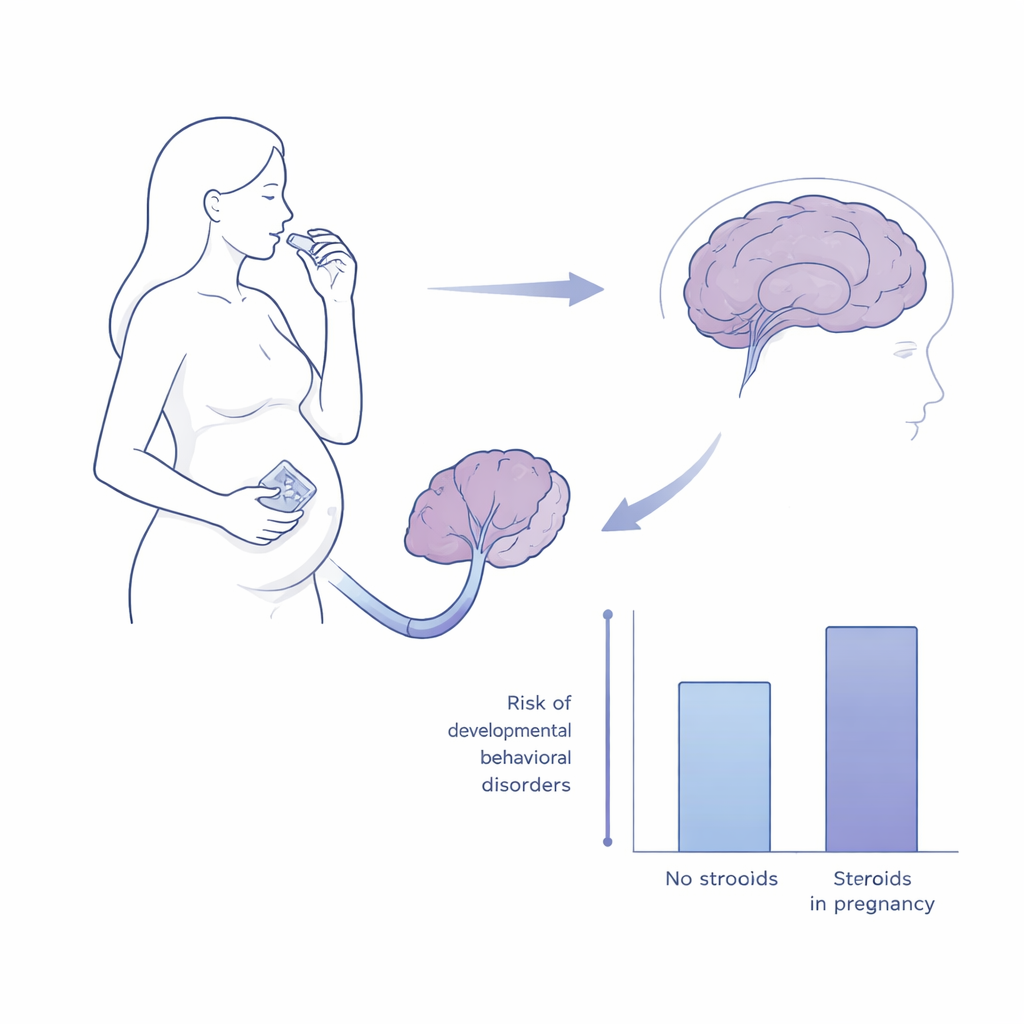
In the matched groups, about 11.5% of children whose mothers took oral glucocorticoids during pregnancy were diagnosed with a long-term neurodevelopmental disorder, compared with 9.8% of children whose mothers did not. This translates to roughly 17 extra affected children per 1,000 births among those exposed, a modest but noticeable difference. The increased odds appeared across several specific diagnoses, including intellectual disabilities, developmental disorders like autism, and behavior or emotional conditions. When the researchers looked more closely, even short courses of pills (1–6 days) showed a small increase in risk, with somewhat higher odds for longer use (7 days or more). The timing of exposure mattered less than one might expect: taking the drugs in the first, second, or third trimester was all linked with a similar, small rise in diagnosed problems.
Digging Deeper Into Families and Limitations
To see whether family background might explain the results, the study also compared brothers and sisters born to the same mother, where one pregnancy involved glucocorticoids and another did not. Even within these families, children exposed in the womb had slightly higher odds of later neurodevelopmental diagnoses, suggesting that the association is not purely due to shared genes or home environment. Still, the authors caution that this is not proof of cause and effect. The database cannot fully capture why the medicines were prescribed, other drugs or substances that may affect brain development, or detailed aspects of parenting and mental health. Some children with real difficulties may never receive a formal diagnosis, while others might be labeled differently over time.
What This Means for Expecting Families
For parents and clinicians, the main message is both reassuring and cautionary. On one hand, the study suggests that oral glucocorticoid use during pregnancy is linked to only a small increase in the chance of long-term learning, developmental, or behavioral diagnoses in children. Most exposed children did not go on to receive such a diagnosis. On the other hand, because the study cannot fully separate the effects of the medicine from the mother’s underlying illness, it raises a real possibility that these drugs may contribute in some way to later challenges. The authors argue that their findings should help guide open, shared discussions between pregnant patients and their doctors—balancing the clear benefits of controlling serious maternal disease against a modest potential added risk for the child’s long-term brain development—rather than serving as a strict rule for or against treatment.
Citation: Oh, T.K., Song, IA. Prenatal exposure to oral glucocorticoids and risk of long-term neurodevelopmental disorders. Sci Rep 16, 5067 (2026). https://doi.org/10.1038/s41598-026-35516-3
Keywords: pregnancy medications, steroids in pregnancy, child neurodevelopment, long-term child health, developmental disorders