Clear Sky Science · en
An AI-based algorithm for analyzing physical activity and health-related fitness in youth
Why tracking kids’ fitness with smart tools matters
Parents and teachers have long relied on yearly school fitness tests to judge how healthy and active children are. Yet these tests often sit in filing cabinets, and scores can be influenced by hurried calculations or inconsistent grading. This paper explores how artificial intelligence can turn those routine measurements—like sprint times or jump‑rope counts—into a powerful, reliable system that not only scores children more fairly, but also predicts how their fitness is likely to change over time. 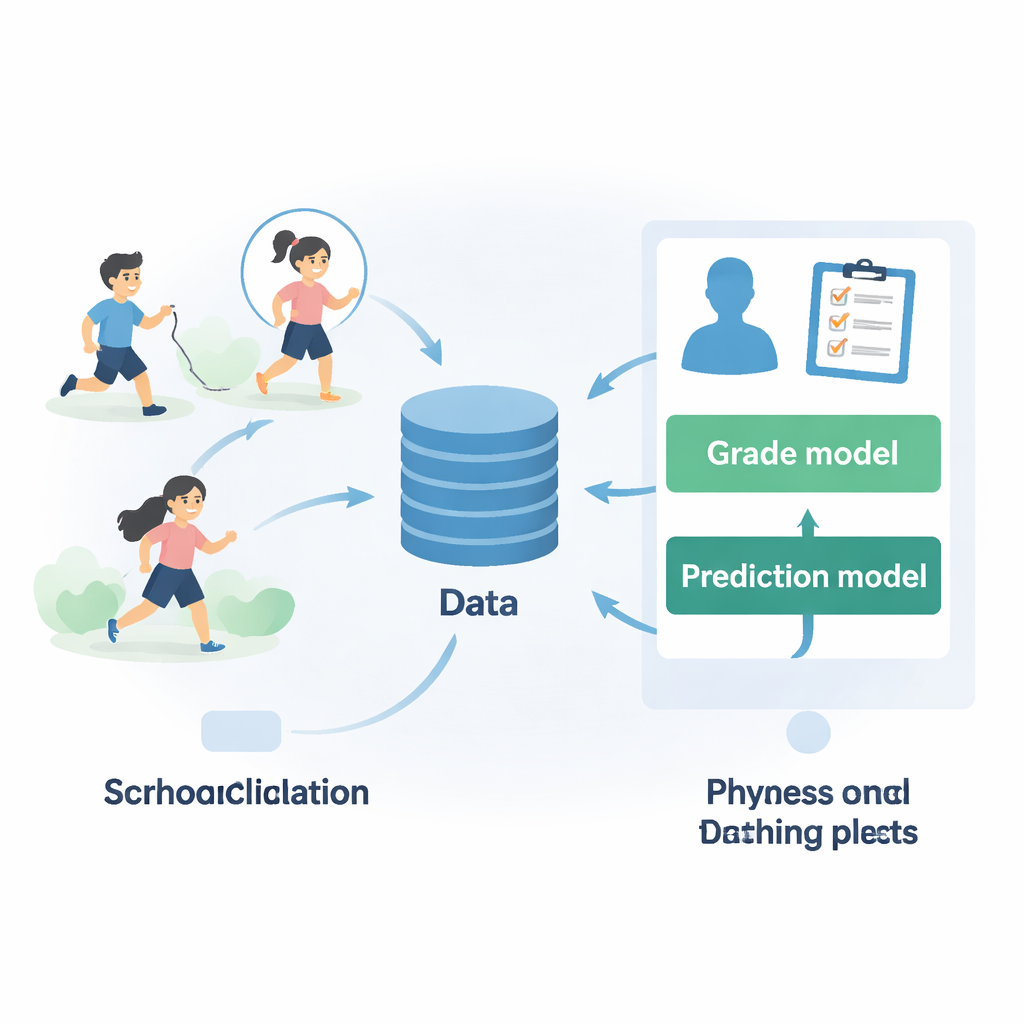
From simple scores to rich health stories
The researchers began with a large trove of real‑world data: more than 13,000 fitness records from primary school students collected over five years, from 2018 to 2022. Each child’s record included basic body measurements such as height, weight, and body mass index, along with test results like a 50‑meter run, a sit‑and‑reach flexibility test, one‑minute jump rope, sit‑ups, and lung capacity. Traditionally, teachers used these results to assign overall grades like “pass” or “outstanding,” but the process was slow, prone to error, and made limited use of the information hidden in the numbers. The team’s goal was to clean, standardize, and rethink this data so it could support much smarter decisions.
Teaching computers to grade fairly
To improve the grading process, the authors built a computer model called a backpropagation (BP) neural network. Instead of relying on hand‑written rules, this model learns from examples: it studies many students’ test results alongside the final grades teachers had given, and gradually discovers patterns linking the two. Before training the model, the team removed faulty entries, scaled the numbers to a common range, and used a technique called principal component analysis to reduce overlap between highly related measures such as height, weight, and lung capacity. Once trained, the BP network could take a new student’s measurements and instantly assign one of four levels—failing, passing, good, or outstanding—with about 98% accuracy, beating a more traditional method called a support vector machine by a clear margin.
Looking ahead: predicting future performance
Scoring this year’s test is helpful, but teachers also want to know how a child’s fitness is likely to develop over several school years. To tackle this, the researchers designed a second model that combines two deep‑learning techniques. A convolutional network (CNN) first learns how different test items relate to one another at a given time, while a long short‑term memory (LSTM) network looks at how each student’s scores change from year to year. An added “attention” layer helps the system focus on the most informative points in a child’s history. Trained on data from 2018 to 2021 and tested on 2022, this combined CNN‑LSTM model predicted students’ future performance more accurately than using CNN or LSTM alone, achieving over 90% accuracy and a strong balance between catching problems and avoiding false alarms. 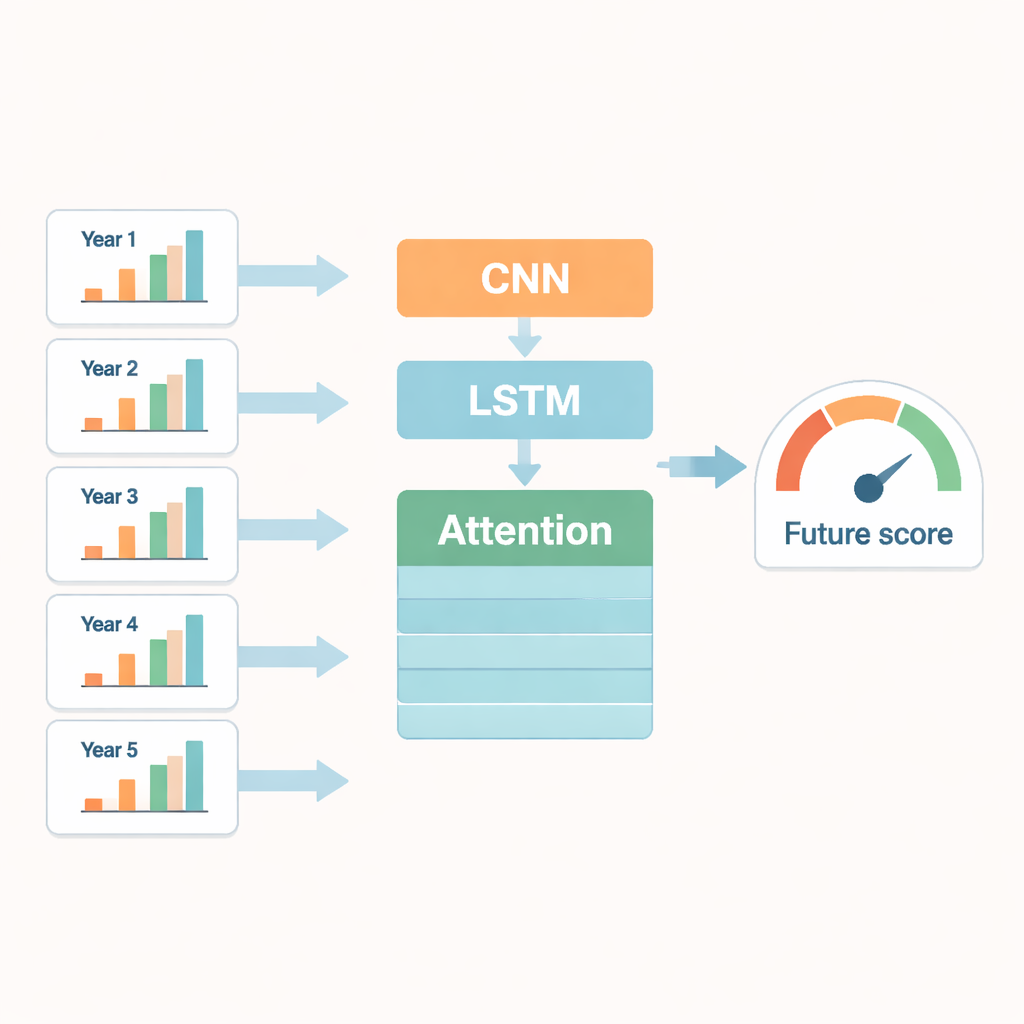
Turning predictions into better PE classes
Armed with these predictions, teachers do not need to guess which students might struggle next year or which skills are lagging behind. If the model forecasts a drop in endurance, for example, staff can plan extra running or aerobic games for that child. If flexibility or core strength looks weak, they can adjust stretching or sit‑up routines. Rather than replacing teachers, the system acts as a decision‑support tool: it surfaces trends that might otherwise be missed in crowded classrooms and large piles of paper forms.
What this means for families and schools
In plain terms, this research shows that everyday fitness tests can become much more than annual report‑card numbers. By letting AI sift through years of results, schools can grade more fairly, spot issues earlier, and tailor exercise plans to each child’s needs. The study’s models demonstrate that computers can reliably recognize patterns in children’s physical development and forecast where they are headed. For parents and educators, that means a better chance to keep kids active, healthy, and confident—using information they already collect, but in a far more intelligent way.
Citation: Lv, M., Wang, J., Yang, Y. et al. An AI-based algorithm for analyzing physical activity and health-related fitness in youth. Sci Rep 16, 5105 (2026). https://doi.org/10.1038/s41598-026-35514-5
Keywords: youth fitness, school physical education, artificial intelligence, health monitoring, performance prediction