Clear Sky Science · en
Revealing and characterizing bacterial communities of in vitro Musa species through 16S rDNA metabarcoding and culture dependent approaches
Why Banana Microbes Matter
Bananas and plantains are everyday staples for hundreds of millions of people, yet the tiny microbes living inside these plants may quietly decide how well they grow and how long they survive disease and storms. This study peeks into that invisible world, exploring the bacteria that inhabit lab-grown banana plantlets and asking a practical question: can we use friendly microbes to raise stronger, healthier crops before they ever reach the field?
Bananas under Pressure
Bananas and plantains, members of the Musa genus, are among the world’s most important food crops, with Latin America and the Caribbean providing a large share of global production. In Puerto Rico, plantains are a cultural icon and a major pillar of the agricultural economy. Yet these crops are increasingly threatened by hurricanes and devastating diseases such as Fusarium wilt, a soil-borne fungal infection that can persist for decades and for which no reliable chemical cure exists. Farmers often propagate bananas by replanting pieces of existing plants, a method that can accidentally spread hidden pathogens from one generation to the next.
Growing Clean Plants in Glass
To reduce disease, scientists are turning to in vitro culture, growing banana plantlets in highly controlled glass bioreactors called Temporary Immersion Bioreactors (TIB). These systems can churn out large numbers of plants that appear free of obvious pathogens and show strong growth. But “clean” does not mean microbe-free: even under sterile-looking conditions, bananas still host internal bacterial communities. The authors of this study wanted to know which bacteria survive and thrive inside these in vitro plantlets, and whether some of them might actually help the plants grow and fend off disease.
Taking a Census of Hidden Bacteria
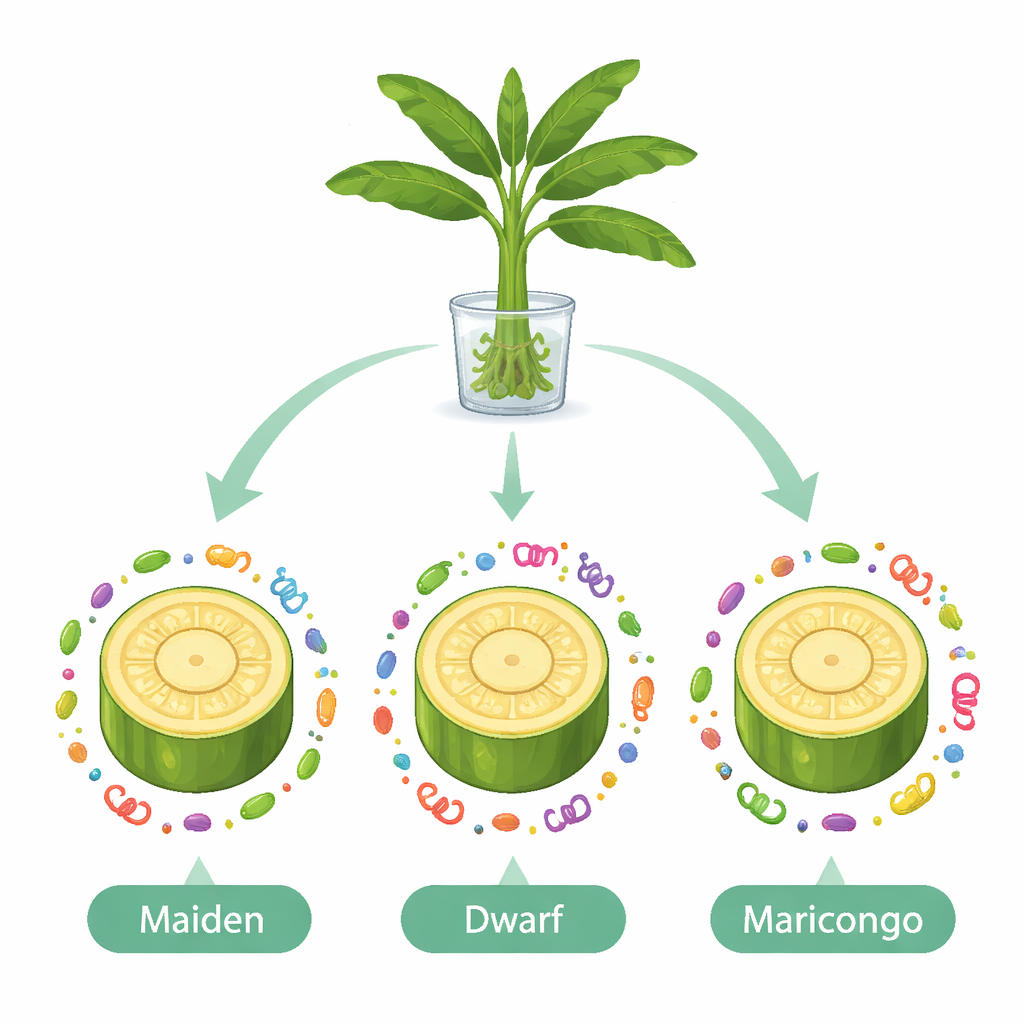
The team focused on the pseudostem and corm—the plant’s central “trunk” and base—of three plantain varieties popular in Puerto Rico: Maiden, Dwarf, and Maricongo. They used two complementary approaches. First, they applied DNA metabarcoding, a kind of genetic bar code, to read bacterial DNA fragments and identify which species were present and how common they were. Second, they grew live bacteria from plant tissues on nutrient plates, then sequenced and tested those isolates in the lab. Together, these methods revealed four major groups of bacteria, with one group (Bacillota, formerly called Firmicutes) dominating across samples. Notably, potential “good guys” such as Brevibacillus and Pseudomonas were common, while a known plant troublemaker, Xylella, was abundant only in the Maricongo variety.
Friends, Foes, and a Microbial Balancing Act
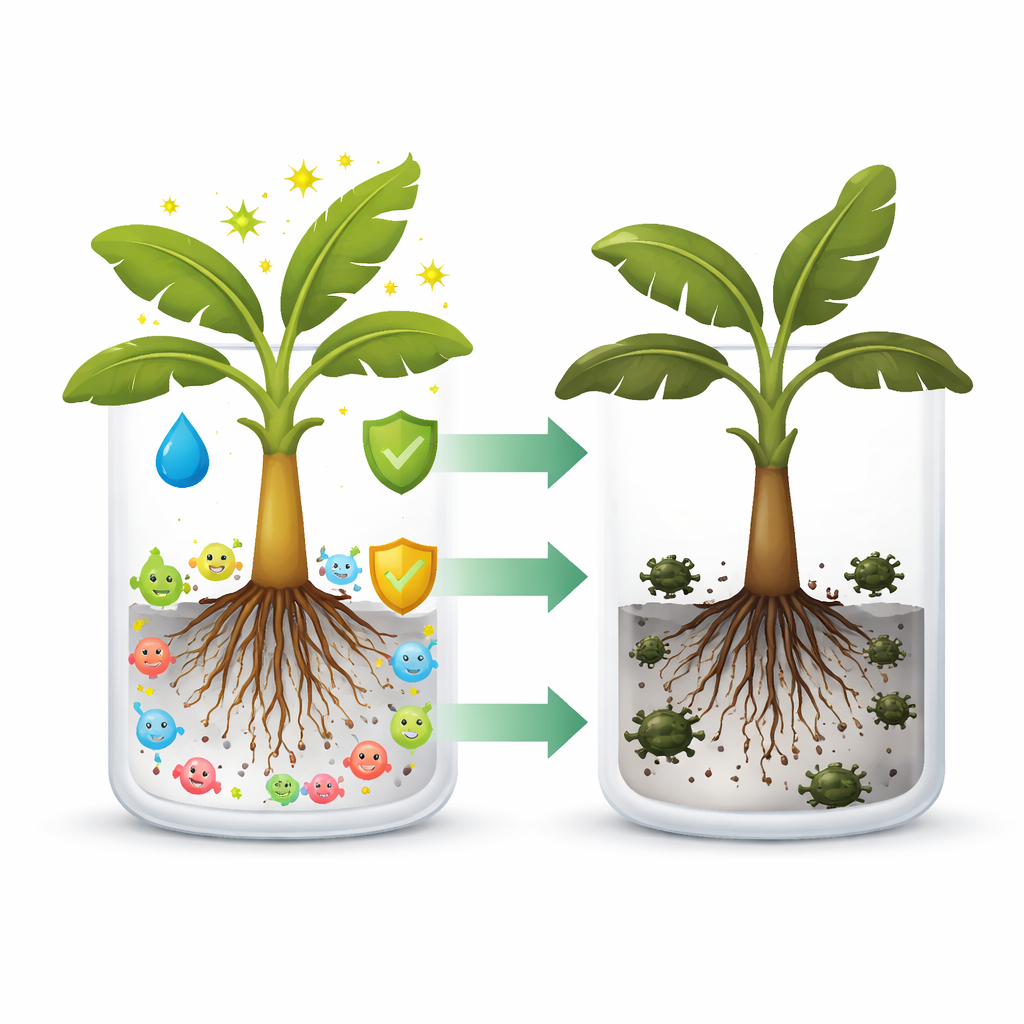
Patterns in the data suggest that some bacterial species may act as bodyguards while others pose a threat. Brevibacillus, for example, is known from other studies to fix nitrogen, produce growth hormones, and release antifungal compounds that can protect crops against the banana-killing fungus Fusarium. In this study, Brevibacillus was plentiful in some varieties where Xylella was absent, hinting at a possible antagonistic relationship. Pseudomonas, another well-known beneficial genus, appeared alongside Xylella in the Maricongo plants and may help keep that pathogen in check. Overall, measurements of diversity showed that one variety, Maricongo, had richer and more uneven bacterial communities than Maiden and Dwarf, but the overall structure of the microbiome was broadly similar among varieties, suggesting that environment and growth conditions shape “who is there” as much as plant genetics do.
What Microbes Do for Their Hosts
Looking beyond who is present, the researchers also inferred what these bacteria might be doing. Using computational tools, they predicted metabolic pathways—biochemical “jobs” carried out by the community. The most common were pathways for building vitamins and other cofactors, making amino acids, generating energy, and synthesizing lipids and DNA building blocks. Many of these processes could feed into plant health: microbes may help mobilize nutrients such as phosphorus and zinc, produce plant hormones, and generate antifungal molecules, all of which can boost growth and strengthen natural defenses. Culture-based work uncovered additional bacteria in dormant spore form, including Terribacillus species not previously reported from Musa plants, expanding the list of candidates for future biofertilizers.
From Lab Vials to Resilient Fields
For non-specialists, the key message is that banana plants grown in glass are not alone: they carry microscopic partners that can either help or harm them. This study shows that in vitro systems like TIB do not simply sterilize the plant; they appear to favor certain beneficial bacteria, especially members of the Bacillota group such as Brevibacillus and newly discovered Terribacillus strains. By learning which microbes support growth and disease resistance, and by combining DNA-based surveys with actual cultures, researchers can begin to design “microbial starter kits” for young plantlets. In the long run, such microbe-informed planting material could help farmers in hurricane-prone and disease-challenged regions harvest more fruit with fewer chemicals, making everyday bananas a bit more sustainable from the inside out.
Citation: Sambolín-Pérez, C.A., Montes-Jiménez, S.M., Montes-Jiménez, H.M. et al. Revealing and characterizing bacterial communities of in vitro Musa species through 16S rDNA metabarcoding and culture dependent approaches. Sci Rep 16, 5214 (2026). https://doi.org/10.1038/s41598-026-35510-9
Keywords: banana microbiome, plant growth-promoting bacteria, in vitro plant culture, plantain diseases, beneficial microbes