Clear Sky Science · en
Cognitive dissonance and psychological contract violation in sports fan loyalty under scandal events
Why sports scandals hit fans so hard
For many people, following a sports team is much more than casual entertainment. Wins and losses shape their mood, sense of belonging, and even personal values. But what happens when a beloved team is caught in match-fixing, doping, or other scandals? This study explores the hidden psychological struggle fans experience in those moments—and why some walk away in anger while others find ways to stay loyal.
The hidden promises between fans and teams
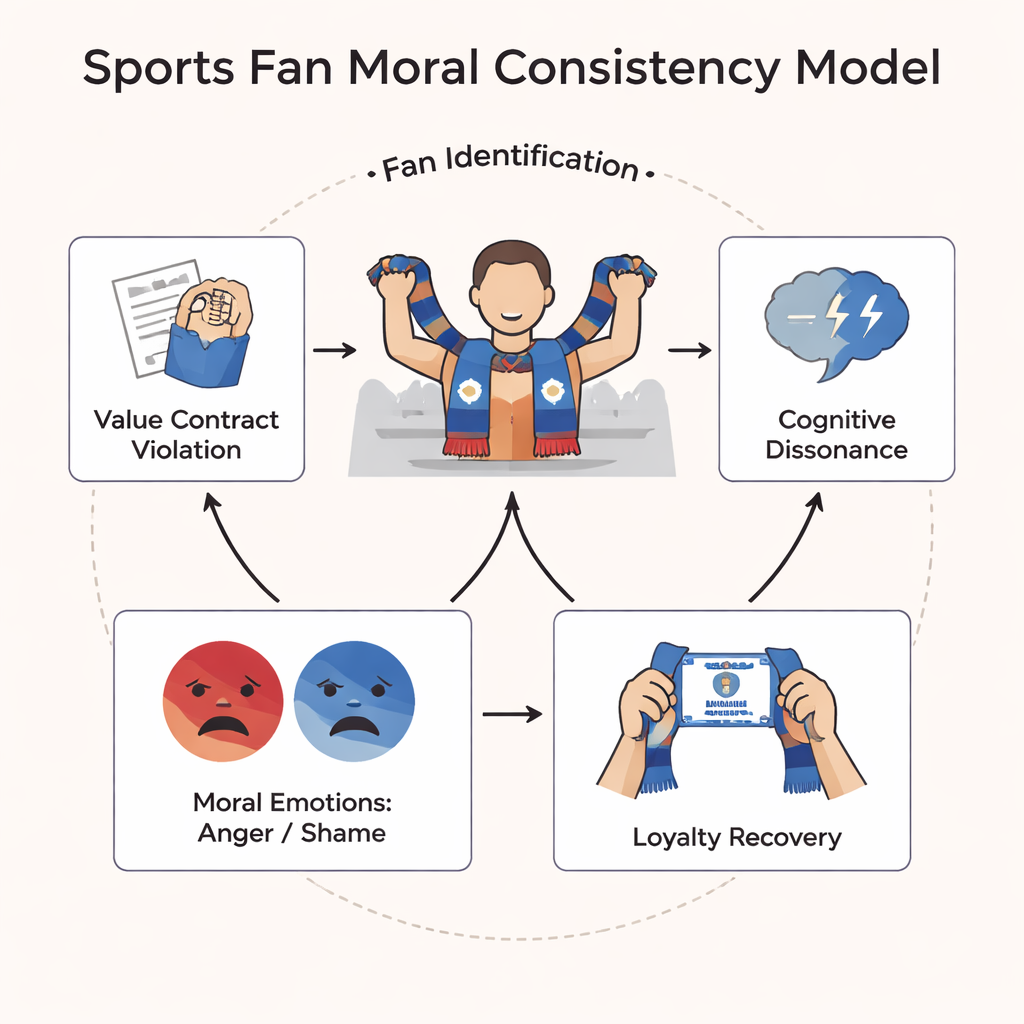
The authors argue that fans and teams are linked by an unwritten “psychological contract.” Fans expect their team to stand for fairness, honor, and responsibility, not just for trophies. When a scandal breaks, fans feel that this moral promise has been broken. The clash between “my team stands for justice” and “my team cheated” creates inner tension known as cognitive dissonance—a mental discomfort that pushes people to restore balance, either by changing their views or distancing themselves from the offender.
From mental conflict to powerful emotions
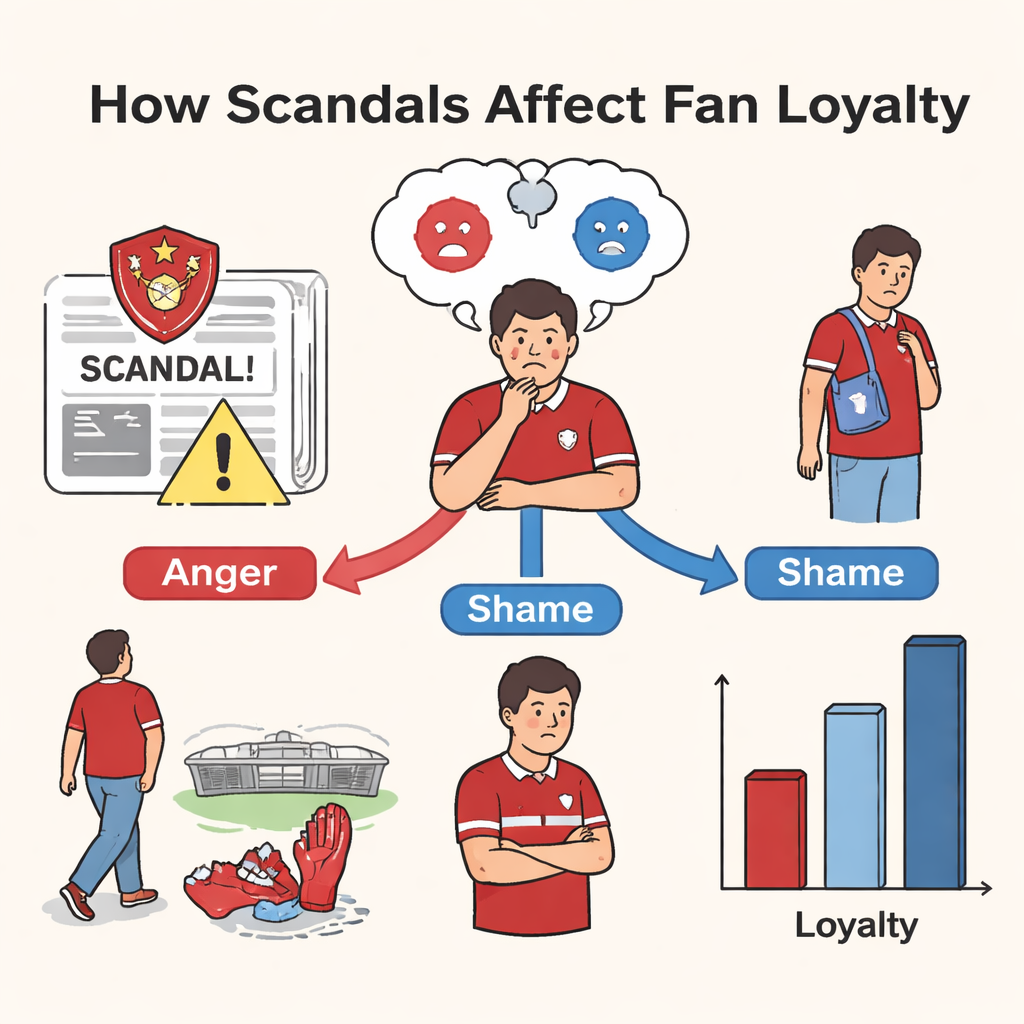
Across three experiments with 1,179 Chinese sports fans, the researchers showed that value-based scandals reliably spark cognitive dissonance, which then fuels strong emotions. Two moral emotions are central: anger and shame. Anger is outward-looking—it targets the team and its leaders for violating shared rules. Shame is inward-looking—it arises when fans feel the team’s wrongdoing reflects on them and their fan community. The studies found that the more strongly fans felt this internal conflict, the more anger and, to a lesser degree, shame they reported.
Why anger breaks bonds and shame struggles to heal them
The team then asked how these emotions shape loyalty after a scandal. They tracked whether fans still wanted to watch games, buy merchandise, or recommend the team if it tried to make amends. Anger clearly undermined this “loyalty recovery”: angry fans were more likely to reject or punish the team. Shame, however, did not reliably help repair the relationship. Although some theories suggest that feeling group-based shame can inspire people to support apologies and reforms, in these experiments shame did not have a strong or consistent link to renewed loyalty. In other words, anger consistently pushed fans away, while shame’s power to pull them back remained uncertain.
How deep attachment changes the emotional path
The third study examined fan identification—how much people see the team as part of who they are. Highly identified fans felt just as much mental conflict as casual followers when scandals hit, but their emotions looked different. Strongly attached fans tended to feel less anger and somewhat more shame than weakly attached fans. This pattern slightly softened the anger-driven drop in loyalty, but it did not turn shame into a dependable route to repair. Loyal fans, it seems, work hard to protect both their moral self-image and their bond with the team, yet their efforts do not always translate into clear support for the team’s comeback.
What this means for everyday fans and teams
For ordinary fans, the study explains why scandals feel like more than a simple disappointment—they threaten a sense of moral alignment with a cherished group. To ease that discomfort, many fans respond with anger that leads them to boycott, criticize, or turn away. Others stay loyal but feel lingering shame. For teams and leagues, the findings highlight that repairing trust is not only about fixing results or issuing statements. It requires addressing fans’ moral expectations and tempering anger through genuine transparency, responsibility, and visible change. Whether shame can ever reliably help rebuild loyalty remains an open question, but one lesson is already clear: when a team breaks faith with its values, the damage goes straight to the heart of what it means to be a fan.
Citation: Xu, W., Xu, W. & Zhang, D. Cognitive dissonance and psychological contract violation in sports fan loyalty under scandal events. Sci Rep 16, 4999 (2026). https://doi.org/10.1038/s41598-026-35507-4
Keywords: sports fan loyalty, team scandals, cognitive dissonance, moral emotions, psychological contract