Clear Sky Science · en
Mediating the role of medical coping styles among psychosocial factors in breast cancer patients with type C personality
Why this matters beyond the hospital
Breast cancer treatment today saves more lives than ever, but many women are left grappling with emotional scars, changes to their bodies, and worries about how they fit into their families and social circles. This study looks beyond surgery and chemotherapy to ask a human question: how do hope, personality, and coping habits shape a woman’s ability to stay connected to others and to accept the changes in her body after breast cancer?
Hope as a quiet source of strength
The researchers focused on two inner forces. The first is hope—the belief that the future can still hold meaning and possibilities, even in the midst of illness. The second is a pattern called “type C personality,” marked by emotional suppression and a strong tendency to please others, sometimes called a “cancer-prone” style. Among 141 Chinese women receiving chemotherapy after breast surgery, the team measured hope, personality, coping methods, quality of social relationships, and how well women felt they had come to terms with their disability, such as the loss of a breast or reduced arm function.
Different ways of facing illness
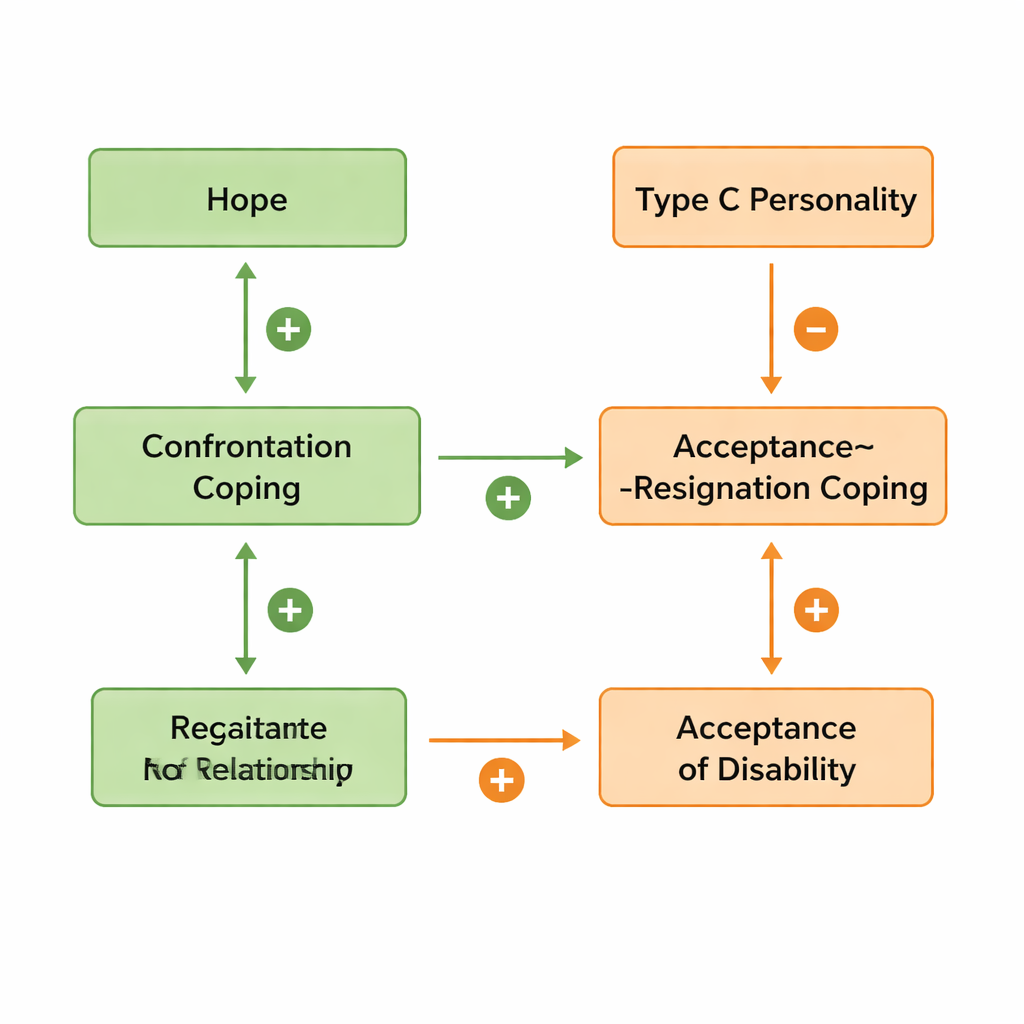
Women in the study used three main medical coping styles when dealing with their diagnosis and treatment. “Confrontation” meant actively seeking information, facing problems, and looking for solutions. “Avoidance” involved distraction or turning away from the issue. “Acceptance–resignation” meant giving up, feeling helpless, and passively accepting whatever happened. The researchers wanted to know whether these coping styles acted as psychological bridges between inner traits like hope or personality and outward outcomes such as social connection and self-acceptance.
How inner attitudes ripple into relationships
The findings showed that hope and social relationship quality were strongly linked. Women who felt more hopeful tended to report warmer family ties and better friendships. Part of this connection arose because hopeful women were more likely to use confrontation coping—meeting the disease head-on rather than shutting down. This active style slightly boosted their social relationship scores, suggesting that hopeful, engaged patients may be better at seeking help, communicating needs, and staying involved with loved ones, even while undergoing demanding treatment.
When bottled-up feelings make recovery harder
Type C personality told a different story. Women who tended to hide their emotions and avoid conflict were more likely to cope through acceptance–resignation. This “giving up” approach was strongly tied to poorer acceptance of disability: these patients struggled more to live with physical changes and functional limits after surgery. Type C personality affected disability acceptance in two ways—directly, and indirectly by increasing resignation. Together, these influences meant that emotionally suppressed, overly compliant women had a harder time adjusting, even when their medical treatment was the same.
What this means for care and everyday life
To a lay reader, the study’s message is straightforward: surviving breast cancer is not just about removing a tumor; it is also about how a woman thinks, feels, and copes. Hope helps women face illness more actively and stay connected with family and friends. In contrast, pushing down feelings and quietly enduring can lead to giving up and feeling unable to accept a changed body. The authors suggest that doctors and nurses should routinely ask about hope, emotions, and coping habits—not only symptoms—and offer counseling or group programs that encourage open expression and problem-focused coping. Supporting women in these inner struggles may be as vital to their long-term wellbeing as the treatments that fight the cancer itself.
Citation: Shen, XY., Wang, J., Qiu, Ll. et al. Mediating the role of medical coping styles among psychosocial factors in breast cancer patients with type C personality. Sci Rep 16, 7202 (2026). https://doi.org/10.1038/s41598-026-35502-9
Keywords: breast cancer, coping styles, hope, social relationships, disability acceptance