Clear Sky Science · en
Optimal operation of multi-carrier energy systems integrated with renewable energy sources and hydrogen storage systems
Powering Cities with Many Energy Sources
As we add more solar panels, wind turbines, electric cars, and smart devices to our cities, keeping the lights on and the taps running becomes a complex balancing act. This paper explores a new way to run local energy networks so that electricity, heat, cooling, water, and even hydrogen work together instead of being planned separately. The goal is simple to understand: use cleaner energy more efficiently, waste less, and cut costs for everyone.
From One-Track Grids to Multi-Energy Hubs
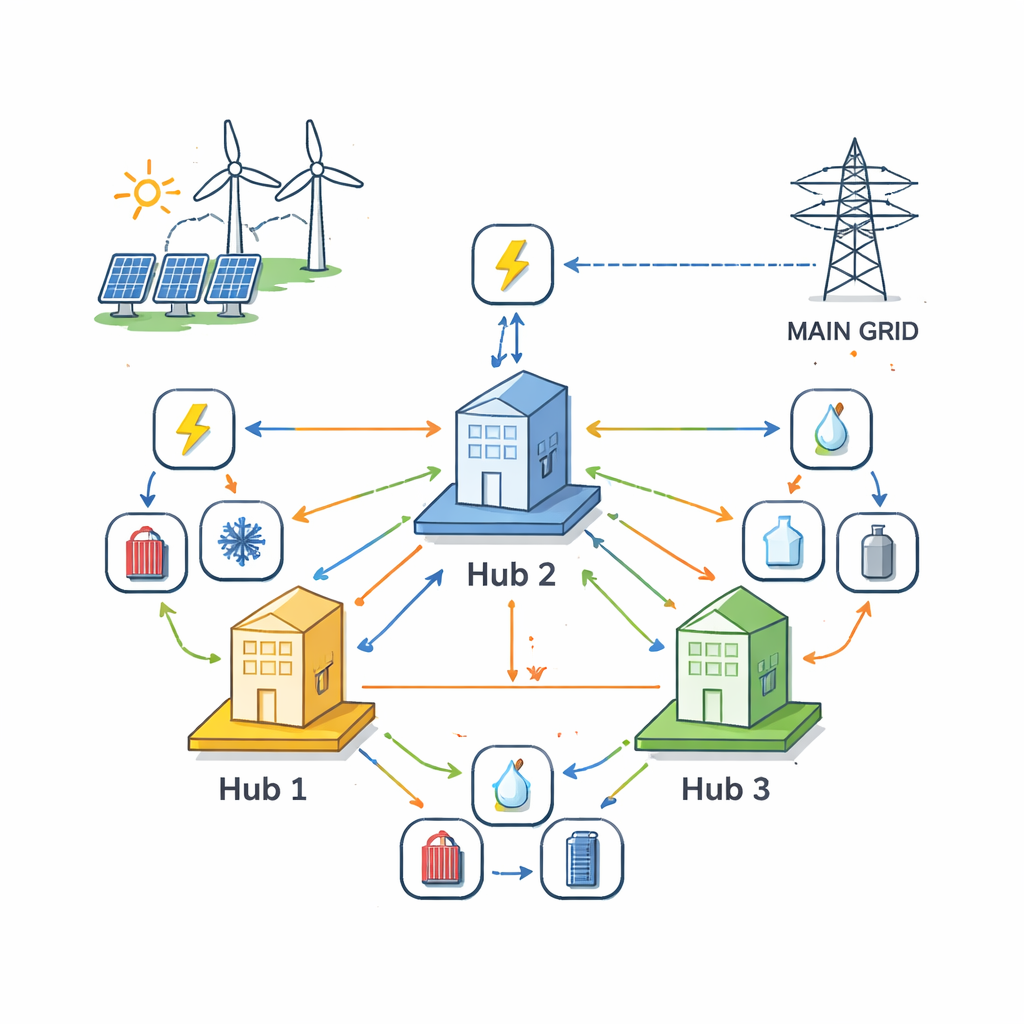
Traditional power systems mainly move electricity in one direction from large power plants to customers. The authors instead focus on "energy hubs"—neighborhood-scale systems that can receive different types of energy (like electricity and gas) and deliver what people actually need: power for appliances, hot water and heating, air-conditioning, and clean drinking water. In the model, three neighboring hubs share local renewable energy from solar panels and wind turbines, as well as gas-fired combined heat-and-power units that produce electricity and heat at the same time. Each hub operates a portfolio of devices, including electric and absorption chillers for cooling, boilers, and energy storage units that can hold electricity, heat, or cooling for later use.
Linking Water, Hydrogen, and Air to the Energy Mix
A key feature of this work is that it does not treat electricity in isolation. The hubs also manage the "water side" and the "hydrogen side" of the system. Potable water can come from underground wells, from a desalination plant that turns salty water into fresh water, or from a water storage tank. Because desalination uses a lot of electricity, the model lets hubs favor groundwater and smart timing of pumping when power is cheaper. On top of that, an electrolyzer turns surplus renewable electricity into hydrogen, which is stored in tanks and later used in fuel cells to generate power during expensive peak hours. Compressed air energy storage adds another buffer: when electricity is cheap, air is compressed and stored; when electricity is expensive, this stored energy is released to help meet demand.
Why Cooperation Beats Going It Alone
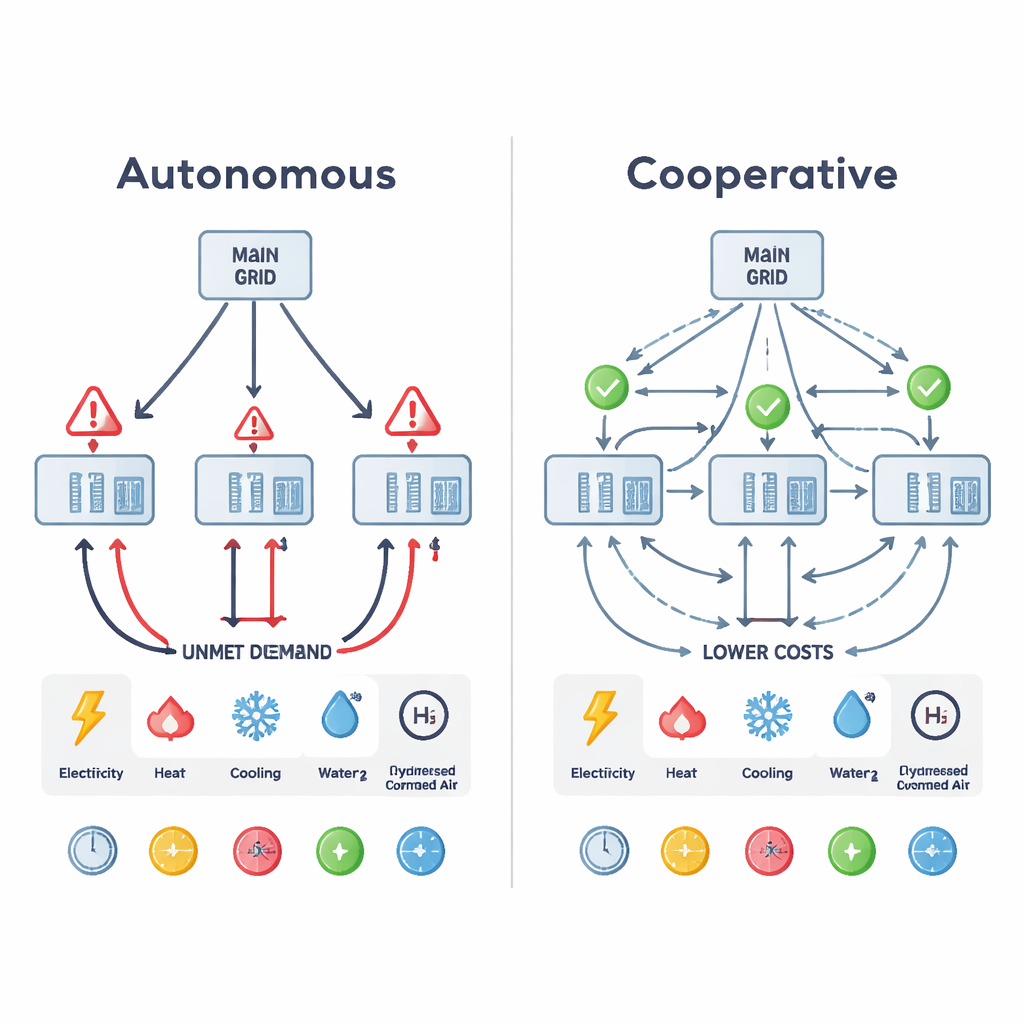
The central question in the study is how much better these hubs perform when they cooperate instead of acting alone. In the "autonomous" case, each hub tries to balance its own supply and demand with limited sharing, which sometimes leaves part of the local demand unmet and forces higher purchases from the main grid. In the "cooperative" case, hubs are allowed to trade electricity and other energy services with each other. One hub’s surplus solar or stored energy can cover another hub’s shortage. Using detailed computer modeling and a day-long schedule broken into hourly steps, the authors show that cooperation reduces operating costs and completely eliminates unserved energy. For the test system, total daily cost falls by about 1.6%, and the amount of unmet demand drops from 64.3 kilowatt-hours to zero.
Smart Timing and Storage Make Renewables More Useful
The study also explores what happens when prices or equipment sizes change. When electricity prices rise, both autonomous and cooperative systems pay more, but the cooperative setup always remains cheaper because it relies less on buying from the main grid. Adding batteries and thermal storage, or increasing their size, lowers costs further by shifting the use of energy from cheap hours to expensive ones. Boosting the capacity of renewable sources, like solar and wind, cuts operating costs in both modes, with savings of more than 13% when renewables are tripled. A stochastic, or uncertainty-aware, version of the model that includes variable weather and prices confirms the same pattern: sharing resources between hubs sharply reduces both costs and the risk that some demands cannot be met.
What This Means for Everyday Life
For non-specialists, the message is that future neighborhoods may not just be connected to a large power grid; they will be mini-systems that trade electricity, heat, water, and hydrogen among themselves. By coordinating how they use wells, desalination, batteries, hydrogen tanks, and compressed air storage, these local hubs can smooth out the ups and downs of sun and wind, rely less on fossil fuels, and keep bills lower and service more reliable. In plain terms, the paper shows that when diverse clean technologies are planned together and neighboring districts cooperate, cities can move toward a low-carbon future that is both more resilient and more affordable.
Citation: Foroughian, S., Bijan, Z.A.J., Karimi, H. et al. Optimal operation of multi-carrier energy systems integrated with renewable energy sources and hydrogen storage systems. Sci Rep 16, 6635 (2026). https://doi.org/10.1038/s41598-026-35497-3
Keywords: multi-energy systems, renewable integration, hydrogen storage, energy hubs, demand response