Clear Sky Science · en
Utilization of electronic plastic waste as fine aggregate with and without silica fume in concrete: experimentation and life cycle assessment
Turning Old Electronics into New Buildings
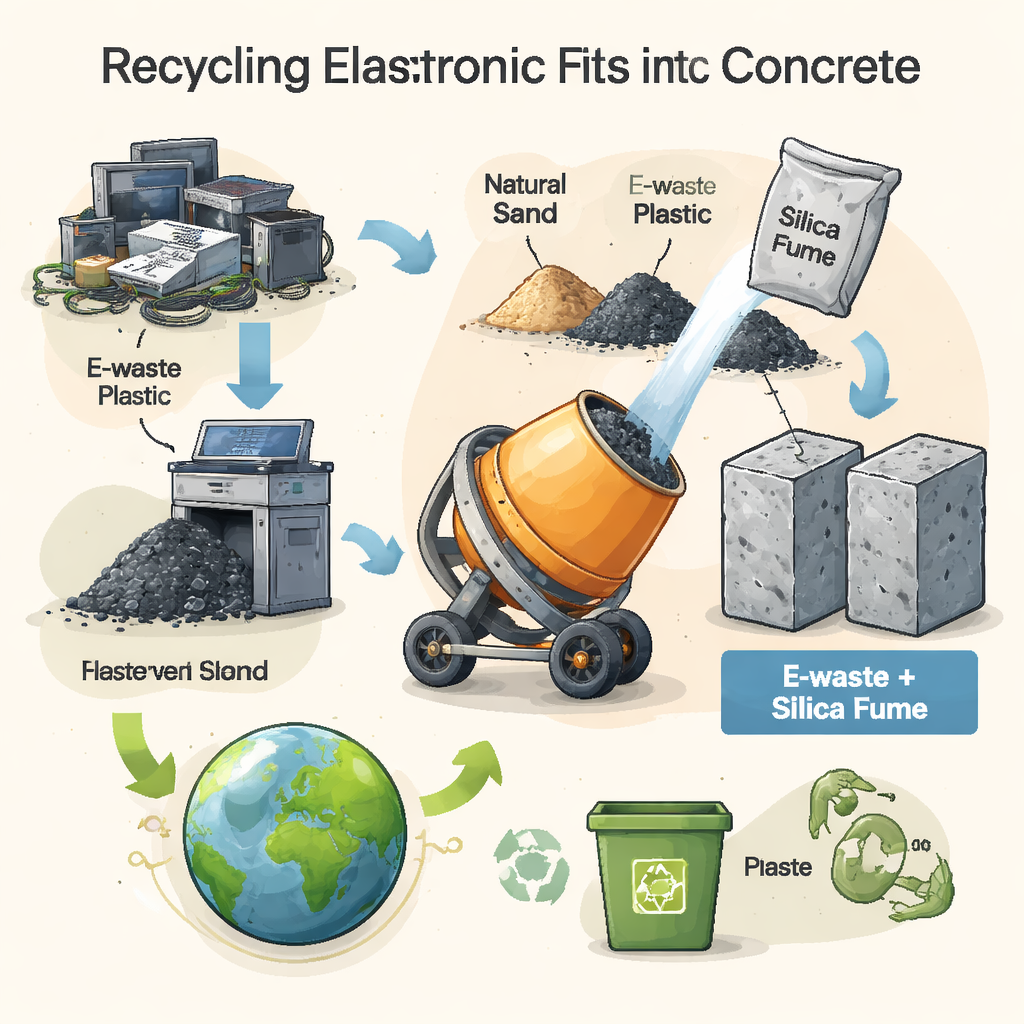
Every year, the world churns out mountains of electronic gadgets—and with them, mountains of discarded plastic casings. Most of this electronic plastic waste ends up in landfills or is burned, releasing toxic substances and wasting valuable material. This study explores a surprising alternative: grinding up plastic from old keyboards, printers, and computers and using it to make concrete, potentially cutting both construction’s hunger for natural sand and the environmental burden of e‑waste.
Why Plastic and Concrete Make an Unlikely Pair
Concrete is the backbone of modern construction and one of the most used materials on Earth. Its main ingredients are cement, water, and aggregates such as sand and gravel. Mining this sand at massive scale erodes riverbeds and disrupts ecosystems. At the same time, electronic plastic waste is piling up, especially in Asia, where only a small fraction is properly recycled. The authors saw an opportunity to address both problems at once by replacing part of the natural sand in concrete with finely crushed plastic from e‑waste, while also testing whether a very fine industrial by‑product called silica fume could help the plastic blend better into the mix.
How the New Mixes Were Designed and Tested
The researchers collected plastic casings made mostly of a common engineering plastic called ABS from discarded electronic equipment. They cleaned, crushed, and sieved the plastic into sand‑sized particles, then used it to replace 5%, 10%, 15%, and 20% of the natural sand in a standard concrete recipe. In another set of mixes, they also replaced 10% of the cement with silica fume—a powder so fine it can pack into tiny gaps in the concrete. Ten different concretes were produced and cured for up to 56 days, then subjected to a full suite of tests: strength in compression, bending, and splitting; non‑destructive checks with ultrasound and rebound hammers; and durability measures such as how easily water and chloride ions could seep in. Microscopic imaging revealed how well the plastic pieces bonded with the surrounding cement paste.
What Happens to Strength and Durability
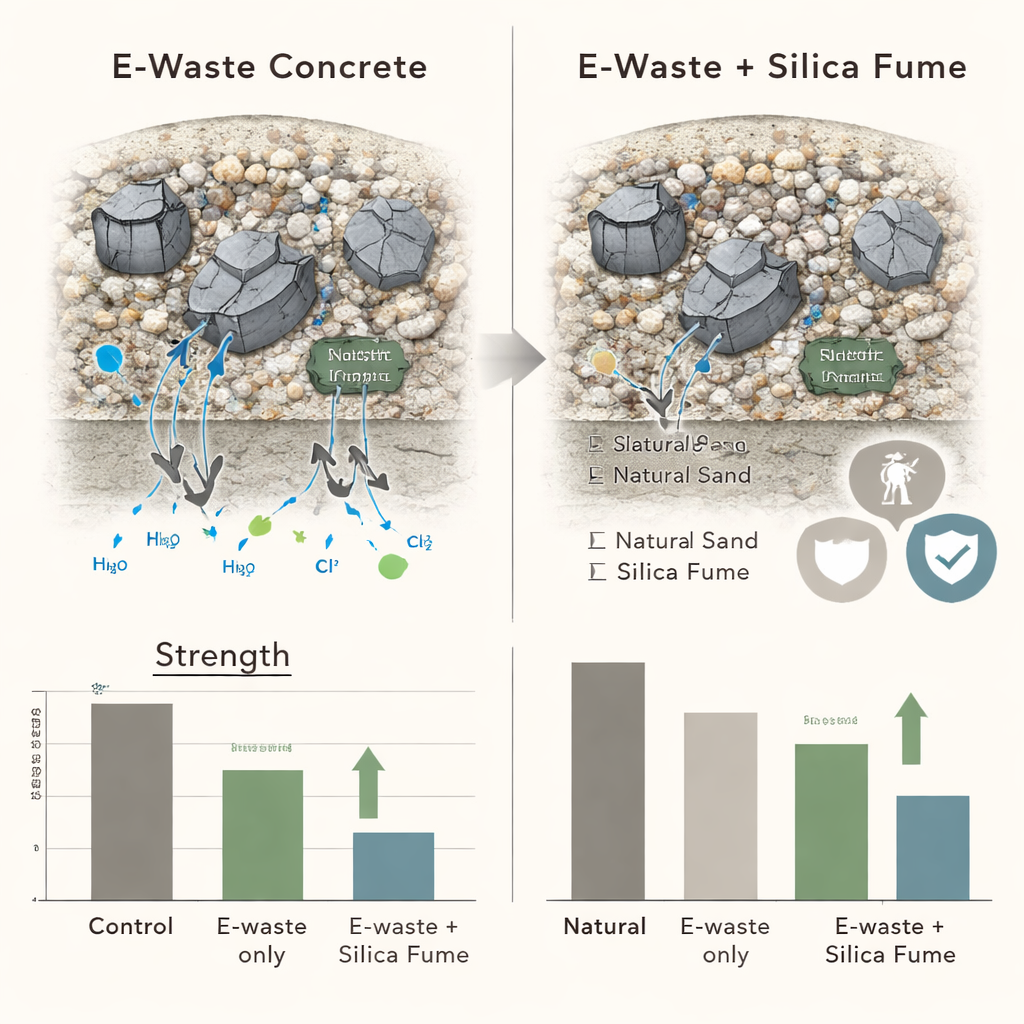
Concrete made with only plastic in place of sand became weaker and more porous as the plastic content increased. The smooth, water‑repelling surface of the plastic created tiny gaps where it touched the cement, leading to weaker bonds, more internal voids, and greater pathways for water and salt to enter. At 20% plastic, strength and stiffness dropped noticeably, and the material absorbed more water and allowed more chloride ions through—both warning signs for long‑term durability. However, when silica fume was added, the picture changed. The fine powder reacted with by‑products of cement hydration and filled the gaps around plastic particles, creating a denser, more tightly knit microstructure. Some mixes containing both plastic and silica fume actually outperformed ordinary concrete. A blend with 5–10% plastic plus 10% silica fume reached higher compressive, tensile, and flexural strengths than the conventional mix after 56 days.
Environmental Payoff from Rethinking the Recipe
To see whether these greener concretes really help the planet, the team ran a life cycle assessment—a kind of environmental balance sheet—for each mix, focusing on the production stage in a precast concrete plant. Replacing 20% of natural sand with electronic plastic waste reduced the overall environmental burden by about 5% and trimmed the concrete’s global warming impact by roughly 1.4%, equivalent to saving about 4–5 kilograms of carbon dioxide for every cubic meter of concrete produced. When silica fume was included as a partial cement replacement, total impacts in some categories rose slightly because silica fume itself is energy‑intensive to make. Yet the carbon footprint per unit of strength improved markedly: mixes combining 10% silica fume with 15–20% plastic delivered the most climate‑efficient concrete in the study, offering more strength for less climate damage.
What This Means for Future Buildings
For a layperson, the takeaway is straightforward: with careful design, old electronics can help build new, more sustainable infrastructure. Using modest amounts of electronic plastic waste in place of sand, and balancing it with silica fume, can yield concrete that is strong, durable, and a bit kinder to the climate. The best-performing mix in this study used 10% electronic plastic waste and 10% silica fume, matching or surpassing conventional concrete while easing pressure on sand resources and cutting emissions. While further work is needed to prove long-term safety and to update building codes, this research points toward a future where part of the concrete in walls, drains, or coastal structures could come from yesterday’s discarded devices rather than freshly mined sand.
Citation: Omran, S., Sisupalan, S., Alyaseen, A. et al. Utilization of electronic plastic waste as fine aggregate with and without silica fume in concrete: experimentation and life cycle assessment. Sci Rep 16, 5723 (2026). https://doi.org/10.1038/s41598-026-35491-9
Keywords: electronic waste concrete, recycled plastic aggregates, silica fume, sustainable construction, life cycle assessment