Clear Sky Science · en
Genetic diversity analysis of North Dakota public soybean breeding program cultivars
Why Soybean Roots Matter to Your Dinner Plate
Soybeans may look like a simple farm crop, but they quietly support much of the world’s meat, dairy, and vegetable oil. In North Dakota, farmers grow a huge share of U.S. soybeans, yet their fields don’t yield as much as those in states like Illinois or Iowa. This article asks a deceptively simple question with big consequences for food production: have North Dakota’s soybeans become too closely related, and could that genetic sameness be holding back future gains in yield and resilience?
A Crop Built on a Narrow Family Tree
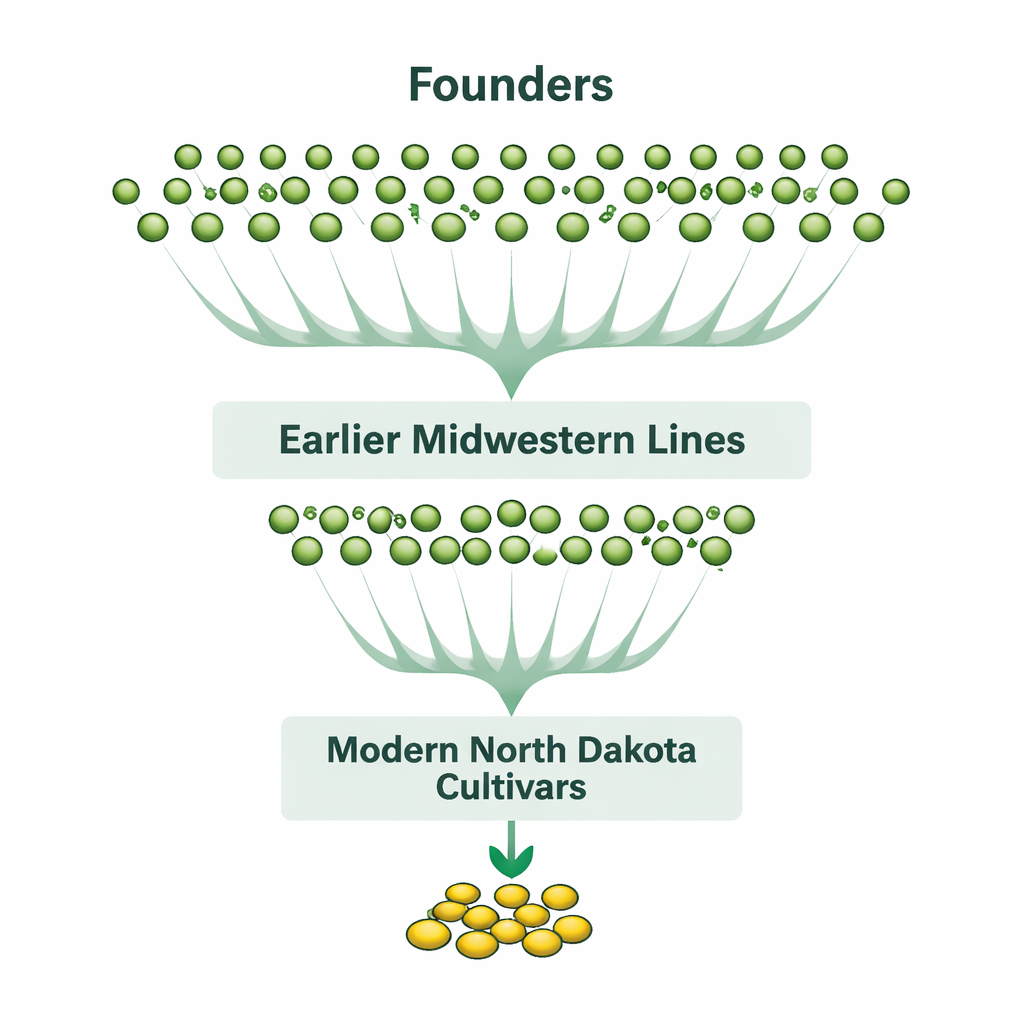
Modern soybeans are the product of thousands of years of selection, from wild plants in East Asia to today’s high-performing varieties. Along the way, the crop passed through several “bottlenecks,” when only a small number of plants contributed most of the genes to later generations. For North American soybeans, a major squeeze occurred when just a few traditional varieties were first brought over from Asia and used to start breeding programs. North Dakota faces an extra challenge: its short, cool growing season requires very early-maturing soybean types, known as maturity groups 00 and 0, which were bred later and from a smaller pool of parents than in warmer Midwestern states.
Tracing Soybean Lineages Like a Family Ancestry
To see how narrow the genetic base has become, the researchers examined 40 soybean varieties released by the North Dakota State University (NDSU) public breeding program between 1994 and 2021. Using historical records, they traced each variety’s “family tree” back through 19 generations, ultimately identifying 49 original founder lines. They then used a statistic called the coefficient of parentage to estimate how much each founder contributed to today’s North Dakota varieties. The verdict was clear: 70 percent of the genetic background came from just 10 founders, and a single early-maturing line called Mandarin (Ottawa) supplied about one-quarter of the entire genetic base.
Reading the Genome for Hidden Relationships
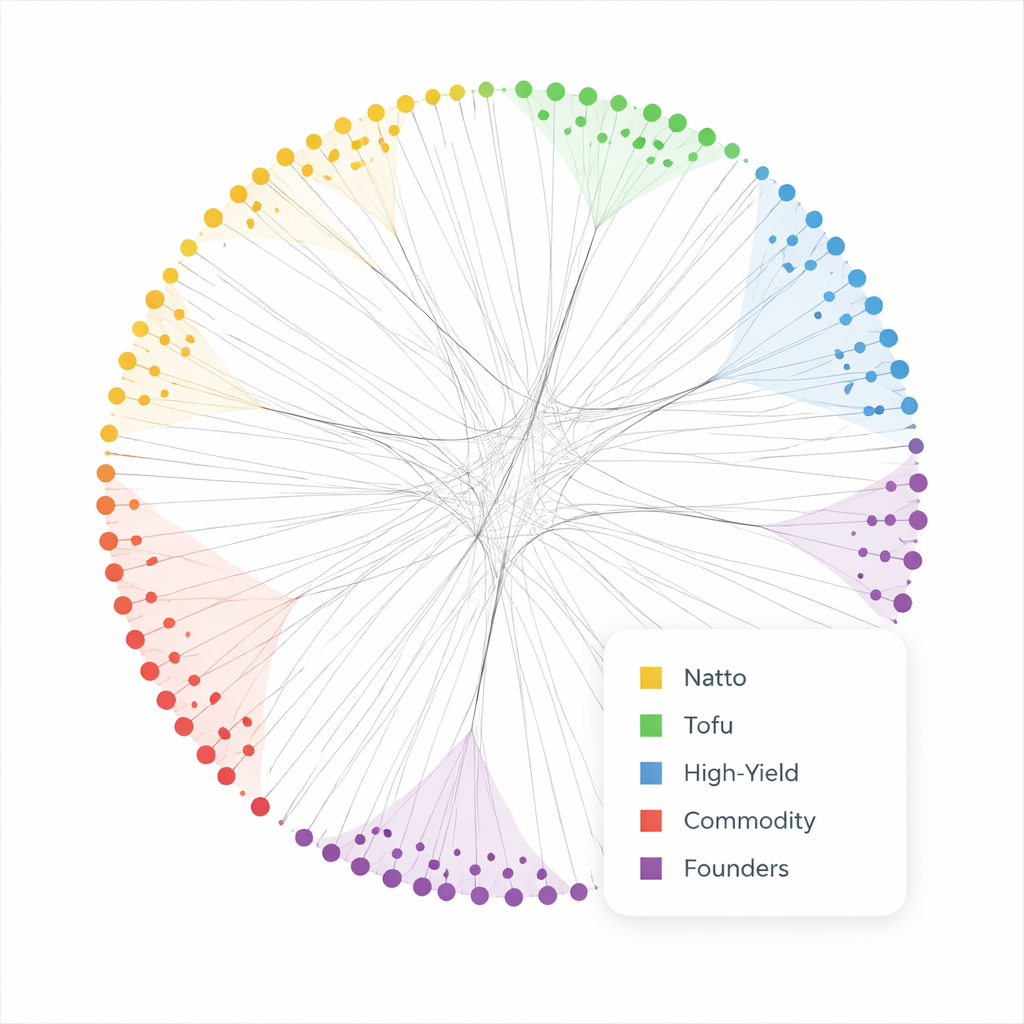
Pedigree records can miss details, so the team also turned to the plants’ DNA. They sequenced whole genomes from 27 of the NDSU varieties and combined these with existing genetic data on most of the 49 founders. By looking at tens of thousands of genetic markers spread across the soybean genome, they built a series of “family maps”: a tree showing how closely varieties cluster, a heat map of pairwise relatedness, and population structure charts that group varieties by shared ancestry. These analyses revealed that the NDSU lines fall into just a handful of genetic clusters. Specialty food types such as natto soybeans (used for the fermented Japanese dish) and tofu soybeans formed their own distinct groups, while several high-yielding, field-oriented varieties clustered together in another group.
Specialty Beans, Hidden Diversity, and a Looming Ceiling
The genetic maps told a nuanced story. On one hand, NDSU’s earliest soybean releases drew on a fairly broad set of ancestors also used across the northern United States, reflecting decades of prior breeding elsewhere. On the other hand, once the NDSU program got underway, it relied heavily on crossing its own successful varieties with one another—so-called “elite-by-elite” breeding. This strategy is excellent for short-term progress, as it stacks favorable traits such as yield and disease resistance. But if used too long without fresh inputs, it can shrink the pool of available genes and make further gains harder. The study also found that natto lines, which require very small seeds and particular quality traits, appear genetically more distinct and may even carry traces of the wild soybean ancestor, hinting at a valuable but underused source of diversity.
What It Means for Future Harvests
For non-specialists, the takeaway is straightforward: North Dakota’s soybean program has done well, steadily increasing yields in a tough northern climate, but it is running on a relatively tight genetic budget. With most modern varieties tracing back to a small cast of ancestral lines—especially Mandarin (Ottawa)—there is a real risk that future breeding will hit a ceiling, where adding more yield or stress tolerance becomes increasingly difficult. The authors argue that now is the time to bring in new germplasm—fresh soybean lines from other regions, gene banks, or even wild relatives—to widen the genetic base. Doing so could help North Dakota farmers close the yield gap with other states, better withstand diseases and harsh weather, and keep this unassuming but vital crop productive for decades to come.
Citation: Hanson, F., Harms, B., Kreutz , G. et al. Genetic diversity analysis of North Dakota public soybean breeding program cultivars. Sci Rep 16, 6012 (2026). https://doi.org/10.1038/s41598-026-35464-y
Keywords: soybean breeding, genetic diversity, North Dakota soybeans, crop improvement, plant germplasm