Clear Sky Science · en
Acceptability of remotely supervised Home-Based transcranial direct current stimulation combined with Cognitive-behavioural-based app for peripartum depression: perspectives from women with lived experience and mental health professionals
A New Way to Support Mothers’ Mental Health
Many women experience depression during pregnancy or after giving birth, but getting help can be hard when they are caring for a newborn, worried about medication, or afraid of stigma. This study looks at a home-based treatment that combines a gentle brain stimulation headset with a smartphone therapy app, and asks a simple question: would women and the professionals who care for them actually want to use it?
Why Post‑Birth Depression Needs New Options
Depression around the time of pregnancy, called peripartum depression, affects roughly one in five women worldwide. It harms not only mothers, but also babies, partners and wider families. Standard treatments, such as antidepressant medicines and talk therapy, help many people but are far from perfect. Pregnant and breastfeeding women often worry about taking medications, and therapy can be hard to access, especially for those juggling childcare, work, and travel. These gaps have pushed researchers to explore alternatives that are safe, practical and easy to fit into family life.
A Home Treatment that Blends Brain Stimulation and an App
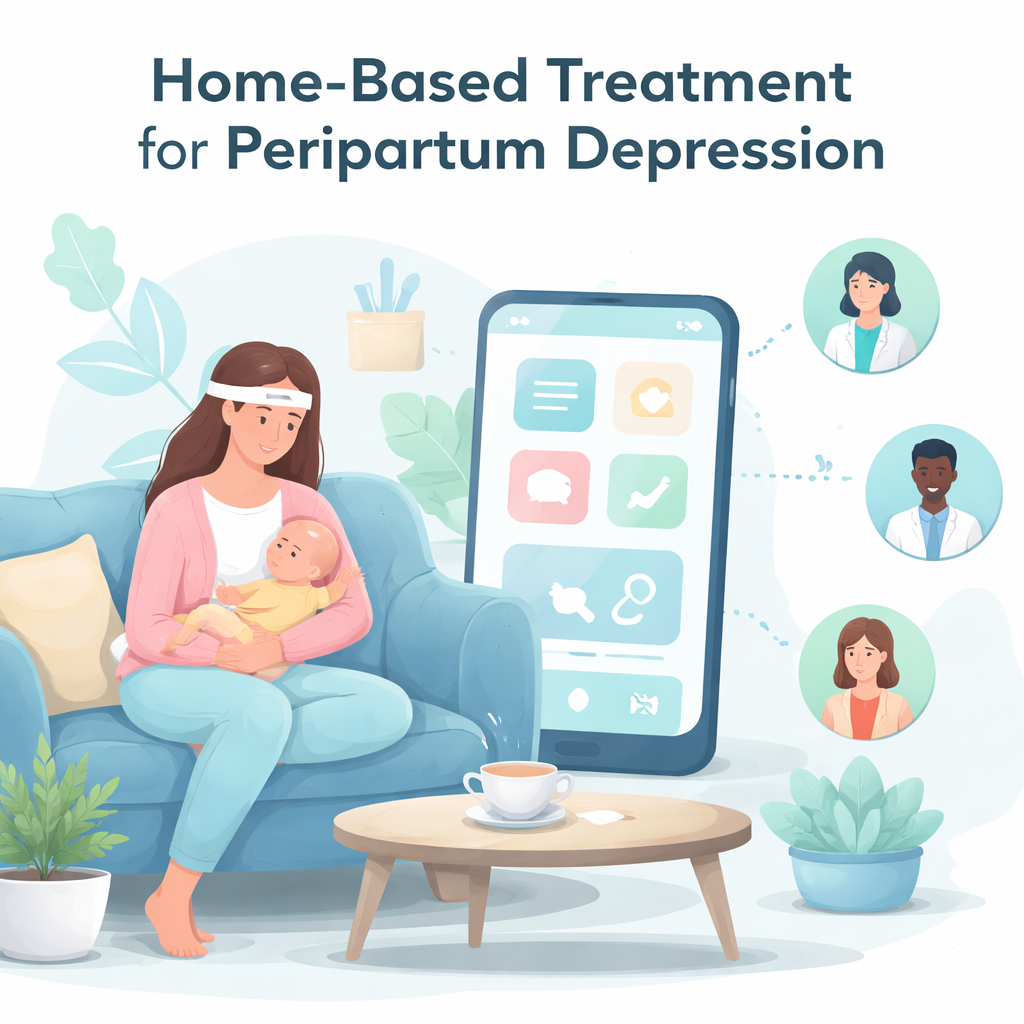
The solution examined in this study, called FLOW Neuroscience, combines two parts: a headband that delivers a very weak electrical current to the surface of the head, and a phone app built on principles from cognitive‑behavioural therapy, a common form of talk therapy. The stimulation, known as transcranial direct current stimulation, aims to gently tune brain areas involved in mood, while the app offers short lessons, exercises and self‑monitoring tools. Importantly, this system is designed to be used at home, with remote supervision from health professionals, so that women can follow treatment while staying close to their babies and daily routines.
Listening to Mothers and Clinicians
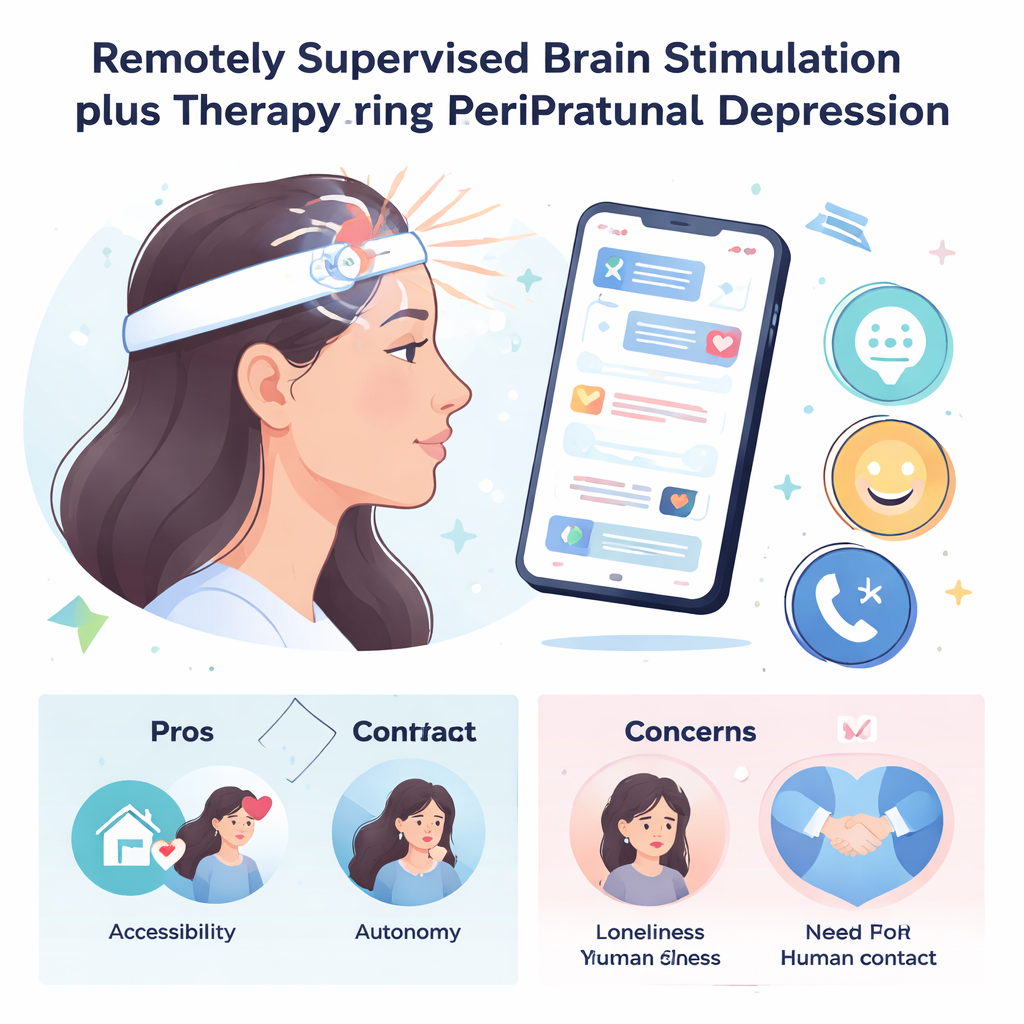
To understand how acceptable this approach might be, the researchers ran group discussions with 15 women who had lived through peripartum depression or anxiety, and 14 health professionals including doctors, nurses and psychologists. Participants tried the headset and the app, then shared their thoughts. Women with lived experience were mostly positive. They appreciated that the treatment is non‑invasive, does not rely on medication, can be done at home, and appears simple to use. Many felt it could support their independence and sense of control. At the same time, they worried about using the device on their own, wanted clearer information about safety for both mother and baby, and missed the warmth of talking to a real person rather than a “bot” in the app.
What Professionals Applaud and What Worries Them
Health professionals saw both promise and pitfalls. They liked having another option for women who decline or do not tolerate medication, and valued the potential to extend care to more patients when health services are overstretched. They found the device generally comfortable and the app visually appealing and easy to navigate. However, they were more cautious than the mothers. Many were uneasy about relying too heavily on remote and automated tools for people who may already feel lonely and vulnerable. They raised concerns about limited in‑person contact, the challenge of monitoring patients at a distance, data privacy, and the risk that some women—especially those with lower education or less confidence with technology—could be left behind.
Making High‑Tech Care Feel More Human
Both groups offered concrete suggestions to improve the system. They called for clearer, trustworthy information about safety and effectiveness, ideally delivered by trained clinicians during pregnancy or early after birth. They wanted the app content tailored more closely to pregnancy and early parenting, with options to personalize topics and style. Crucially, they recommended blending the home‑based treatment with scheduled face‑to‑face or video appointments, so that women can ask questions, feel supported, and be closely monitored. In this vision, the headset and app would not replace human care, but extend and complement it.
What This Means for Mothers and Families
In everyday terms, the study suggests that a home treatment combining gentle brain stimulation with a therapy app could become a welcome new tool for managing depression around childbirth—especially for women who prefer to avoid medication and need flexible care. Yet technology alone is not enough. To truly help mothers and babies, such tools must be woven into existing services, guided by trusted professionals, and designed to keep the human connection at the center of care.
Citation: Ganho-Ávila, A., Cruz, A., Szczygiel, N. et al. Acceptability of remotely supervised Home-Based transcranial direct current stimulation combined with Cognitive-behavioural-based app for peripartum depression: perspectives from women with lived experience and mental health professionals. Sci Rep 16, 5140 (2026). https://doi.org/10.1038/s41598-026-35443-3
Keywords: peripartum depression, postpartum mental health, home-based brain stimulation, digital therapy app, maternal well-being