Clear Sky Science · en
Network analysis of emotion regulation and moral injury symptoms among medical staff
Why the hidden burdens of healers matter
When we think about doctors and nurses, we usually picture people who save lives and stay calm in a crisis. But behind the professional mask, medical staff often face situations that clash with their deepest sense of right and wrong: watching patients die despite their efforts, following rules that delay care, or feeling betrayed by colleagues or institutions. This study looks at how these experiences can leave lasting moral wounds—and how the ways people manage their emotions can either ease or intensify that hidden damage.
When doing your job feels morally wrong
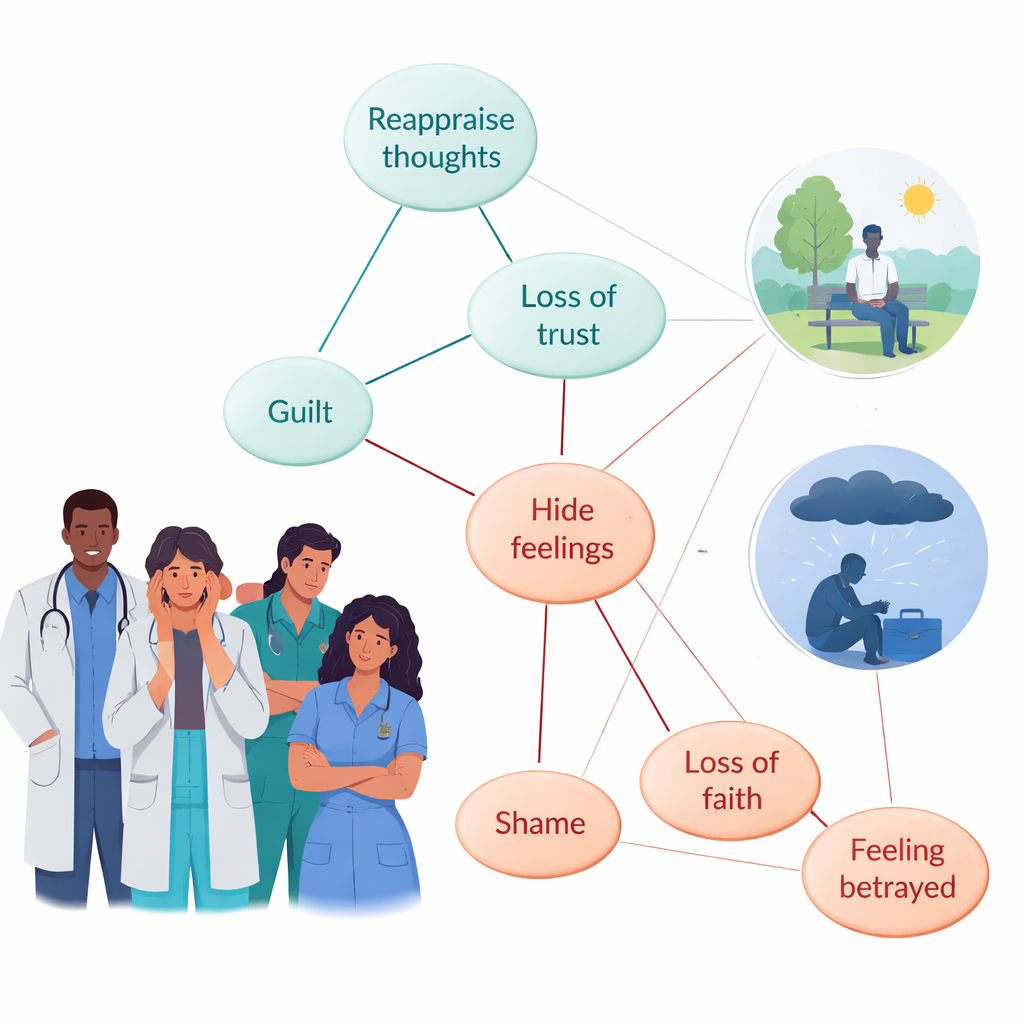
The authors focus on a problem called “moral injury.” Unlike regular work stress, moral injury arises when people feel they have violated, or seen others violate, their core moral beliefs—for example, by not being able to save a patient, feeling forced to provide care that seems unfair, or witnessing serious mistakes. These experiences can lead to guilt, shame, loss of trust in others, a sense that life has lost meaning, and even a loss of faith. Among 1,001 Chinese physicians and nurses from top-tier hospitals, the researchers measured ten such moral injury symptoms, along with two common ways people regulate their emotions: reframing how they think about events (“cognitive reappraisal”) and hiding their emotional expressions (“expressive suppression”).
Two different ways of handling painful feelings
Cognitive reappraisal means mentally reinterpreting a situation—for example, telling oneself, “I did everything I could under impossible conditions,” rather than “I failed that patient.” Expressive suppression, by contrast, means holding feelings in, keeping a neutral face, and pretending everything is fine even when distress is intense. Using a technique called network analysis, the researchers treated each emotion strategy and each moral injury symptom as separate points in a web, then examined how strongly each point was connected to the others. This approach let them see which specific symptoms are most closely tied to each way of regulating emotions, rather than just looking at total scores.
How thinking differently can help—or hurt
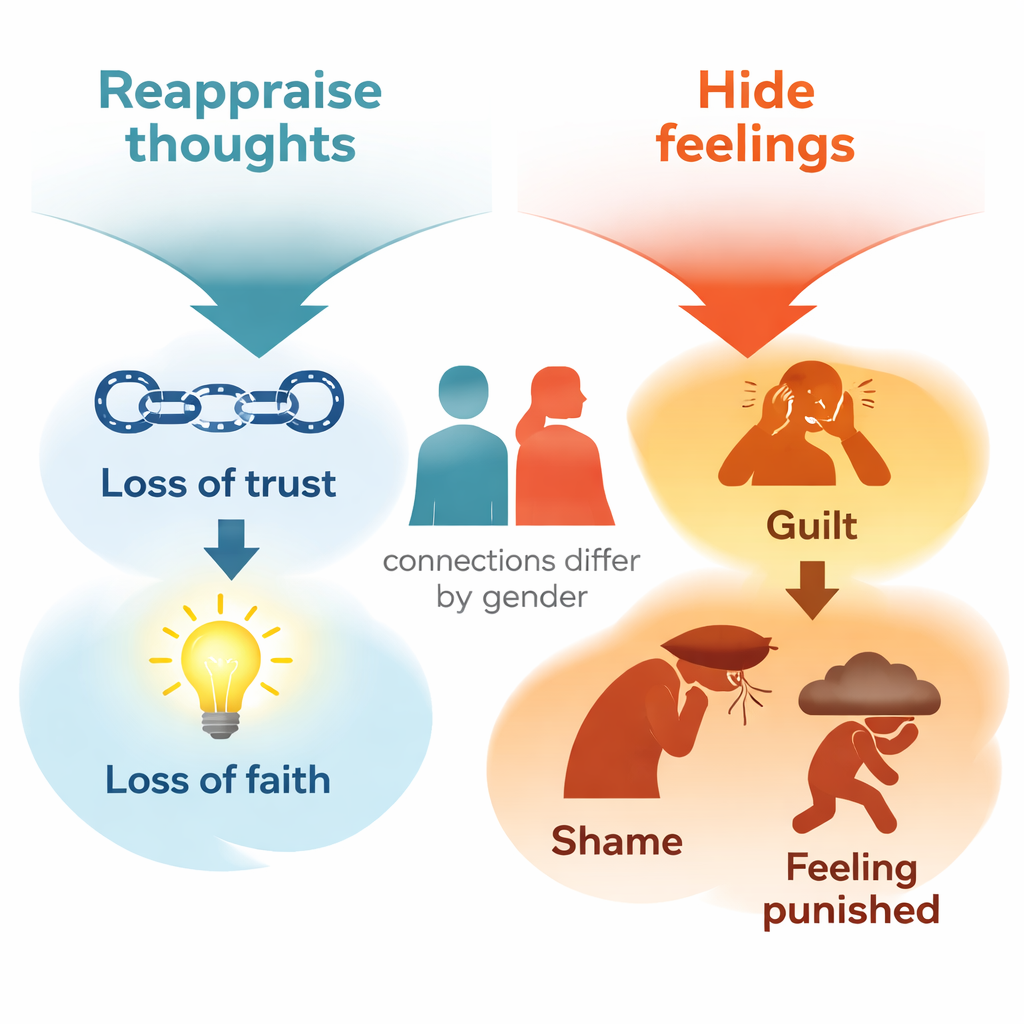
The results showed a clear pattern: rethinking events was linked to fewer moral wounds, while bottling up feelings was linked to more. Cognitive reappraisal was connected to lower levels of seven symptoms, especially loss of faith, loss of trust, feeling punished, unforgiveness, self-condemnation, loss of meaning, and feeling betrayed. In other words, people who were better at reshaping the story they told themselves about painful events tended to feel less spiritually and relationally damaged. However, reappraisal did not seem to reduce intense self-focused emotions like guilt, shame, or a general sense of being troubled—suggesting that some moral emotions are so deeply personal that they may require more specialized or targeted help.
Why hiding feelings makes things worse
Expressive suppression showed the opposite pattern. It was tied to higher levels of feeling betrayed, guilty, ashamed, punished, and losing faith. Even though hiding emotions may keep the workplace running smoothly in the short term, it appears to trap painful feelings inside, fueling rumination, physical stress, and strained relationships. Over time, this can deepen the sense that one is being punished or abandoned, or that previously trusted people and institutions have let them down. When the authors calculated which emotion strategies acted as “bridges” between everyday coping and moral injury, cognitive reappraisal emerged as a protective bridge, while suppression acted as a risk bridge.
Men, women, and the same job
The team also asked whether these patterns differed between men and women, and between physicians and nurses. Overall, the structure and strength of the emotion–moral injury network looked similar across groups. But two important links stood out for gender. For men, rethinking events was more strongly related to lower feelings of being betrayed and less self-condemnation; for women, these specific protective links did not appear. The authors suggest that differences in how men and women see themselves in relationships, how they explain betrayal, and their typical coping styles may influence how well reappraisal works for certain moral wounds. Surprisingly, the connections between emotion strategies and moral injury did not differ between physicians and nurses, even though past work suggests physicians may experience more severe moral injury overall.
What this means for protecting those who care for us
Put simply, the study finds that how medical staff handle their emotions can shape whether morally painful experiences become lasting injuries. Learning to reconsider the meaning of difficult events may help rebuild trust, restore a sense of purpose, and protect spiritual well-being. Simply pushing feelings down, however, seems to heighten guilt, shame, and a sense of punishment. For patients and health systems, the message is clear: supporting caregivers’ emotional skills is not a luxury. Training that strengthens healthy reappraisal and reduces reliance on suppression could be a key part of preventing burnout, turnover, and deep moral wounds among the people we rely on when our own lives are on the line.
Citation: Zhou, Y., Zhu, W., Wang, J. et al. Network analysis of emotion regulation and moral injury symptoms among medical staff. Sci Rep 16, 6100 (2026). https://doi.org/10.1038/s41598-026-35438-0
Keywords: moral injury, medical staff, emotion regulation, cognitive reappraisal, expressive suppression