Clear Sky Science · en
An economic, environmental and energy study of six innovative roofing solutions through life cycle assessment methodology
Roofs that Shape Our Bills and Our Planet
Most of us never think about what’s above our heads, yet the roof over a building quietly drives how much energy it uses, how much it costs to build, and how much it pollutes. This study looks at six modern roof designs now being used in Iran and asks a simple question with big consequences: which ones are kinder to both our wallets and the environment? By following each roof from raw materials to the construction site, and by simulating how well they keep heat in or out, the researchers reveal trade-offs that matter to homeowners, builders and policymakers alike.
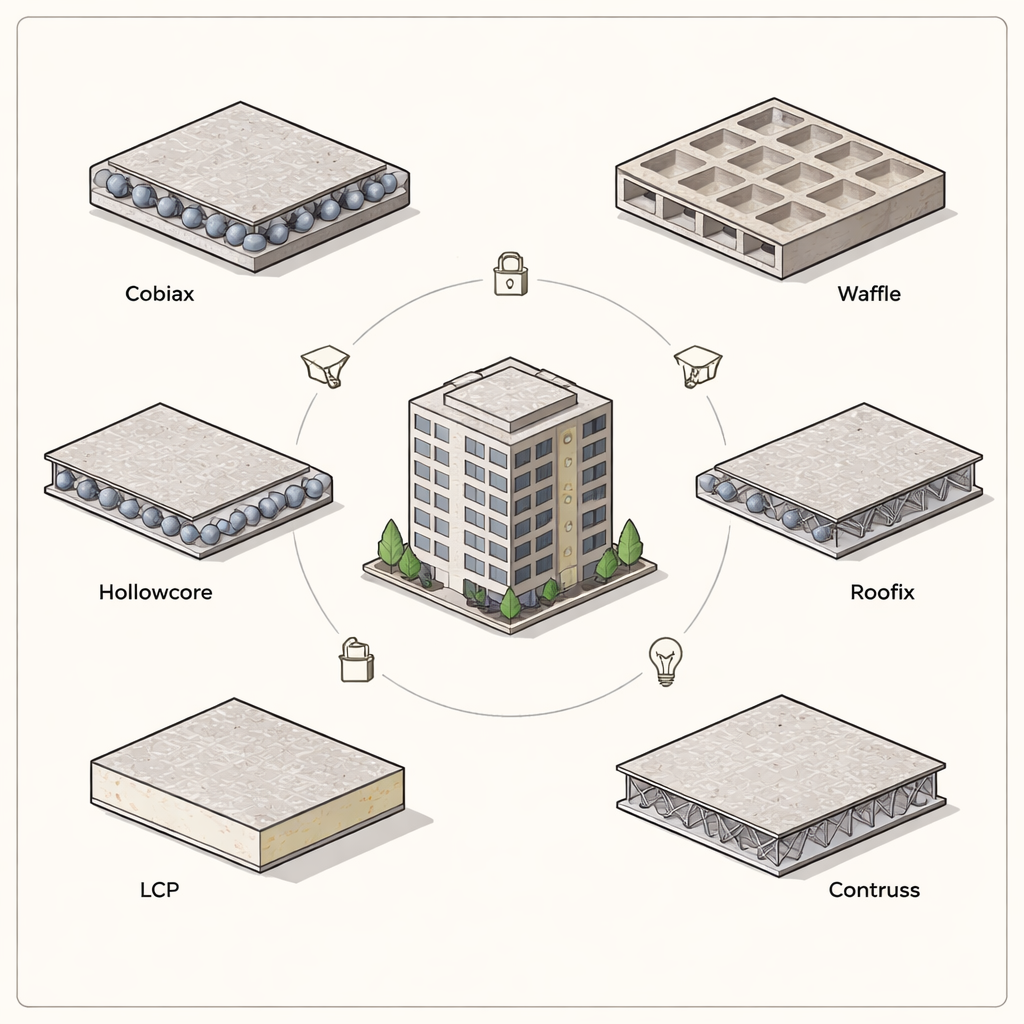
Six New Ways to Top a Building
The team examined six innovative concrete-based roofing systems: Cobiax, Waffle, Roofix, Hollowcore, Light Composite Panel (LCP) and Contruss. Each uses a different trick to save weight or improve performance. Cobiax hides plastic balls inside the slab to replace heavy concrete. Waffle roofs use a grid of reusable molds to create a lighter, ribbed underside. Roofix combines a thin concrete layer with permanent steel decking. Hollowcore slabs are made in factories with long circular holes running through them. LCP roofs pair thin concrete with a lightweight, insulated core. Contruss relies on a slim truss-like framework to cut down on concrete and steel. These design choices change how many materials are needed, how much they cost and how well they insulate.
Following Each Roof from Quarry to Construction Site
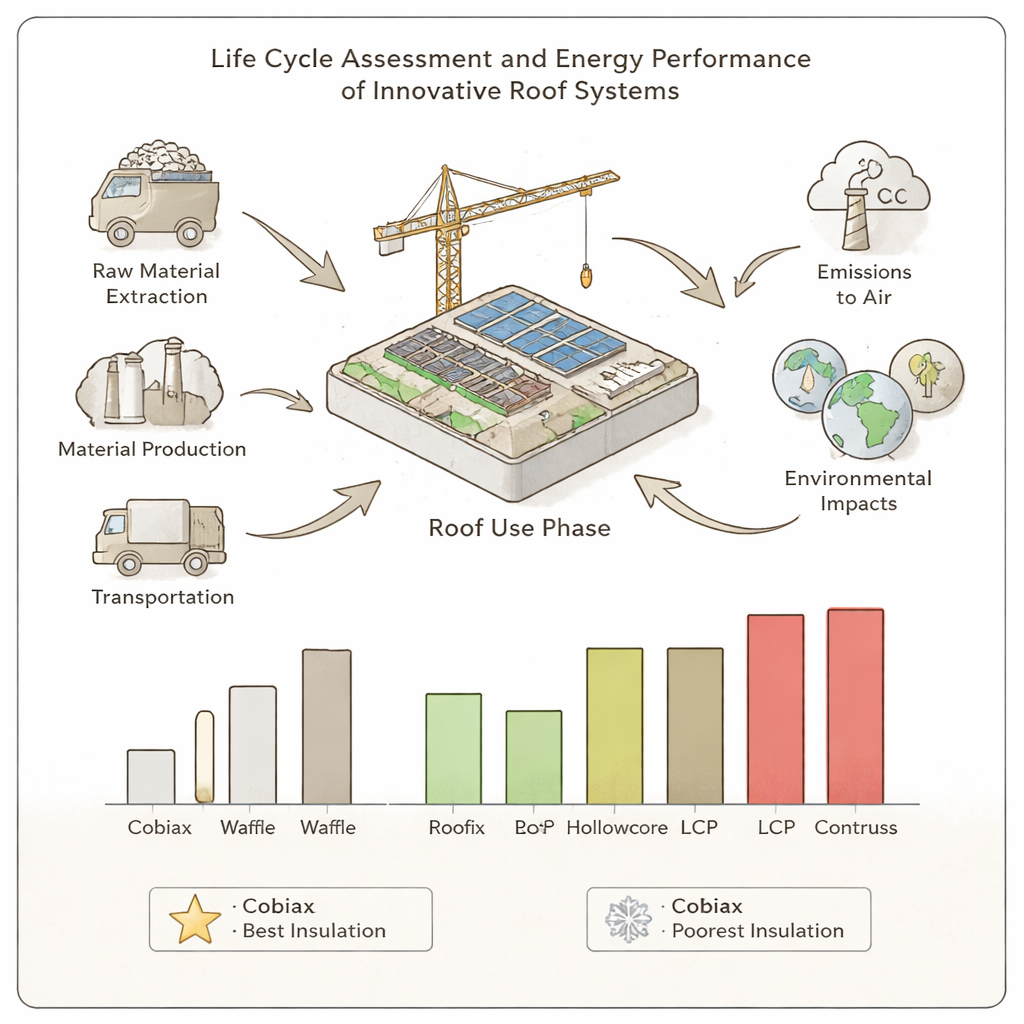
To compare these systems fairly, the researchers used a method called life cycle assessment, but limited it to the early stages: extracting raw materials, making products like concrete and steel, transporting them, and building one square meter of roof. They used two widely used computer tools, SimaPro and GaBi, which draw on large international databases to estimate pollution from each step. Because there is little local data for Iran, they relied mainly on European records, an accepted but imperfect stand-in. They focused on three key types of pollution: global warming gases, acidification (which contributes to acid rain) and eutrophication (nutrient pollution that can harm water bodies). They also looked at broader damage to human health, ecosystems, climate and natural resources.
Winners and Losers in Pollution and Cost
The results show that not all “modern” roofs are automatically green. Across many impact categories, the LCP and Cobiax systems generally created the highest pollution load, largely because they rely on more material and energy-intensive components. Hollowcore, Roofix and Contruss tended to score better, with Contruss and Roofix usually among the lowest for environmental damage. When the team added up costs using Iran’s 2024 building price list, Contruss emerged as the cheapest option per square meter, while Hollowcore was the most expensive. In other words, some of the roofs that pollute less can also be easier on construction budgets, which is good news for widespread adoption.
How Well the Roofs Hold Back Heat
Beyond construction impacts, the researchers also asked how each roof might influence a building’s heating and cooling needs over time. Using the EnergyPlus simulation program, they modeled heat transfer through each roof type. Cobiax stood out with the best insulation, showing the lowest rate of heat flow, which can cut energy use for air conditioning and heating. At the other extreme, the LCP roof allowed heat to move more readily through it, indicating poorer insulation. Although this operational energy analysis was kept separate from the main environmental accounting, it highlights a key point: a roof that is slightly more polluting to build might still pay back its “carbon debt” if it drastically reduces energy use over decades of service.
Small Material Changes, Big Environmental Gains
To see which design choices matter most, the team tested how sensitive the results were to changes in material amounts. They found that three ingredients drive most of the damage: concrete, reinforcing steel and the molds or formwork used to shape the slabs. Modest reductions in concrete, for example, led to noticeable drops in global warming and water pollution indicators. This means better engineering and material optimization—using only as much concrete and steel as truly needed—could substantially cut the environmental footprint of future roofs without changing the overall roof concept.
What This Means for Builders and Occupants
For non-specialists, the message is straightforward: roofs are not all equal, and smarter choices can lower both construction costs and environmental harm. In this study, the Contruss system offered a strong balance, pairing low cost with relatively low pollution, while Cobiax delivered superior insulation but higher impacts when built. LCP, despite being lightweight and modern, tended to perform worst on several environmental measures and had weaker insulation. By shining a light on these trade-offs, the research gives architects, engineers and regulators a practical roadmap for picking roof systems that save money, cut emissions and keep buildings more comfortable for the people living and working under them.
Citation: Katebi, A., Asadollahfardi, G., Homami, P. et al. An economic, environmental and energy study of six innovative roofing solutions through life cycle assessment methodology. Sci Rep 16, 6418 (2026). https://doi.org/10.1038/s41598-026-35437-1
Keywords: sustainable roofing, life cycle assessment, building energy use, construction materials, environmental impact