Clear Sky Science · en
Prognostic role of smoking in metastatic renal cell carcinoma in real-world data from the Turkish Oncology Group Kidney Cancer Consortium (TKCC)
Why this research matters to patients and families
When kidney cancer spreads to other parts of the body, many people want to know which everyday habits still matter. Smoking is a well-known cause of kidney cancer, but its role after the cancer has already spread is less clear. This study looked at hundreds of patients with advanced kidney cancer in routine clinical practice and asked a focused question: does being a current or former smoker change how long people live once their cancer has metastasized, especially when it reaches the bones? The answer turns out to be yes—particularly for cancer in the skeleton.
Looking at real patients, not just clinical trials
Researchers from the Turkish Oncology Group Kidney Cancer Consortium examined medical records from 779 adults with metastatic renal cell carcinoma, the most common type of kidney cancer. All patients had received modern drug treatments for advanced disease, most commonly targeted pills that block blood vessel growth in tumors. The team divided people into two groups: never-smokers and current or former smokers. They then followed how long patients lived from the start of treatment and where in the body the cancer had spread, with special attention to bone, lung, liver, brain, and lymph nodes. 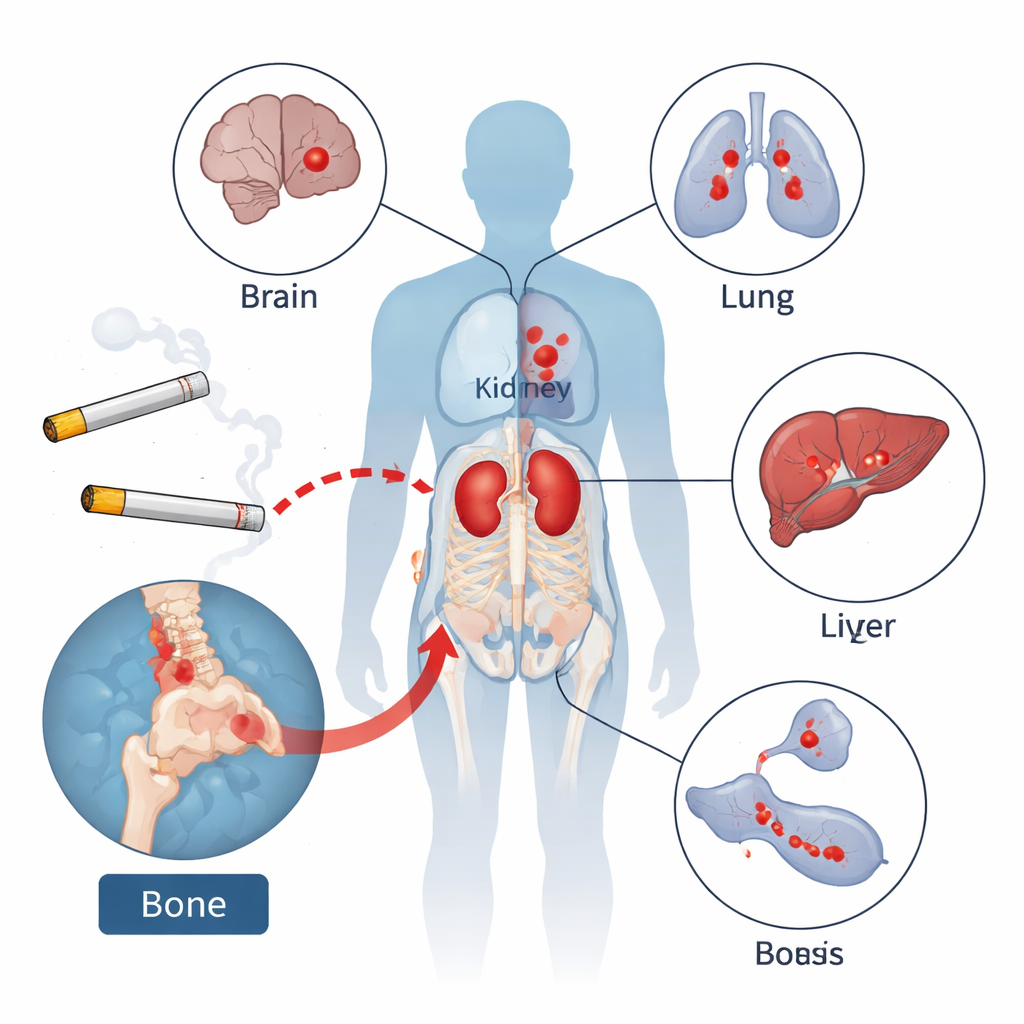
Smoking and overall survival: a hidden effect in the bones
At first glance, smoking did not seem to change survival very much when all patients were lumped together. Never-smokers lived a median of about 38 months after starting therapy, while current or former smokers lived about 34 months—a difference that was not statistically meaningful. But when the researchers broke the data down by metastatic site, a striking pattern emerged. In patients whose cancer had spread to bone, smokers died sooner: they lived a median of roughly 22 months compared with about 34 months for never-smokers. Among patients without bone metastases, smoking status did not make a clear difference in survival.
Bone metastases: where smoking does the most damage
The team used detailed statistical models to separate the effect of smoking from other factors that also influence prognosis, such as age, overall health, risk scores, and whether the cancer had spread to the lungs or liver. Even after this adjustment, being a current or former smoker remained an independent sign of worse survival in those with bone metastases. The risk of death was about 44% higher in smokers with bone spread, and more than fourfold higher in smokers with bone-only metastases compared with never-smokers in the same situation. Interestingly, smoking did not significantly change how long it took for the cancer to grow or spread again after treatment, suggesting the main impact is on overall survival rather than short-term tumor shrinkage. 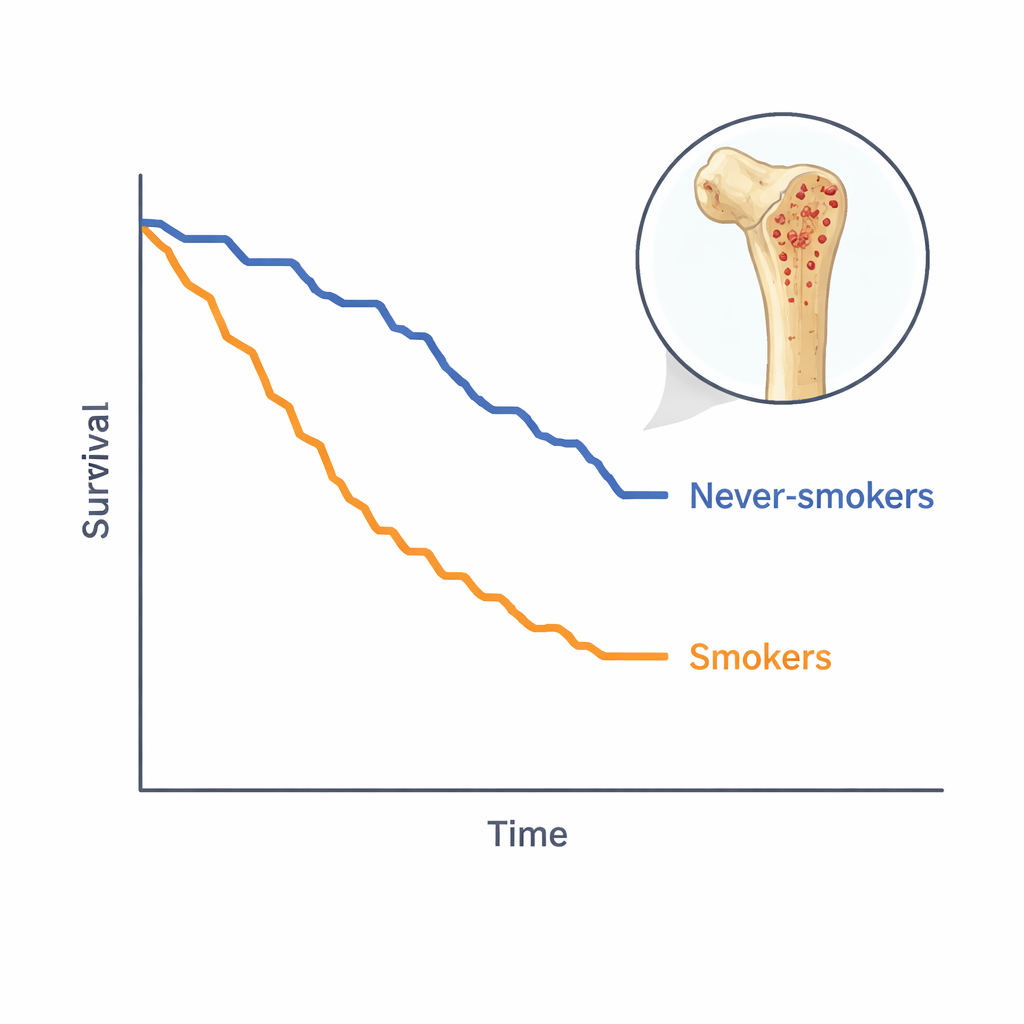
How smoking may weaken the skeleton against cancer
Why would smoking matter so much specifically in the bones? Prior research offers clues. Cigarette smoke disrupts the balance between the cells that build bone and those that break it down, tilting the body toward bone loss. It drives chronic inflammation and raises levels of chemical messengers that promote bone destruction and help cancer cells invade and grow in the skeleton. These changes can create a more “welcoming” environment for tumor cells in bone and may make skeletal complications more likely. In this study, smokers with bone metastases were also more likely to have poorer general health and lung spread, which may further contribute to their worse outcomes.
What this means for people living with advanced kidney cancer
For patients and clinicians, the message is straightforward but important: in metastatic kidney cancer, smoking is not just a past cause of disease—it continues to shape what happens next, especially when the cancer reaches the bones. While this study was retrospective and cannot prove cause and effect, it strongly suggests that quitting smoking and protecting bone health should be priorities even after a metastatic diagnosis. Future research will need to test whether these findings hold in patients receiving today’s immunotherapy-heavy combinations and to uncover the precise biological links between smoking, bone health, and cancer spread. For now, the results add one more reason to support smoking cessation at every stage of kidney cancer care.
Citation: Bolek, H., Sertesen Camoz, E., Kuzu, O.F. et al. Prognostic role of smoking in metastatic renal cell carcinoma in real-world data from the Turkish Oncology Group Kidney Cancer Consortium (TKCC). Sci Rep 16, 5634 (2026). https://doi.org/10.1038/s41598-026-35435-3
Keywords: kidney cancer, smoking and cancer, bone metastases, metastatic renal cell carcinoma, cancer survival