Clear Sky Science · en
Analysis of nicotine, tar, carbon monoxide, total particulate matter, water, benzo[a]pyrene, and humectants in cigarettes and bidis from India and Myanmar
Why tiny smoke particles matter to everyday life
Tobacco smoke is more than a bad habit—it is a moving cloud of chemicals that quietly damages hearts, lungs, and blood vessels. In South and Southeast Asia, where cigarettes and traditional hand-rolled bidis are widely used, smoking cuts lives short and strains already stretched health systems. This study peeks inside that smoke, measuring how much addictive nicotine, poisonous gases, and cancer‑linked substances are released when popular brands from India and Myanmar are burned. Understanding these invisible ingredients helps governments set safer rules and gives people clearer reasons to quit or never start.
What the researchers set out to test
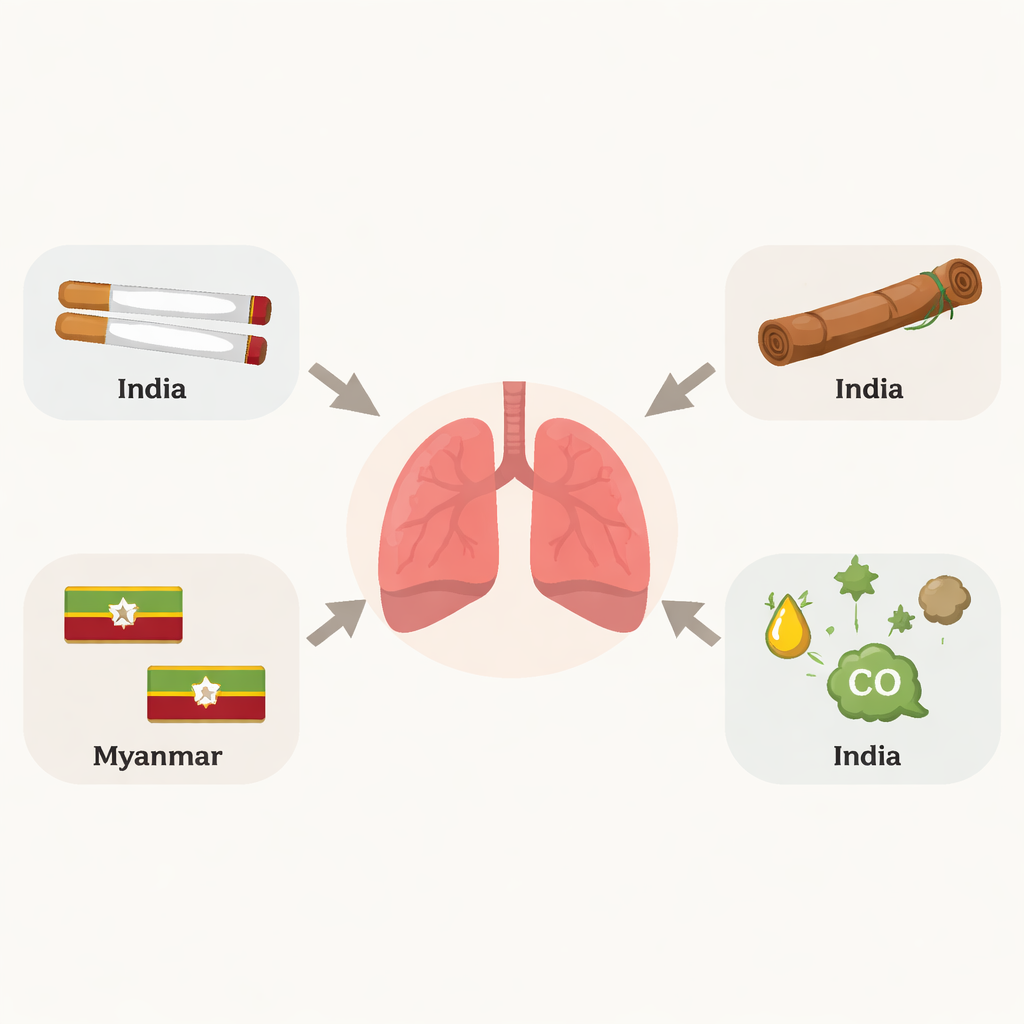
The team focused on two common types of smoked products: factory‑made cigarettes sold in India and Myanmar, and Indian bidis, which are small hand‑rolled sticks of tobacco wrapped in leaf. They wanted to know how much nicotine (the drug that hooks people), carbon monoxide (a gas that robs blood of oxygen), tar and total particulate matter (the sticky particles that clog lungs), water, and a cancer‑linked chemical called benzo[a]pyrene were present in the smoke. They also checked the tobacco itself for moisture‑holding additives called humectants and for flavoring agents that can make smoke feel smoother and more attractive.
How they recreated smoking in the lab
Rather than asking people to smoke, the researchers used a specialized smoking machine that draws regular puffs on cigarettes and bidis in a controlled way. This device can standardize how big each puff is, how long it lasts, and how often it is taken, making fair comparisons possible. Cigarettes and bidis were bought from real shops in India and supplied brands from Myanmar, then stored and prepared under strict international guidelines. The smoke was passed through filters and collection bags, and modern instruments measured the different chemicals, following World Health Organization (WHO) and other global testing methods.
Cigarettes versus cigarettes: India and Myanmar
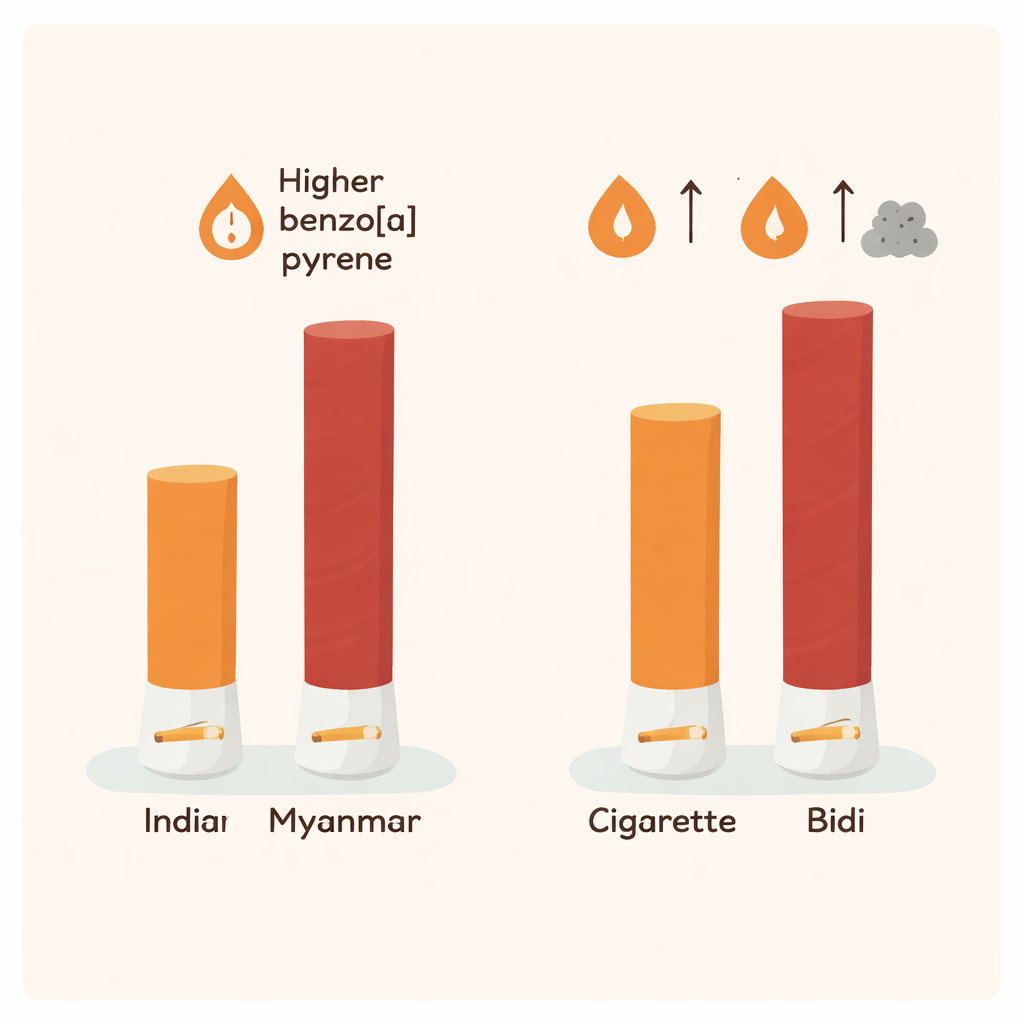
When Indian and Myanmar cigarettes were compared, the overall picture was similar for nicotine, tar, carbon monoxide, water, and total particles; small differences were not statistically meaningful. One important exception stood out: Myanmar cigarettes released clearly higher levels of benzo[a]pyrene, a marker for cancer‑causing compounds formed when tobacco burns. The study also found that one of the moisture‑holding additives, propylene glycol, varied significantly between the two countries’ products, while other humectants did not. No flavor chemicals that were tested for—such as menthol or sweet, spice‑like additives—showed up in the smoke of any of the sampled cigarettes.
Why bidis can be even more harmful
Bidis often look smaller and more rustic than cigarettes, which can give a false impression that they are milder. In this study, the opposite was true. Under the same machine‑smoking conditions, Indian bidis delivered substantially more nicotine and carbon monoxide than Indian cigarettes, as well as far higher amounts of tar and total particulate matter. Levels of benzo[a]pyrene in bidis were comparable to or higher than in Indian cigarettes, again pointing to strong cancer‑related risks. Some additives also differed: glycerol, a common humectant, and benzo[a]pyrene both showed significant contrasts between bidis and cigarettes. None of the tested flavorings were found in bidi smoke either, meaning the extra harm was not due to flavor additives but to the basic design and burning of the product itself.
What this means for health and policy
The findings reinforce that all smoked tobacco products—whether sleek factory‑made cigarettes or simple hand‑rolled bidis—send dangerous mixtures deep into the lungs. Myanmar cigarettes showed higher levels of a key cancer‑linked chemical, while Indian bidis produced heavier doses of nicotine, tar, and carbon monoxide than regular cigarettes. Even though this was a relatively small study, it used strict, internationally accepted testing methods, making the numbers credible enough to guide action. For the general public, the message is straightforward: there is no safe type of smoked tobacco, and some traditional products may be even worse than they look. For governments, such measurements can support stronger rules on how much of these toxic substances are allowed and help push manufacturers toward less harmful designs—while underscoring the ultimate goal of reducing and eliminating tobacco use altogether.
Citation: Sharma, P., Kaur, J., Rinkoo, A.V. et al. Analysis of nicotine, tar, carbon monoxide, total particulate matter, water, benzo[a]pyrene, and humectants in cigarettes and bidis from India and Myanmar. Sci Rep 16, 6775 (2026). https://doi.org/10.1038/s41598-026-35417-5
Keywords: tobacco smoke, cigarettes, bidis, nicotine, benzoapyrene