Clear Sky Science · en
Young honey bees Apis mellifera learn to avoid pollen contaminated with glyphosate or imidacloprid
Why bees and farm chemicals matter to all of us
Modern agriculture leans heavily on honey bees to pollinate crops that feed people around the world. At the same time, farms rely on powerful chemicals to kill weeds and insects. This study asks a simple but crucial question: can young honey bees learn to stay away from pollen that carries traces of these chemicals? The answer helps us judge how much bees can protect themselves in human-shaped landscapes—and how we might farm in ways that give them a fighting chance.
Bee youngsters at the food bar
Inside a beehive, not all workers are foragers. Very young adults, often called “nurse bees,” stay indoors and eat large amounts of pollen so they can feed the developing larvae. That makes them especially exposed to any pesticides that hitchhike into the hive on pollen. The researchers focused on two common farm chemicals: glyphosate, a weed killer, and imidacloprid, a neonicotinoid insecticide. Both are frequently found, in low amounts, in bee foods like honey, pollen, and beebread. The team wanted to know whether nurse-aged bees could change their pollen choices to reduce their exposure once they had experienced these chemicals in their food.
Teaching bees with tainted pollen
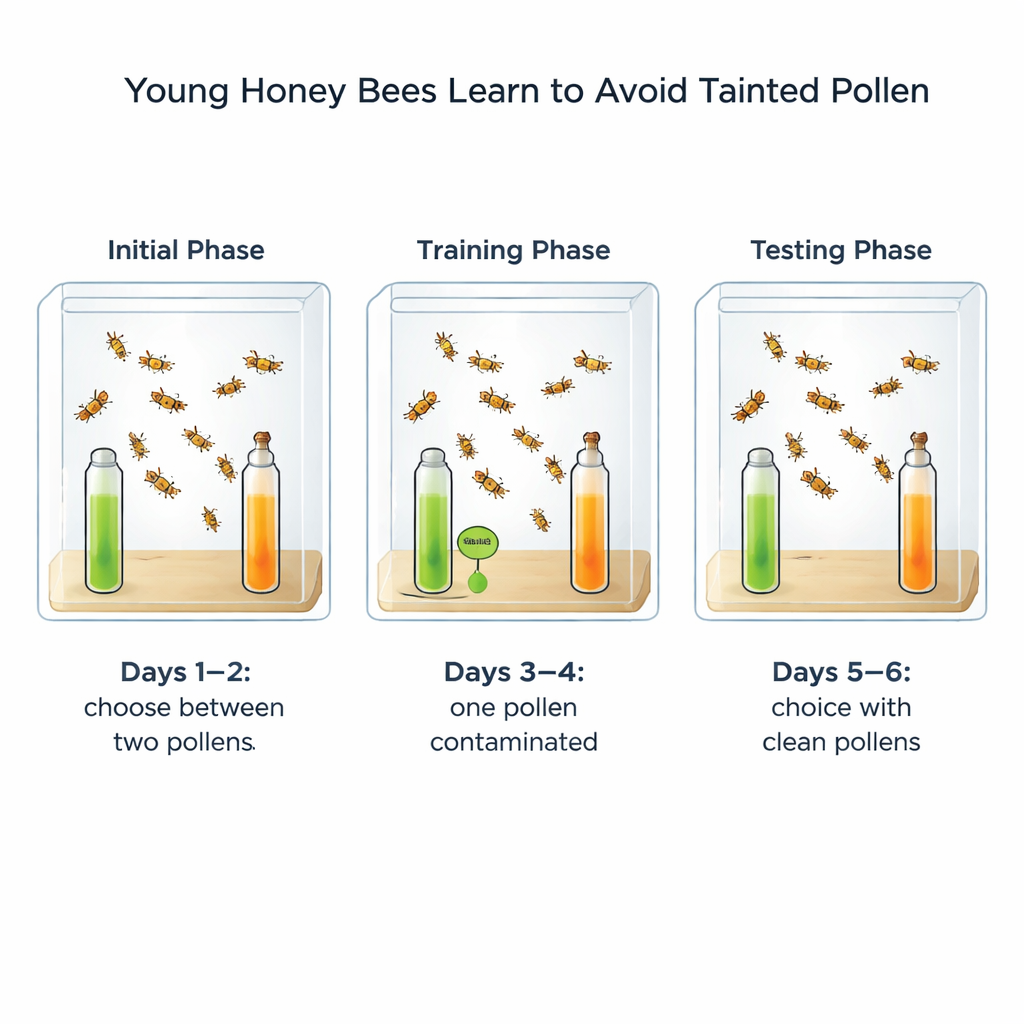
To test this, newly emerged workers were kept in small cages in the lab, each cage holding bees of the same age. Every cage received two different single-flower pollens, offered side by side in small feeders, mimicking the paste-like beebread bees eat in the hive. For the first two days, both pollen types were clean, allowing the bees to reveal any natural preferences. Over the next two days, one of the two pollens was mixed with either glyphosate or imidacloprid at concentrations similar to those measured in real hive products. On the final two days, both pollens were clean again. By precisely tracking how much of each pollen the bees consumed at every stage, the scientists could see whether experience with contaminated food changed the bees’ later choices.
Learning from feeling unwell
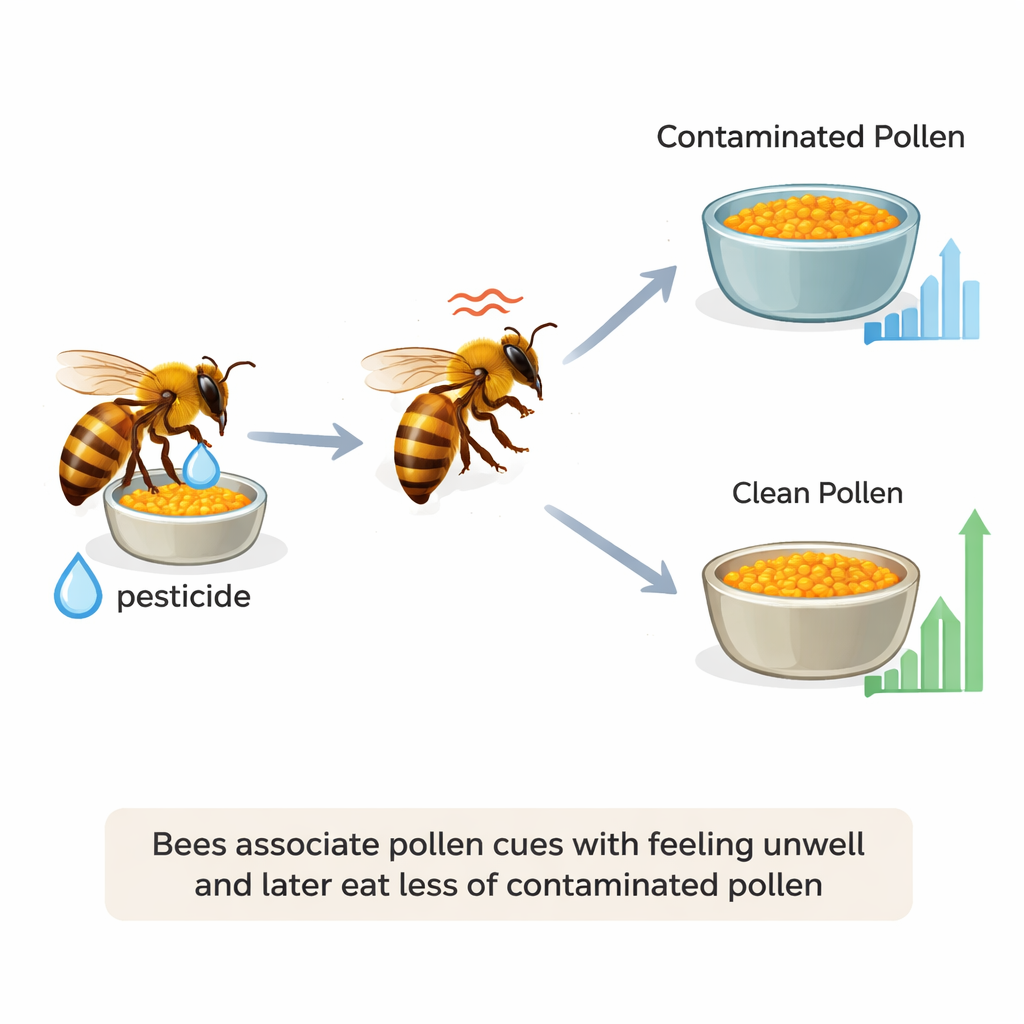
The bees did not immediately shun the contaminated pollen as soon as the chemicals were added. Instead, their avoidance built up over time. During and after exposure, bees reduced their relative intake of the previously tainted pollen by about 11–23% for glyphosate and 13–20% for imidacloprid, depending on dose. Notably, this lower preference persisted even after both options were once again chemical-free. That pattern suggests the bees were not “tasting” the pesticides directly; rather, they likely linked the pollen’s smell or flavor with a delayed feeling of malaise—an internal sense of having been harmed—and formed a lasting memory that guided later feeding.
Health trade-offs and survival
Avoiding tainted food helped bees reduce their exposure but also came with potential costs. In some combinations of pollen types and glyphosate doses, total pollen intake dropped, although this did not always reduce survival during the short experiment. With imidacloprid, survival did fall in certain groups, probably because bees still consumed substantial amounts of a highly valued pollen that happened to carry the pesticide. These results hint at a delicate balance: steering away from contaminated pollen may protect bees from chemicals but could also alter their nutrition, depending on the quality of the alternative pollen available.
What this means for bees and farms
For non-specialists, the key message is that young honey bees are not passive victims of farm chemicals. They can learn to associate specific pollen types with bad internal effects and later eat less of those pollens, even after the chemicals are gone. This built-in flexibility may help colonies cope when only some flowers in the landscape are contaminated. But if nearly all available pollen carries pesticides, this avoidance has limited value and may even harm nutrition. The study underscores that giving bees real choices—by reducing chemical use where possible and maintaining patches of untreated flowering plants—could make full use of bees’ own ability to sidestep the most dangerous food.
Citation: Hunkeler, C., Lajad, R., Farina, W.M. et al. Young honey bees Apis mellifera learn to avoid pollen contaminated with glyphosate or imidacloprid. Sci Rep 16, 5601 (2026). https://doi.org/10.1038/s41598-026-35416-6
Keywords: honey bees, pesticides, glyphosate, imidacloprid, pollen preference