Clear Sky Science · en
The biostimulatory effect of microalgae extracts upgrades salt tolerance and antioxidant capacity in flowers and shoots of Cuminum cyminum L.
Why a kitchen spice matters in harsh soils
Cumin is best known as the warm, earthy seed in curries and breads, but the rest of the plant—its delicate flowers and green shoots—also carries valuable natural antioxidants. As farmland worldwide becomes saltier due to drought, irrigation and climate change, many crops struggle to survive and maintain their nutritional quality. This study asks a simple but powerful question: can extracts from microscopic algae help cumin plants stay healthy in salty conditions while boosting the antioxidant compounds that may benefit human health?
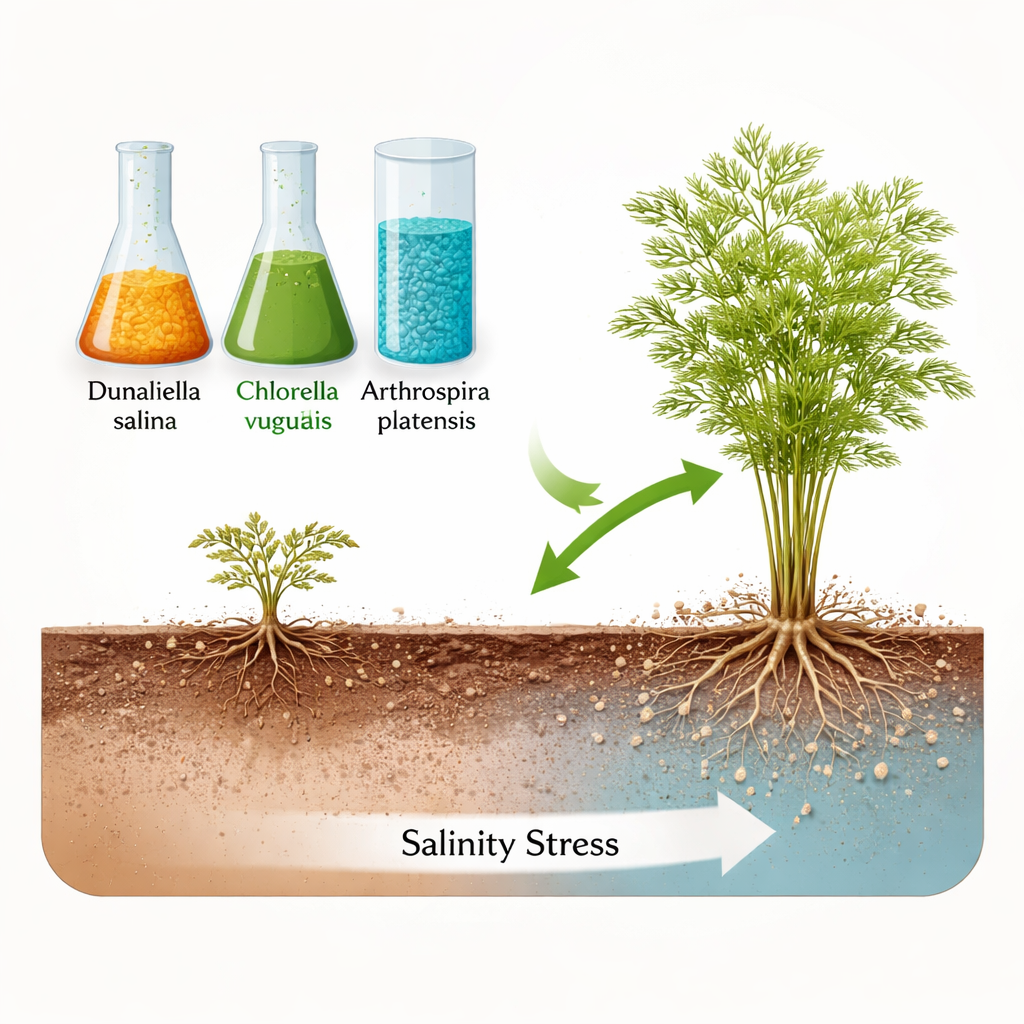
Tiny algae as natural plant helpers
The researchers focused on three species of microalgae: Dunaliella salina, Chlorella vulgaris and Arthrospira platensis (often marketed as spirulina). These single-celled organisms are packed with proteins, vitamins, plant hormones and pigments, and are already explored as eco-friendly growth enhancers in food crops. The team wanted to know whether water-based extracts from these algae could act as gentle, natural "boosters" for cumin, especially when the plants are forced to grow in salty conditions that usually stunt growth and damage cells.
Testing cumin under salt stress
The scientists grew two locally adapted types of cumin, called the Mashhad and Sabzevar ecotypes, in a greenhouse. Some plants were kept in normal conditions, while others were exposed to a salt level similar to that found in stressed agricultural soils. Within each group, plants either received plain water or water containing one of the three microalgae extracts. The team then measured plant size and dry weight, leaf color (as a sign of photosynthetic health), how leaky the cell membranes had become (a marker of damage), the activity of natural protective enzymes, and the amount and strength of antioxidant compounds in the dried flowers and shoots.
Stronger growth, greener leaves, tougher cells
Salt alone sharply reduced cumin growth, especially in the Mashhad ecotype, and caused leaves to lose chlorophyll while cell membranes became leaky. When microalgae extracts were added, both cumin types generally grew larger, with greener leaves and higher "tolerance index," a simple measure of how well a plant endures stress compared with an unstressed control. The algae treatments also reduced cell leakage by boosting the plant’s own defense enzymes, which neutralize harmful oxygen-containing molecules produced under salt stress. Among the three, Dunaliella salina stood out: it gave the biggest improvements in growth, leaf pigments and membrane stability, particularly in the more sensitive Mashhad cumin.
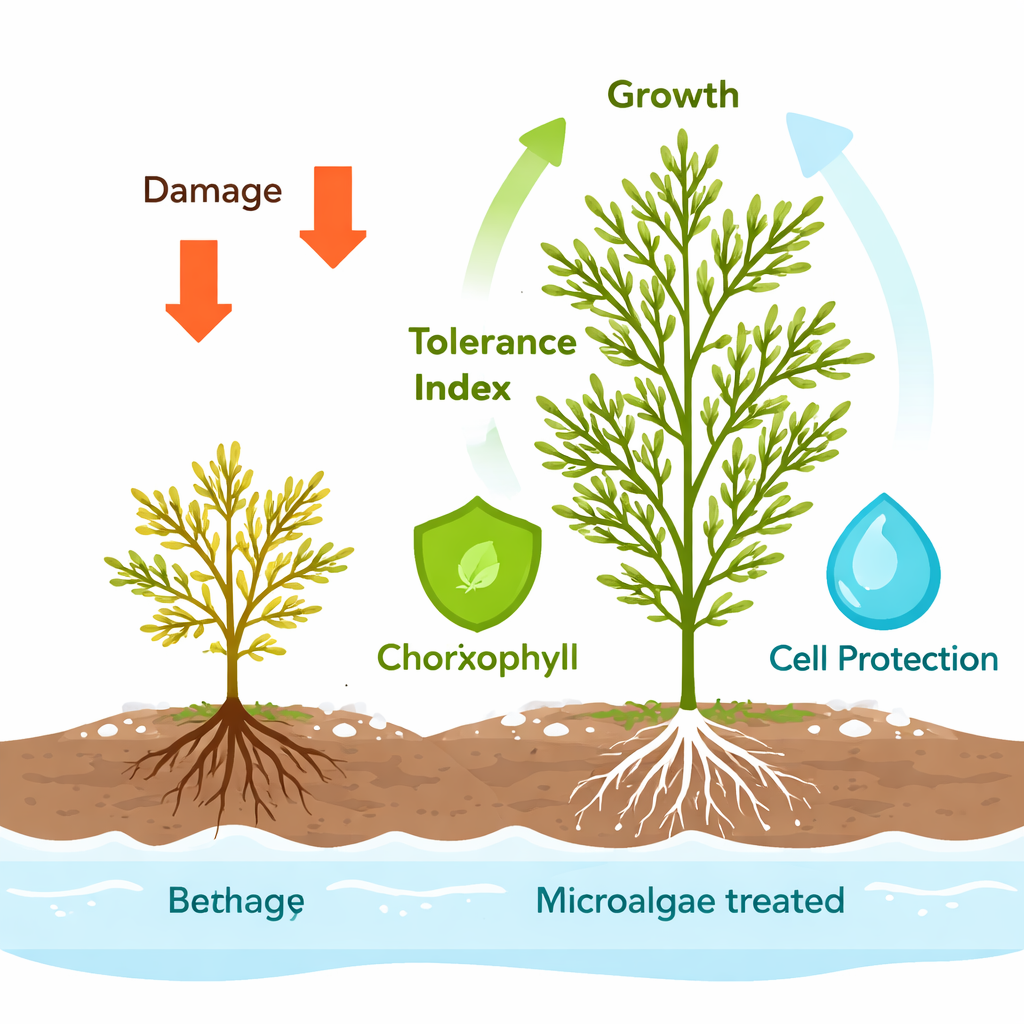
More natural antioxidants in flowers and shoots
Beyond keeping the plants alive, the microalgae extracts also changed the chemistry of cumin’s flowers and shoots in ways that matter for food and health. Salt on its own tended to push the plants to make more phenolic compounds—plant chemicals known for their antioxidant and anti-inflammatory potential—but the algae extracts amplified this effect. Flowers and shoots from treated plants contained more total phenolics and showed stronger antioxidant capacity in three different laboratory tests that gauge how well extracts can quench free radicals, prevent pigment breakdown and donate electrons. In these assays, lower "IC50" or "EC50" values mean higher antioxidant power, and the algae consistently drove these values down. Again, Dunaliella salina was the most effective, followed by Arthrospira, with Chlorella giving smaller but often still beneficial changes.
What this means for farms and food
By combining all the measurements with statistical tools, the researchers showed that cumin plants treated with Dunaliella extracts under salt stress grouped together with the highest growth, strongest antioxidant enzyme activity, and richest phenolic content. In other words, the same treatment that helped the plants cope with salty soil also made their flowers and shoots more potent natural antioxidants. This suggests a dual benefit: farmers in dry, saline regions could sustain cumin yields using a biodegradable, microalgae-based spray or drench, while the harvested plant parts may offer enhanced value for herbal products, functional foods, or natural preservatives.
A simple takeaway for non-specialists
This work shows that microscopic algae can act like an organic multivitamin for cumin plants growing in harsh, salty environments. By strengthening the plants’ own defenses, especially when using Dunaliella salina, the extracts help cumin stay greener, grow better and pack more antioxidant compounds into its flowers and shoots. For consumers, that could eventually mean spices and leafy ingredients with greater potential health benefits; for farmers, it points to a natural tool to keep crops productive on increasingly stressed soils.
Citation: Amooaghaie, R., Jamal, A. & Banisharif, A. The biostimulatory effect of microalgae extracts upgrades salt tolerance and antioxidant capacity in flowers and shoots of Cuminum cyminum L.. Sci Rep 16, 6990 (2026). https://doi.org/10.1038/s41598-026-35407-7
Keywords: microalgae biostimulant, salt stress, cumin, antioxidant capacity, plant phenolics