Clear Sky Science · en
Targeting the NLRP3 inflammasome alleviates the comorbidity of chronic pain and depression via enhancing the autophagy
Why Pain and Mood Often Go Hand in Hand
Many people living with long-lasting nerve pain also struggle with depression. This double burden can trap patients in a vicious cycle: pain worsens mood, low mood amplifies pain, and both are hard to treat at the same time. The study behind this article asks a hopeful question: if scientists target one key inflammatory switch in the brain, could they ease both chronic pain and depression together rather than treating them separately?
A Brain Region at the Crossroads of Pain and Emotion
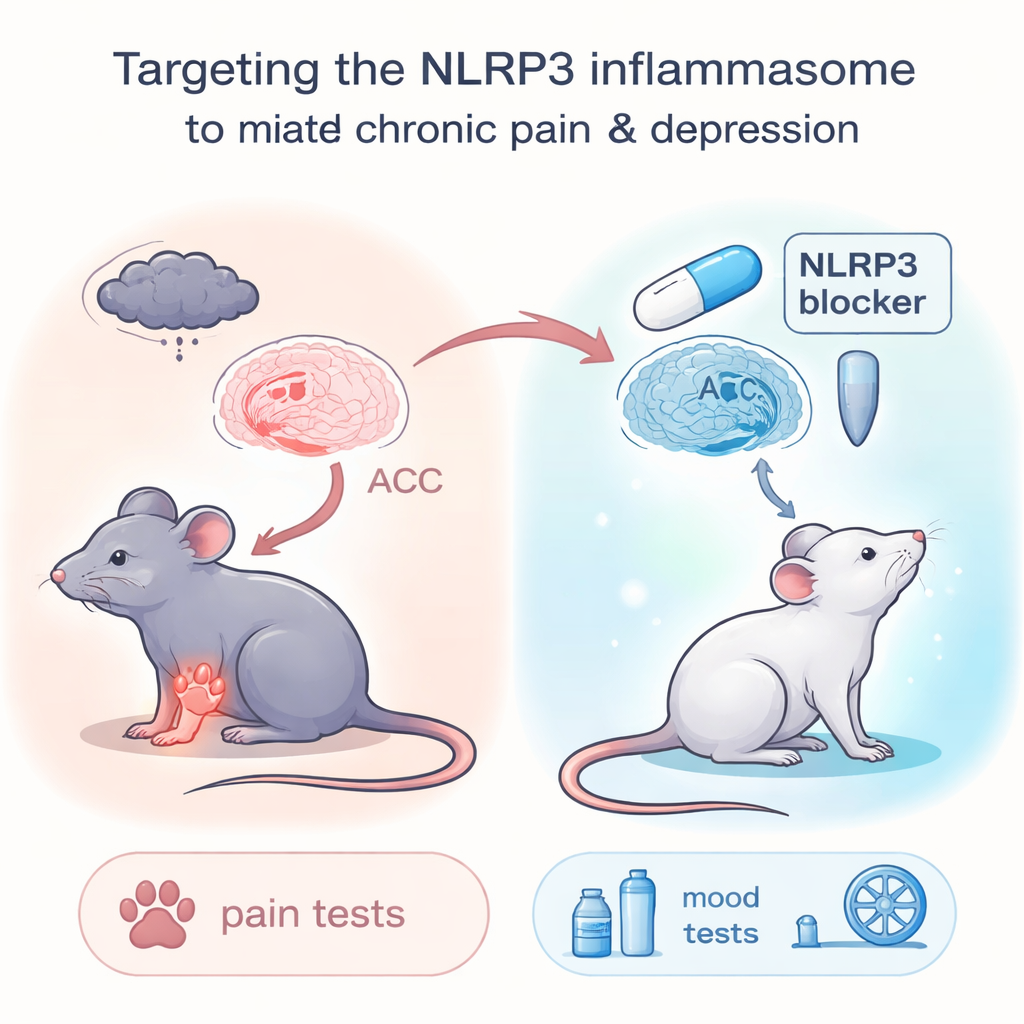
The researchers focused on the anterior cingulate cortex (ACC), a region deep in the brain that helps shape how we feel pain, make decisions, and process emotions. Brain scans in people with chronic pain or depression often show changes in this area. In mice, injury signals travel from the body up the spinal cord and through other brain hubs before reaching the ACC, where they influence how unpleasant pain feels and how much it dominates a person’s mental life. Because the ACC also participates in mood control, it is a natural candidate for explaining why chronic pain and depression so often occur together.
Turning Down an Inflammatory Alarm
At the center of this work is a protein machine called the NLRP3 inflammasome, which acts like an internal fire alarm for danger and damage. When switched on, it triggers the release of inflammatory substances that can disturb brain cells and change behavior. The team used a well-established mouse model called “spared nerve injury” to mimic neuropathic pain, the kind that arises from damaged nerves. Six weeks after surgery, these mice showed clear signs of suffering: they withdrew their paws quickly from touch and heat, moved less, gave up sooner in stress tests, and showed less interest in sweetened water, all signs of pain and depression-like behavior.
A Drug and a Gene Test a New Treatment Idea
To see whether NLRP3 is driving these problems, the scientists tried two strategies. In one, they gave mice a compound called MCC950 directly into the fluid-filled spaces of the brain, where it could reach many regions including the ACC. MCC950 is known to specifically block NLRP3. In the second approach, they used mice genetically engineered to lack the Nlrp3 gene. In both cases, blocking NLRP3 made a striking difference: treated or gene-edited mice became less sensitive to painful touch and heat, moved more confidently, spent more time in open spaces that anxious animals usually avoid, and performed better in a simple memory test. Importantly, the drug did not appear to damage the animals’ livers or kidneys at the doses used.
Cleaning Up the Cell’s Interior Waste
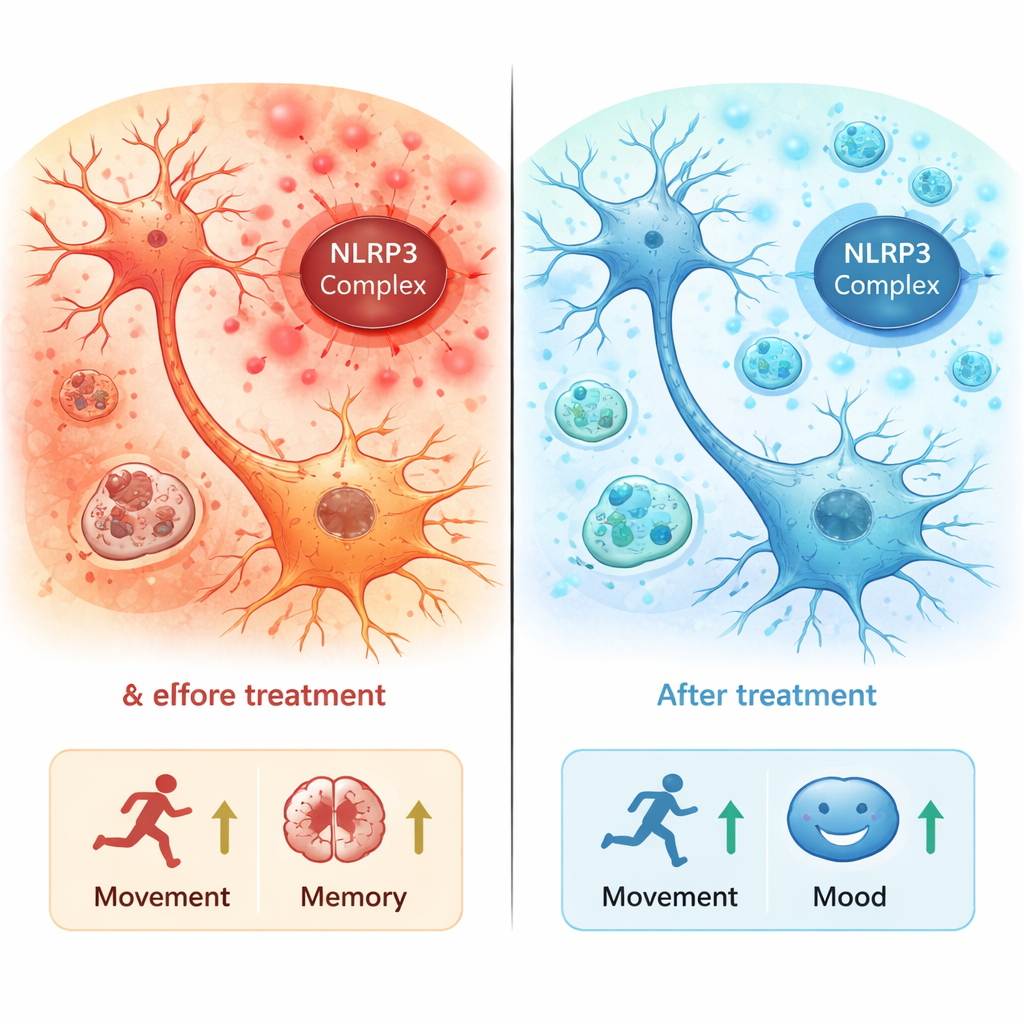
The study also explored a cellular housekeeping process called autophagy, in which cells recycle worn-out components and clear away potentially harmful material. In the pain-depression mice, brain cells in the ACC showed signs of stress and inflammation, along with reduced markers of this internal cleanup system. When NLRP3 was blocked with MCC950 or removed by gene editing, signs of inflammation dropped, nerve cells appeared healthier, and markers of autophagy increased. Similar effects were seen in supporting brain cells grown in a dish, where the drug and gene deletion both boosted the recycling machinery and reduced inflammatory signals after stimulation.
What This Could Mean for People in Pain
Taken together, the findings suggest that when nerve injury flips on the NLRP3 inflammasome in the ACC, inflammation rises, cellular cleanup falters, and this combination helps drive both chronic pain and depression-like behavior. Blocking NLRP3, at least in mice, restores autophagy, calms inflammation, and eases both kinds of symptoms. While MCC950 itself still needs careful safety testing and this work is preclinical, the study highlights NLRP3 and the cell’s recycling system as promising targets for future treatments that could tackle pain and depression together instead of one at a time.
Citation: Zhang, P., Liu, H., Zhou, J. et al. Targeting the NLRP3 inflammasome alleviates the comorbidity of chronic pain and depression via enhancing the autophagy. Sci Rep 16, 4932 (2026). https://doi.org/10.1038/s41598-026-35400-0
Keywords: chronic pain, depression, brain inflammation, autophagy, NLRP3