Clear Sky Science · en
Combined effects of physical activity and diabetes medications on glycemic control: a real-world data study
Why Moving Your Body Matters With Diabetes Pills
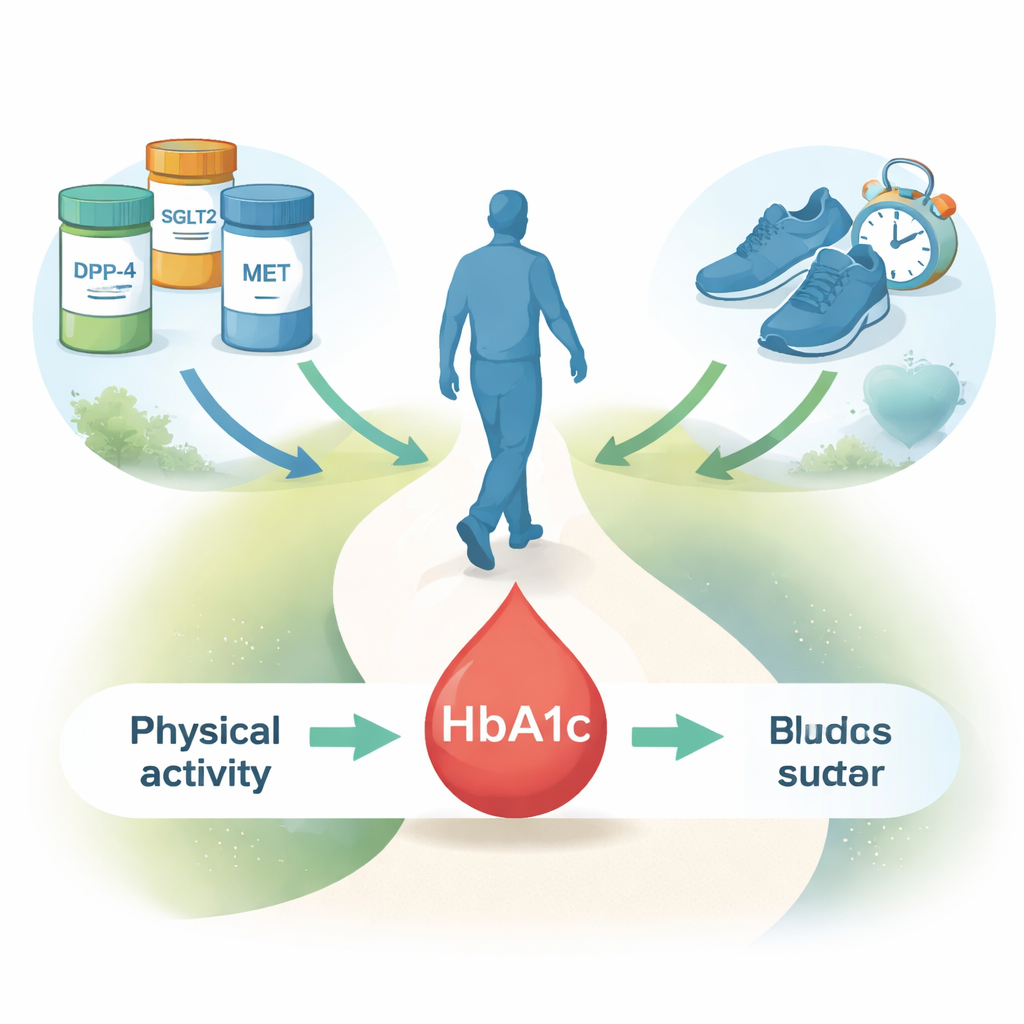
For many people with type 2 diabetes, managing blood sugar means taking daily medication. But medicine is only part of the story. This study used health records from tens of thousands of Japanese adults to ask a simple, real-world question: if you start exercising after being diagnosed, does it actually boost the benefits of common diabetes drugs and help you reach healthy blood sugar levels?
A Nationwide Glimpse Into Everyday Life
The researchers analyzed data from a large Japanese health insurance and health checkup database that followed over 24,000 adults with type 2 diabetes. Everyone in the study began in a similar situation: they were not yet on diabetes medication and were classified as sedentary based on simple lifestyle questions. Over the next year or so, some people stayed inactive, while others became more physically active. During this time, some started one of three common diabetes treatments—DPP-4 inhibitors, SGLT2 inhibitors, or metformin—while others remained untreated by drugs but were still tracked through health checks.
How Activity and Medicines Were Measured
Physical activity was assessed using two straightforward questions asked at routine checkups: whether people walked or did similar activity for at least an hour a day, and whether they regularly exercised hard enough to cause light sweating. At follow-up, anyone answering “yes” to either question was considered physically active; others were classified as sedentary. The main yardstick for success was hemoglobin A1c (HbA1c), a measure of average blood sugar over several months. The study focused on how many people reached an HbA1c level below 6.5%, a common target for good diabetes control, and how much their blood sugar, body weight, and waist size changed over time.
When Exercise Adds Extra Power
The clearest pattern emerged for those taking DPP-4 inhibitors or SGLT2 inhibitors. Within each of these groups, people who became physically active were more likely to reach the target HbA1c than those who stayed sedentary. They also saw larger drops in their HbA1c levels, body weight, and waist size. Even people who did not take any diabetes drugs but increased their activity showed better blood sugar control and more weight loss than inactive peers. In other words, in most situations, adding movement on top of usual care—whether or not medicine was used—was linked to better diabetes control.
A Puzzling Case With Metformin
Metformin, one of the most widely prescribed diabetes drugs, told a more complicated story. In this group, people who became active did not show a clearly better chance of hitting the blood sugar target than those who stayed sedentary, even though both groups improved. Waistlines still tended to shrink more with activity, but the added effect on blood sugar and body weight was modest. This result fits with some earlier research suggesting that metformin and exercise can sometimes interact in ways that blunt each other’s advantages, although other studies have found benefits when they are combined. The authors suggest that when in the course of diabetes metformin is started, and how intense the exercise is, may influence how well the two work together.
What This Means for Everyday Care
Because this was an observational study using real-world data, it cannot prove cause and effect, and it lacked details such as exercise intensity and exact diet. Still, the patterns were consistent: for many people with type 2 diabetes, especially those on DPP-4 or SGLT2 drugs, becoming physically active was linked with better blood sugar control, greater weight loss, and smaller waists. For patients and clinicians, the message is straightforward. Diabetes pills are important, but they work best when paired with regular movement. Even simple daily walking or moderate exercise can be a powerful partner to medication in keeping blood sugar in check and reducing the risks of long-term complications.
Citation: Yamamoto, K., Kai, R., Inano, A. et al. Combined effects of physical activity and diabetes medications on glycemic control: a real-world data study. Sci Rep 16, 5611 (2026). https://doi.org/10.1038/s41598-026-35396-7
Keywords: type 2 diabetes, physical activity, blood sugar control, diabetes medication, real-world data