Clear Sky Science · en
Rapid chemical characterization of finger millet using UHPLC-Q-Exactive orbitrap MS coupled with based via Feature-Based molecular networking and PRM
Why a humble grain matters
Finger millet may look like an ordinary cereal, but it is quietly earning a reputation as a “hero crop.” It thrives in poor, dry soils where other grains fail and has long been valued in traditional diets for supporting blood sugar control, gut health, and even iron levels. Yet until recently, scientists did not really know which specific natural chemicals inside this grain might be responsible for these benefits. This study set out to open that black box and map, in detail, the chemical world hidden inside finger millet—then test whether the grain’s extracts can actually tame inflammation in immune cells.
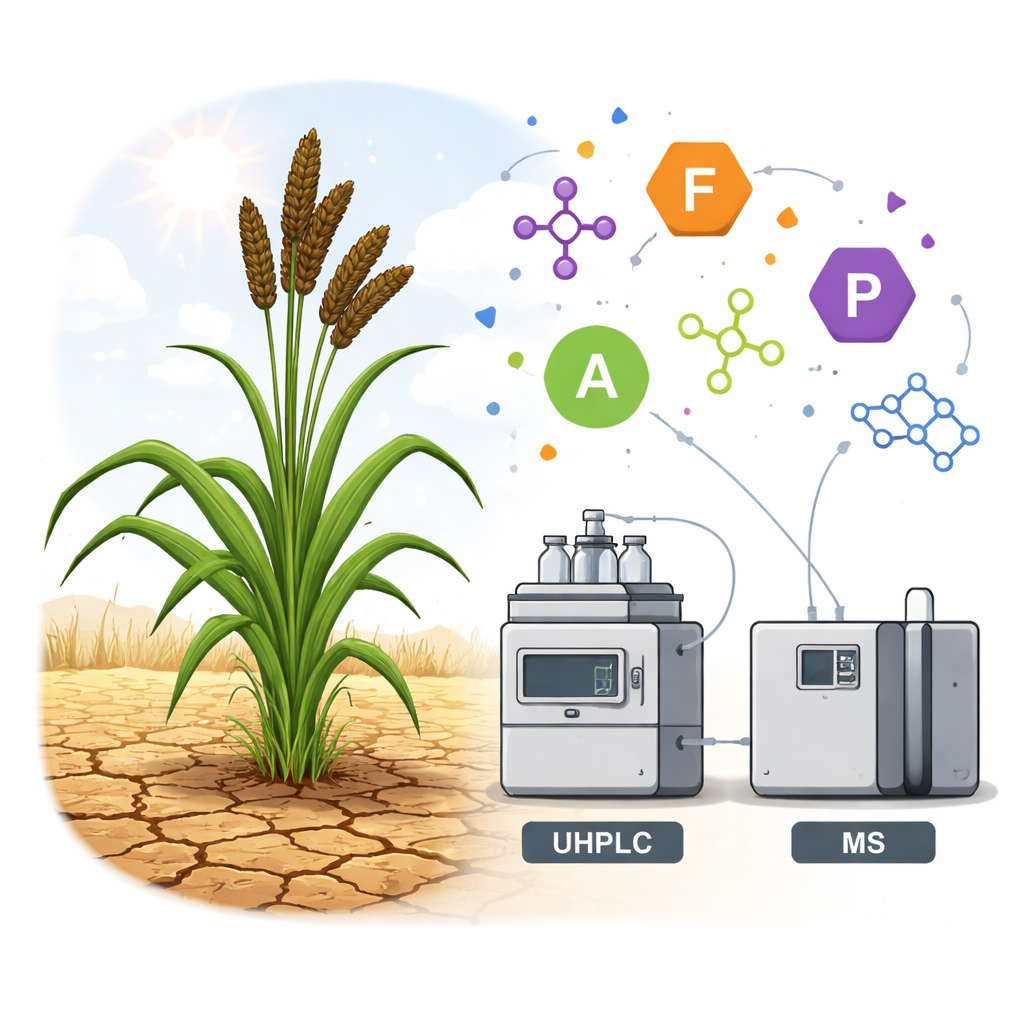
Peeking inside a drought‑proof super grain
The researchers focused on the whole finger millet plant, not just the seeds. This is important because past studies had often looked only at select parts, like the seed coat, and mainly at one family of compounds. By grinding, extracting, and carefully preparing the plant material, the team could feed it into a highly sensitive analytical pipeline. Their goal was to answer a basic but powerful question: exactly which small molecules—potentially beneficial to human health—are present in this resilient crop, and how many of them have never been reported in finger millet before?
Turning chemistry into a map
To chart this inner landscape, the scientists used a combination of ultra‑high‑performance liquid chromatography and high‑resolution mass spectrometry. In simpler terms, they first separated the mixture into individual chemical peaks, then weighed and broke apart each component to get a fingerprint. Software tools grouped related molecules into “families” based on how they behaved and fragmented, creating networks that reveal patterns, such as sugars attached to plant pigments or slight structural twists that convert one form into another. This allowed them not only to recognize known compounds from reference standards and databases, but also to spot look‑alikes and isomers that are often missed by more basic methods.
A crowded catalogue of natural defenders
Using this strategy, the team catalogued 126 distinct compounds in finger millet. These included 64 flavonoids (plant pigments famous for antioxidant and anti‑inflammatory activity), 24 phenylpropanoids (often involved in plant defense and human health), 21 organic acids, and a variety of other molecules such as sugars, lipids, and nucleotides. Remarkably, 44 of these had never before been reported in this species. Among the identified names were well‑studied natural defenders like quercetin, procyanidins, caffeic and ferulic acids, as well as organic acids such as citric and gluconic acid. Together, they form a complex chemical “team” that may underlie many of the grain’s reported health effects.
Putting the grain to the test in immune cells
Cataloguing chemicals is one thing; showing they matter biologically is another. To bridge this gap, the researchers treated mouse immune cells with an ethanol extract of finger millet and then challenged the cells with a bacterial component that normally triggers strong inflammation. They measured two key inflammation‑related proteins, COX‑2 and iNOS, which help drive pain, swelling, and tissue damage when overproduced. As the dose of millet extract increased, the levels of both proteins dropped sharply—at the highest test dose, the suppression was almost as strong as that from a standard anti‑inflammatory drug. This points to a genuine anti‑inflammatory effect, most likely arising from the combined action of multiple flavonoids and phenylpropanoids working together.
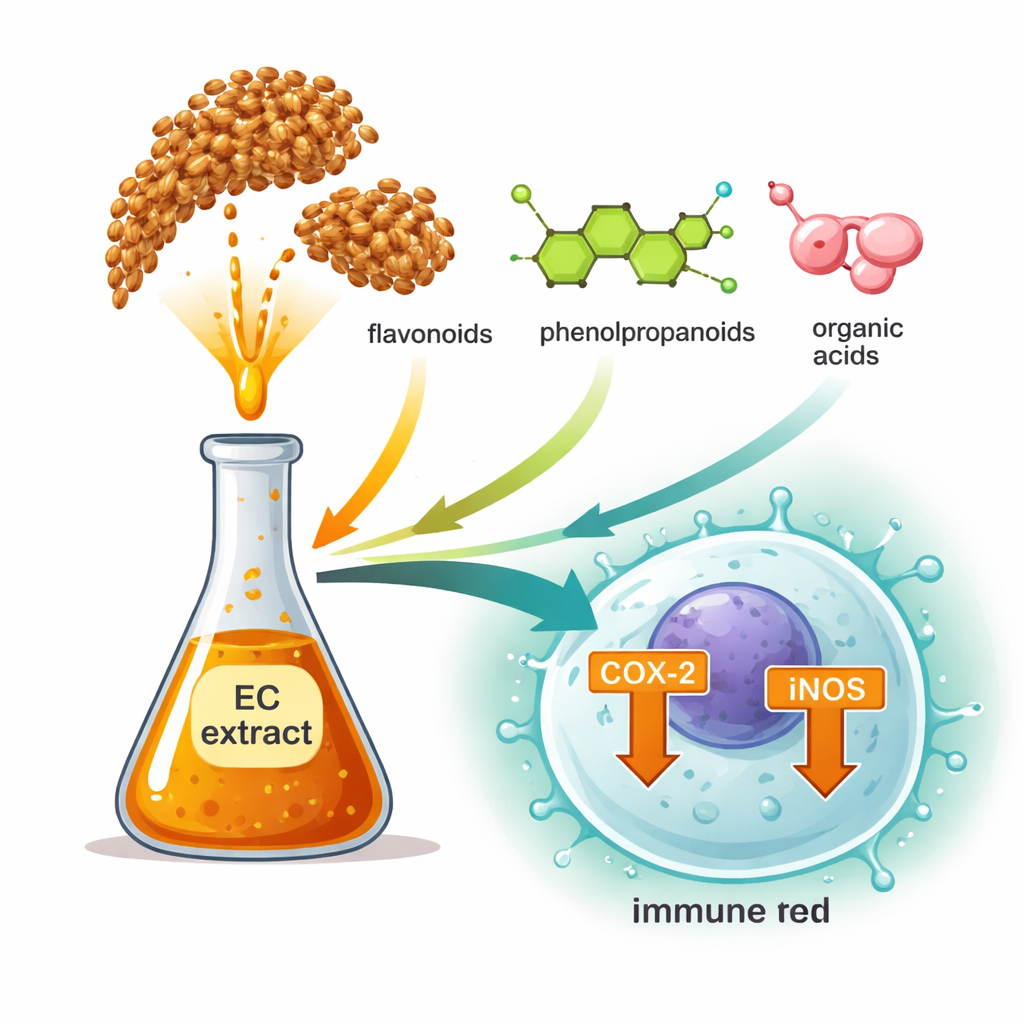
From traditional food to future health resource
For a non‑specialist, the takeaway is straightforward: finger millet is not just a hardy crop that feeds people under harsh conditions; it is also chemically rich in natural compounds that can calm overactive inflammation in the lab. By building a detailed “ingredient list” and linking it to measurable biological effects, this work lays the scientific groundwork for better quality control of millet‑based foods, for isolating specific helpful molecules, and for designing new functional products or medicines. In a warming world where both food security and chronic inflammation are rising concerns, understanding what lies inside this modest grain could help turn an ancient staple into a modern ally for health.
Citation: Zou, Y., Xiao, S., Wang, J. et al. Rapid chemical characterization of finger millet using UHPLC-Q-Exactive orbitrap MS coupled with based via Feature-Based molecular networking and PRM. Sci Rep 16, 6001 (2026). https://doi.org/10.1038/s41598-026-35395-8
Keywords: finger millet, flavonoids, anti-inflammatory, functional foods, mass spectrometry