Clear Sky Science · en
Effect of different dilution levels of toothpastes on the abrasive wear on enamel and dentin in in-vitro studies
Why the way you use toothpaste matters
Most of us squeeze some paste on a brush, add a bit of water, and never think about it again. But how much you dilute your toothpaste while brushing can influence how quickly your teeth wear down over the years. This study asked a simple but important question: does mixing toothpaste with more or less liquid change how much it scrapes away the hard outer layer of teeth (enamel) and the softer layer underneath (dentin)? The answer could affect how toothpastes are tested in the lab—and how safely they protect your smile in real life.
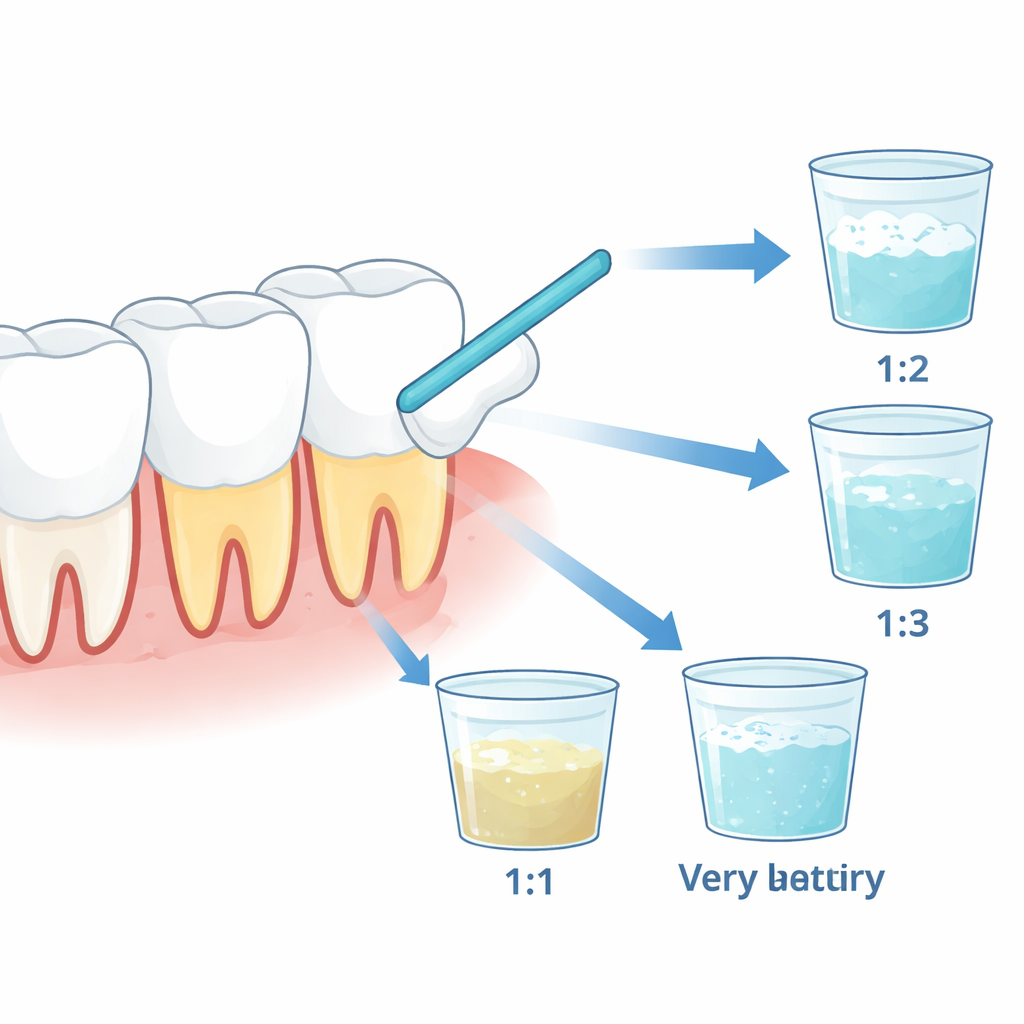
Hard outer shell, softer inner core
Our teeth are built like tiny armor-plated structures. Enamel forms the tough outer shell that faces toothpaste and toothbrush bristles every day. Just beneath it lies dentin, which is softer and contains microscopic channels leading toward the nerve. Toothpastes contain tiny polishing particles that help remove plaque and stains, but those same particles can also grind away tooth tissue over time, a process called abrasion. How abrasive a toothpaste is is often described using standard lab measures, but these tests usually assume a fixed amount of dilution with water or saliva—an assumption this research team decided to challenge.
Recreating years of brushing in the lab
To explore the impact of dilution, researchers in Zurich used 288 small samples of cow enamel and dentin, a common stand-in for human teeth because it behaves similarly under wear. They brushed these samples with several commercial toothpastes that ranged from gently to strongly abrasive. Each paste was mixed with artificial saliva at four different ratios, from a thick 1:1 mix (equal parts paste and saliva) to a much thinner 1:6 mix (one part paste, six parts saliva), reflecting new clinical measurements showing that real-life brushing often dilutes toothpaste more than most lab tests assume. The samples were brushed with a standardized force and speed for set periods, then a highly sensitive measuring device recorded exactly how much material had been worn away.
What happens to enamel when paste is thinned
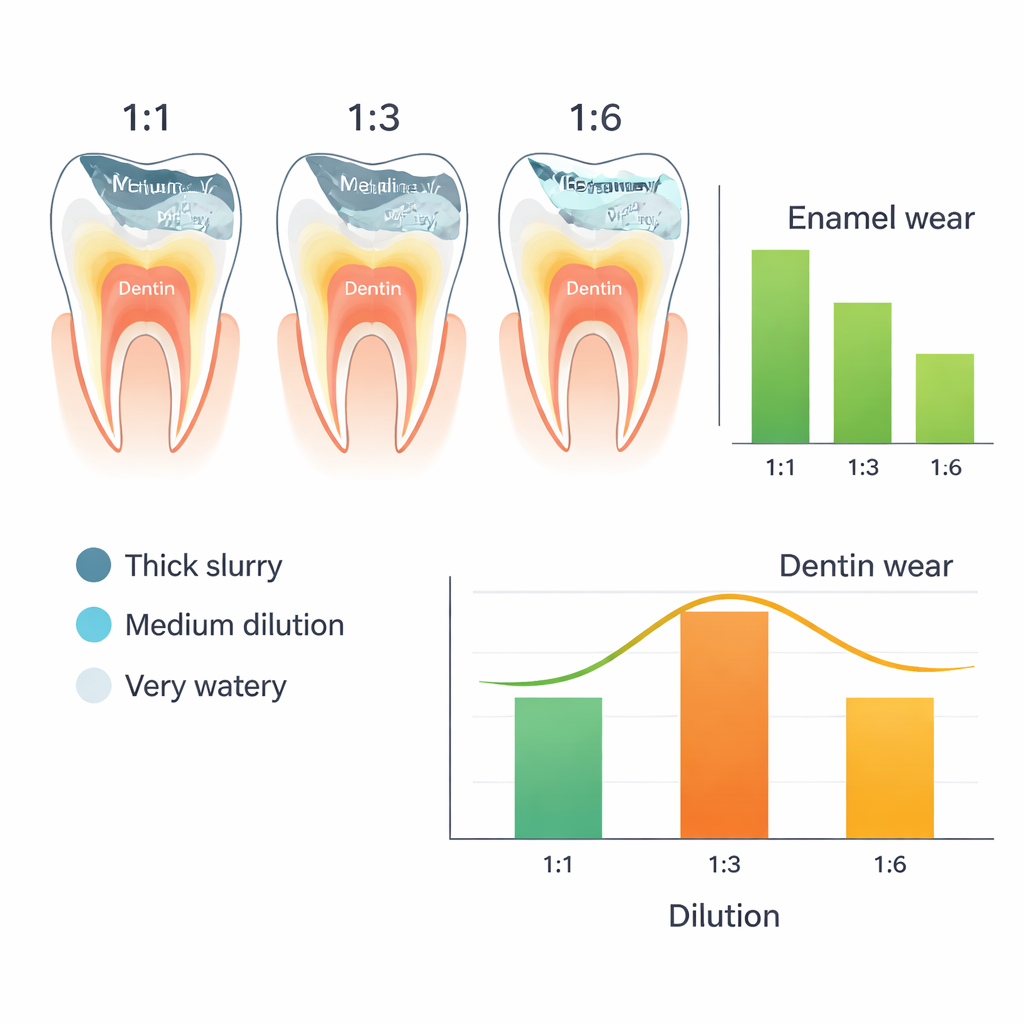
The results for enamel were clear and easy to grasp: the more the toothpaste was diluted, the less enamel was rubbed away. Across all three enamel toothpastes, wear was highest in the thick 1:1 mixtures and dropped steadily as the slurry became more watery. In other words, a paste-heavy mix is harsher on the tooth surface, while a more saliva-rich mix is gentler. This fits common sense—fewer abrasive particles per spoonful of fluid means less scraping. It also suggests that traditional lab tests using relatively thick slurries may overestimate how much damage everyday brushing does to the enamel of healthy teeth.
Why dentin tells a more complicated story
Dentin, however, did not behave so simply. All three dentin toothpastes showed that dilution level mattered, but the pattern differed by product. One toothpaste wore less dentin as it became more diluted, much like enamel. The other two actually produced the most wear at medium dilutions, then caused less damage again at the highest dilution. The researchers suggest that this may be linked to dentin’s complex structure and the size and behavior of abrasive particles. In a very thick slurry, particles may clump together and slide across the softer dentin; at a certain dilution, they may spread out and cut more effectively; and when the mix is too watery, there may simply be too few particles to cause much harm.
What this means for teeth and toothpastes
For everyday brushing on intact teeth, enamel is usually the surface most exposed, and this study indicates that higher dilution—similar to what occurs naturally with saliva—tends to be less abrasive. People with dry mouth, who produce less saliva and therefore brush with a relatively stronger paste, may face greater risk of enamel wear and might need especially gentle toothpastes. At the same time, many safety tests and product labels still focus on measurements taken under lab conditions that may not match what happens in the mouth, especially for dentin. The authors conclude that how much toothpaste is diluted should be taken more seriously when testing and comparing toothpastes, and that declared “abrasivity” values need to be interpreted with dilution in mind. For the layperson, the practical takeaway is simple: use a soft brush, don’t scrub too hard, let saliva do its job of thinning the paste, and be cautious with highly abrasive or whitening products—especially if your teeth or roots are already sensitive.
Citation: Fragapane, F., Tanner, M., Attin, T. et al. Effect of different dilution levels of toothpastes on the abrasive wear on enamel and dentin in in-vitro studies. Sci Rep 16, 5073 (2026). https://doi.org/10.1038/s41598-026-35388-7
Keywords: toothpaste abrasivity, tooth wear, enamel and dentin, toothbrushing, dilution with saliva