Clear Sky Science · en
The bacterial community composition of American Lobster (Homarus americanus) embryos and recently hatched larvae held under experimental laboratory conditions
Tiny Partners on Lobster Eggs
Lobsters are a culinary and cultural icon of the North Atlantic, but their survival quietly depends on unseen partners: microbes living on their eggs and hatchlings. As ocean waters warm and become more acidic, scientists worry that harmful germs could gain the upper hand, threatening lobster populations and the coastal communities that rely on them. This study peeks into that invisible world, asking a simple question with big implications: who is living on lobster embryos and newborn larvae, and how stable are these microscopic communities in the face of climate change?
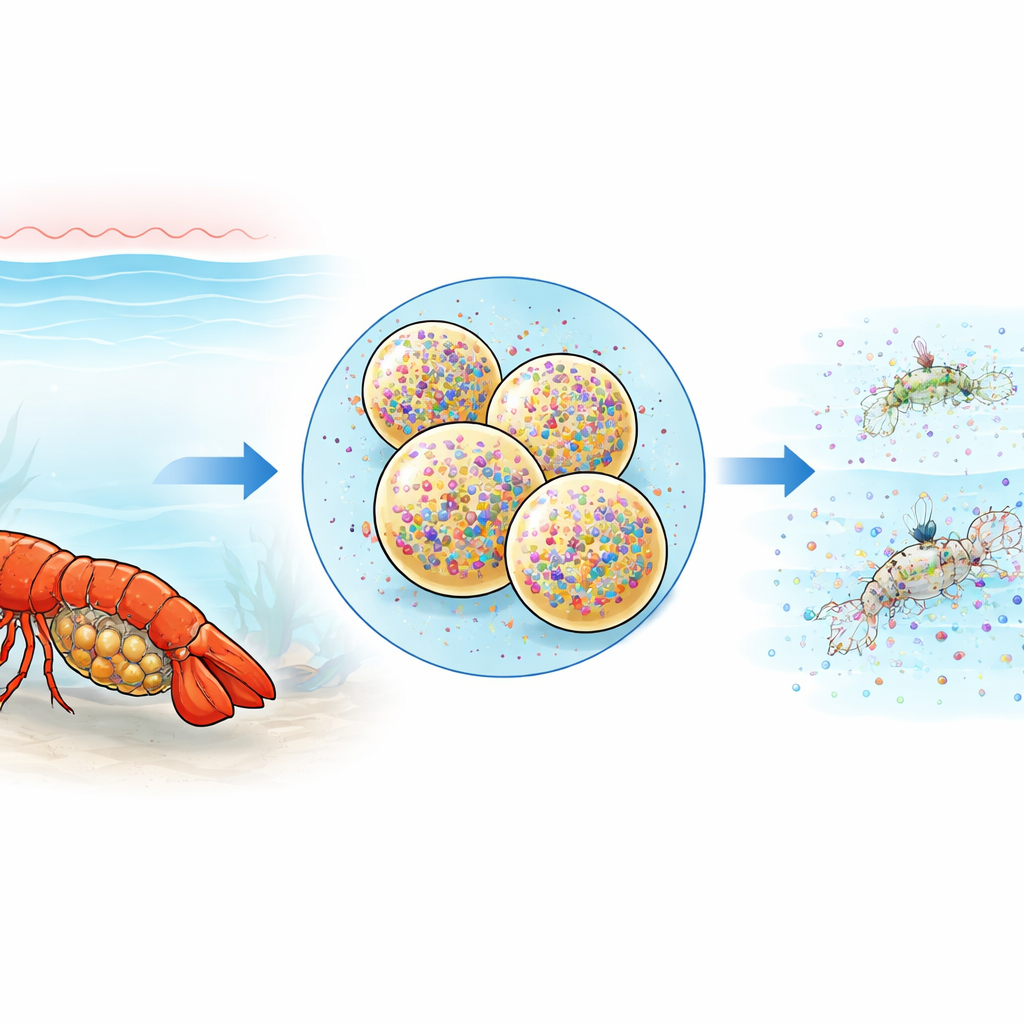
A Hidden World on the Egg Surface
For decades, researchers assumed that only a few types of bacteria clung to the outer surface of lobster eggs. Using modern DNA sequencing, this study shows that the picture is far richer. The authors collected egg-bearing female American lobsters from Maine and Massachusetts, kept them in carefully controlled aquariums that mimicked present and future ocean conditions, and sampled their embryos early and late in development. They also sampled larvae within hours of hatching, and the surrounding tank water, then read the genetic fingerprints of bacteria attached to each.
Growing Babies, Growing Microbial Diversity
As the embryos developed, their bacterial communities became more diverse and more varied from one lobster to another. Early-stage eggs hosted fewer kinds of bacteria and had more tightly grouped communities. By late development, the eggs harbored a broader mix of species and showed greater differences among individuals. Newly hatched larvae took this trend even further: their microbiomes were the most diverse of all, likely reflecting both the egg surface community they inherited and the beginnings of a gut community inside the tiny animals.
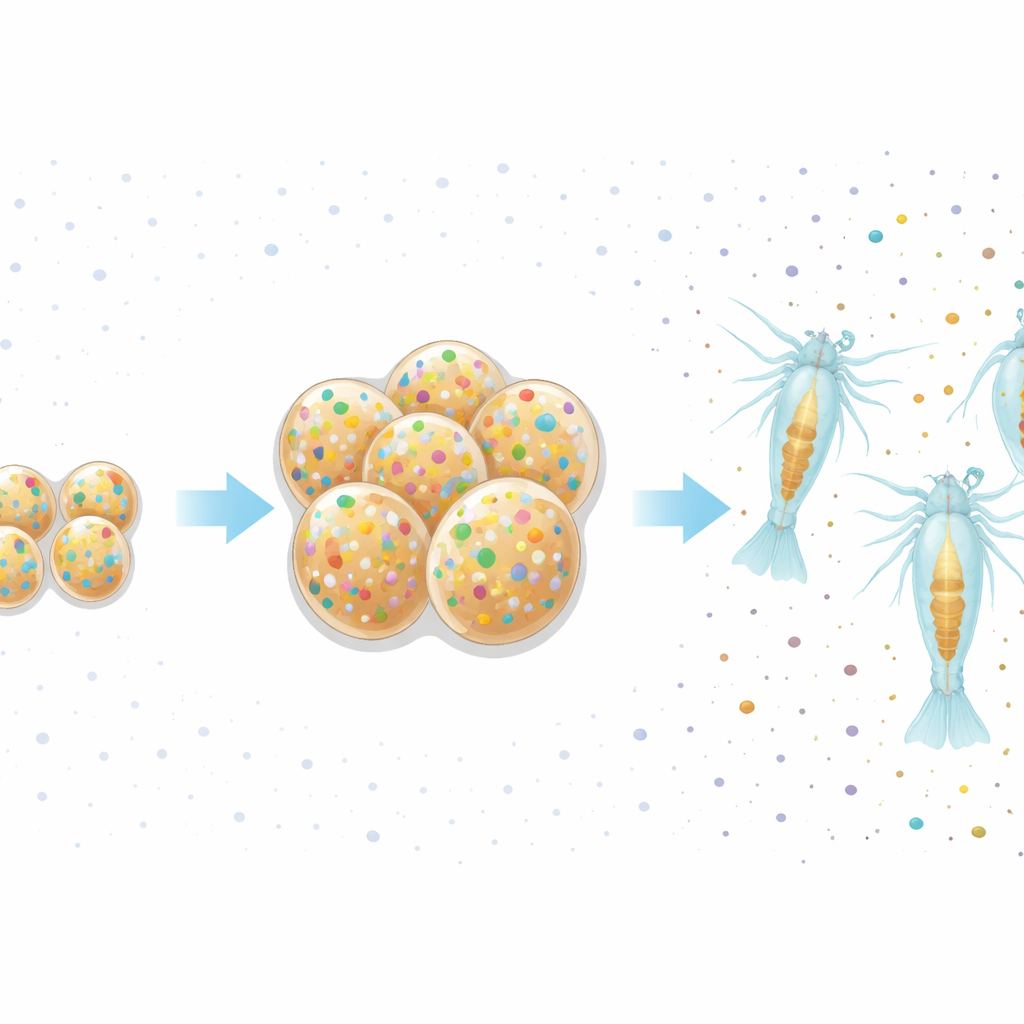
Different from the Water Around Them
One of the most striking findings is how distinct the microbes on the eggs and larvae were from those floating freely in the tank water. Only a small fraction of bacterial types were shared between life stages and the surrounding environment. The water itself had a simpler and more uniform bacterial mix, whereas the eggs and larvae formed selective “microhabitats” that favored certain groups. Three bacterial genera—Rubritalea, Delftia, and Stenotrophomonas—were consistently present on embryos and larvae at all stages, suggesting a core group of long-term companions that may help with nutrient processing, waste breakdown, or defense against disease.
Surprisingly Stable Under Future Ocean Conditions
Because climate change is warming and acidifying the Gulf of Maine faster than much of the global ocean, the team tested whether increased temperature and lower pH would disturb these fragile early-life microbiomes. Lobsters were held under control, warmed, acidified, and combined “multi-stressor” conditions that reflect expected future seas. Despite these changes, the structure and diversity of the bacterial communities did not shift in a consistent way with temperature, acidity, or the geographic origin of the lobsters. Instead, the dominant driver of microbial differences was life stage—early embryo, late embryo, or larva—rather than the experimental environment.
What This Means for Lobsters and Their Future
To a non-specialist, the takeaway is reassuring but also intriguing. American lobster embryos and hatchlings appear to cultivate their own carefully chosen sets of microbes, largely independent of the water they float in and surprisingly robust to the range of warming and acidification tested here. That suggests a built-in resilience in these early life stages, at least with respect to their bacterial partners. At the same time, the work underscores how little we know about what these microbes actually do for the lobster—whether they help fend off infections, process waste, or influence which embryos live and which die. By establishing a detailed baseline of “normal” microbial life on lobster eggs and larvae, this study lays the groundwork for future efforts to detect disease, understand failures in egg clutches, and better protect an iconic species in a changing ocean.
Citation: Koshak, J.S., Song, B., Jellison, B. et al. The bacterial community composition of American Lobster (Homarus americanus) embryos and recently hatched larvae held under experimental laboratory conditions. Sci Rep 16, 9045 (2026). https://doi.org/10.1038/s41598-026-35387-8
Keywords: lobster embryos, microbiome, ocean warming, marine larvae, bacterial communities