Clear Sky Science · en
Factors influencing malignant tumor development in cats from a multicenter retrospective study
Why cat cancers matter to people
Cancer is not just a human disease; it is one of the leading health problems in our pets, especially cats. Because millions of cats share our homes and many of our environmental exposures, understanding which tumors they develop, and in which animals, can help veterinarians protect feline health and may even offer clues about cancer risks for humans. This study looked back over 15 years of tumor records from cats in central Italy to uncover patterns in how often different cancers appear, which cats are most affected, and how these diseases are changing over time.
Taking a census of feline tumors
To build a clear picture of cancer in cats, researchers combined data from two veterinary pathology centers that receive tumor samples from several Italian regions. They examined 5,289 primary tumors diagnosed in just over 5,100 cats between 2008 and 2023. Every tumor was confirmed under the microscope and coded using a standardized system adapted from human cancer registries, which records where in the body the tumor arose and what type of cells it came from. This careful coding allowed the team to compare patterns across years, regions, and cat characteristics such as age, sex, neuter status, and whether the cat was purebred or a mixed-breed house cat. 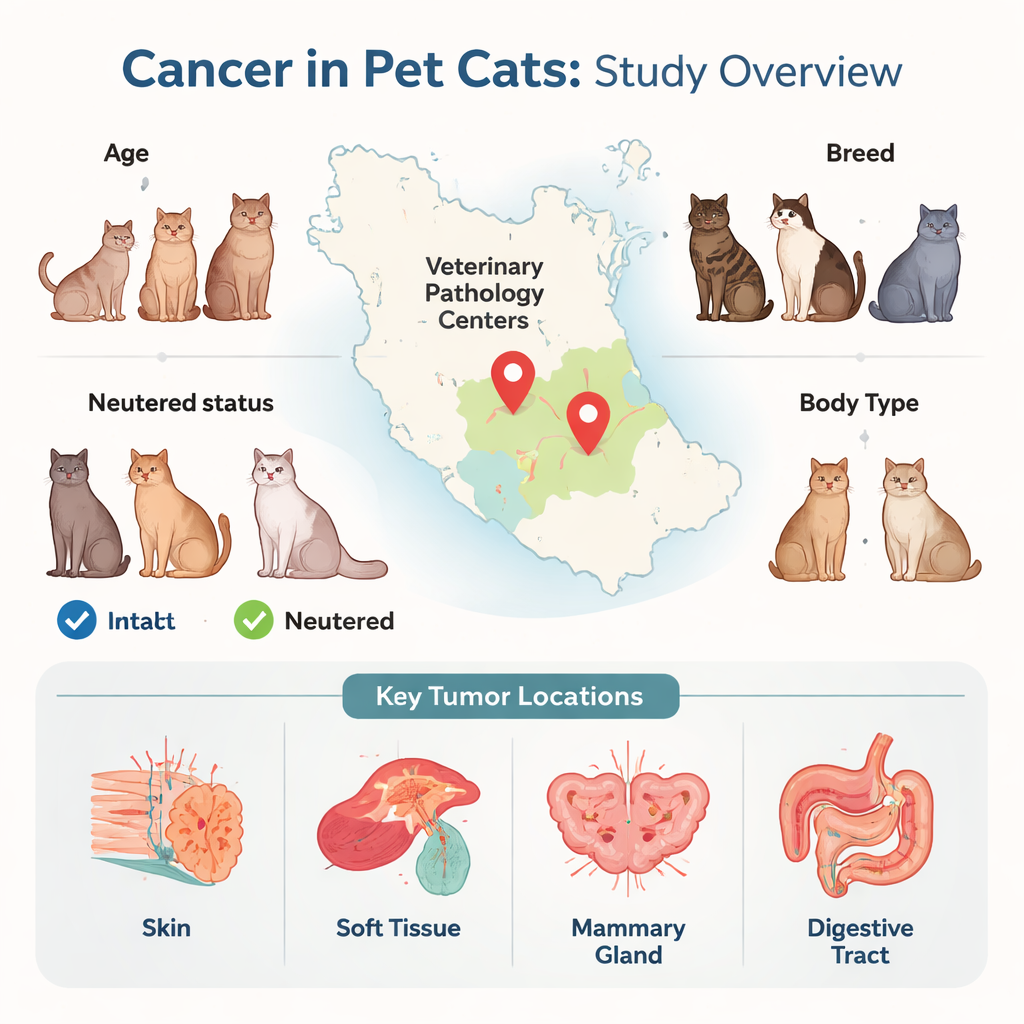
Where tumors appear in the body
The most common places for tumors in these cats were the skin, soft tissues just under the skin, and the mammary (breast) glands. Four broad tumor types dominated the picture: fibrosarcomas (a form of soft-tissue cancer), adenocarcinomas (often arising in mammary tissue or internal organs), squamous cell carcinomas of the skin and mouth, and lymphomas, which affect the immune system and often involve the gut or lymph nodes. Overall, about four out of five tumors in this study were malignant—that is, capable of invading nearby tissues or spreading elsewhere. Certain body sites, such as lymph nodes and parts of the chest, produced malignant tumors almost exclusively, while skin and genital areas showed a higher mix of benign and malignant growths.
Which cats face the highest risks?
By applying statistical models similar to those used in human epidemiology, the researchers found that the chance a tumor would be malignant rose steadily with age, increasing by about 8% for every extra year of life. Female cats were more likely than males to have malignant tumors, largely reflecting the heavy burden of aggressive mammary cancers in this species. Surprisingly, mixed-breed house cats faced higher odds of malignancy than purebred cats, the reverse of what is often seen in dogs and people; this may be because many cat breeds still retain more genetic diversity, emphasizing the importance of outside factors like infections or sun exposure. Neutering did not change the overall chance that a tumor would be malignant, but neutered cats were less likely to develop adenocarcinomas, especially in mammary tissue.
Changing patterns of the major cancers
When the team focused on the four most common malignant tumors, distinct trends emerged. Fibrosarcomas were the single most frequent cancer but became less common over the 16-year period, as did adenocarcinomas. Many fibrosarcomas in cats arise at injection sites, and their decline may be linked to the growing use of vaccines that do not contain certain inflammatory additives. In contrast, squamous cell carcinoma, a cancer of the skin and mouth strongly associated with sunlight in cats, showed a steady rise, echoing increases in sun-related skin cancers in humans and raising concerns about changing outdoor lifestyles and climate-driven shifts in ultraviolet exposure. Lymphoma mostly affected the digestive tract and tended to strike relatively younger cats than other cancers, but its overall frequency remained stable over time. 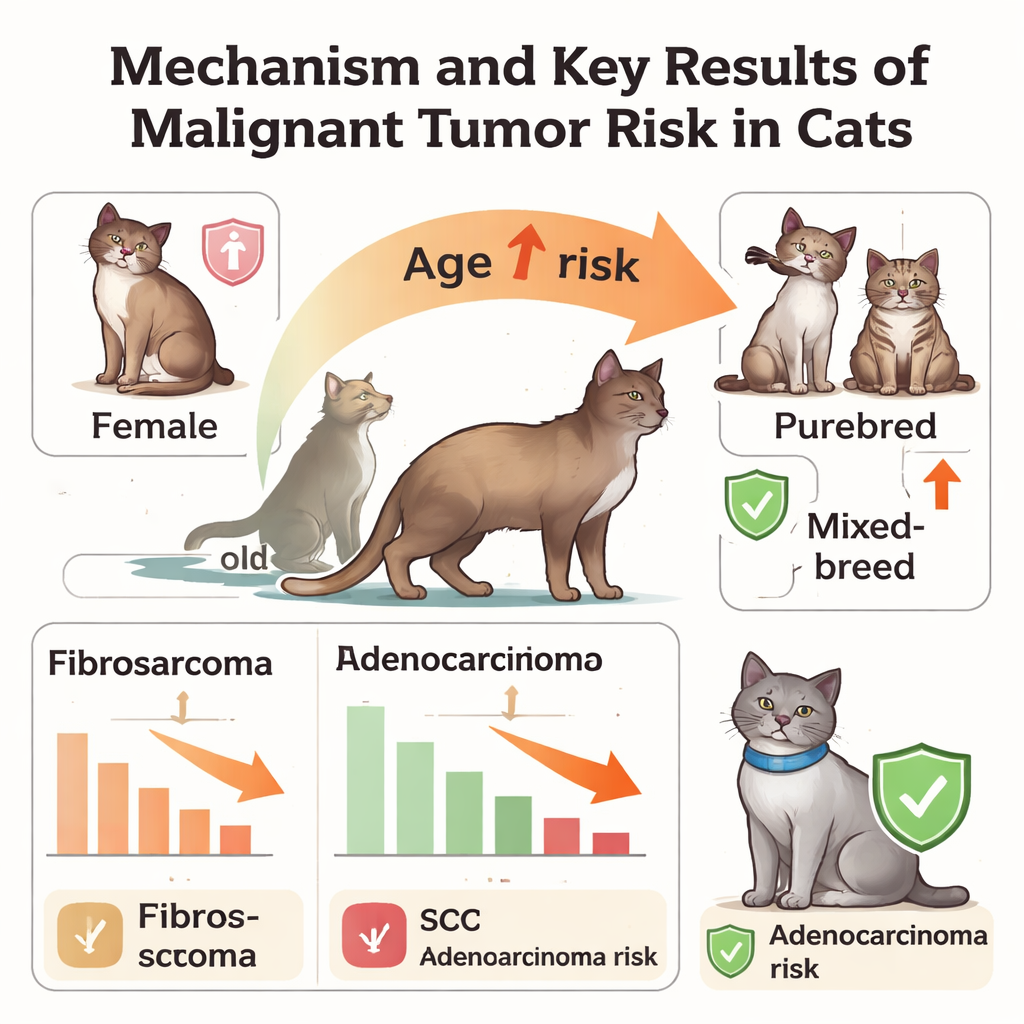
What this means for cats and their owners
For cat owners, the study underscores that cancer is common, especially in older animals, and that early attention to skin changes, mouth lesions, and mammary lumps is vital. For veterinarians and researchers, these results highlight how large, coordinated cancer registries can reveal hidden risk factors, track the impact of vaccination strategies, and flag environmental concerns such as increased sun exposure. By mapping which cats get which tumors, and how those patterns shift over time, this work not only guides better prevention and care for feline patients but also strengthens the role of cats as sentinels for environmental health risks that humans share.
Citation: Fonti, N., Carnio, A., Cocumelli, C. et al. Factors influencing malignant tumor development in cats from a multicenter retrospective study. Sci Rep 16, 5532 (2026). https://doi.org/10.1038/s41598-026-35379-8
Keywords: feline cancer, tumor registry, cat health, pet oncology, environmental risk