Clear Sky Science · en
Body temperature as a predictor of mortality in multiple trauma patients: aprospective single-centre cohort study
Why body heat matters after serious injuries
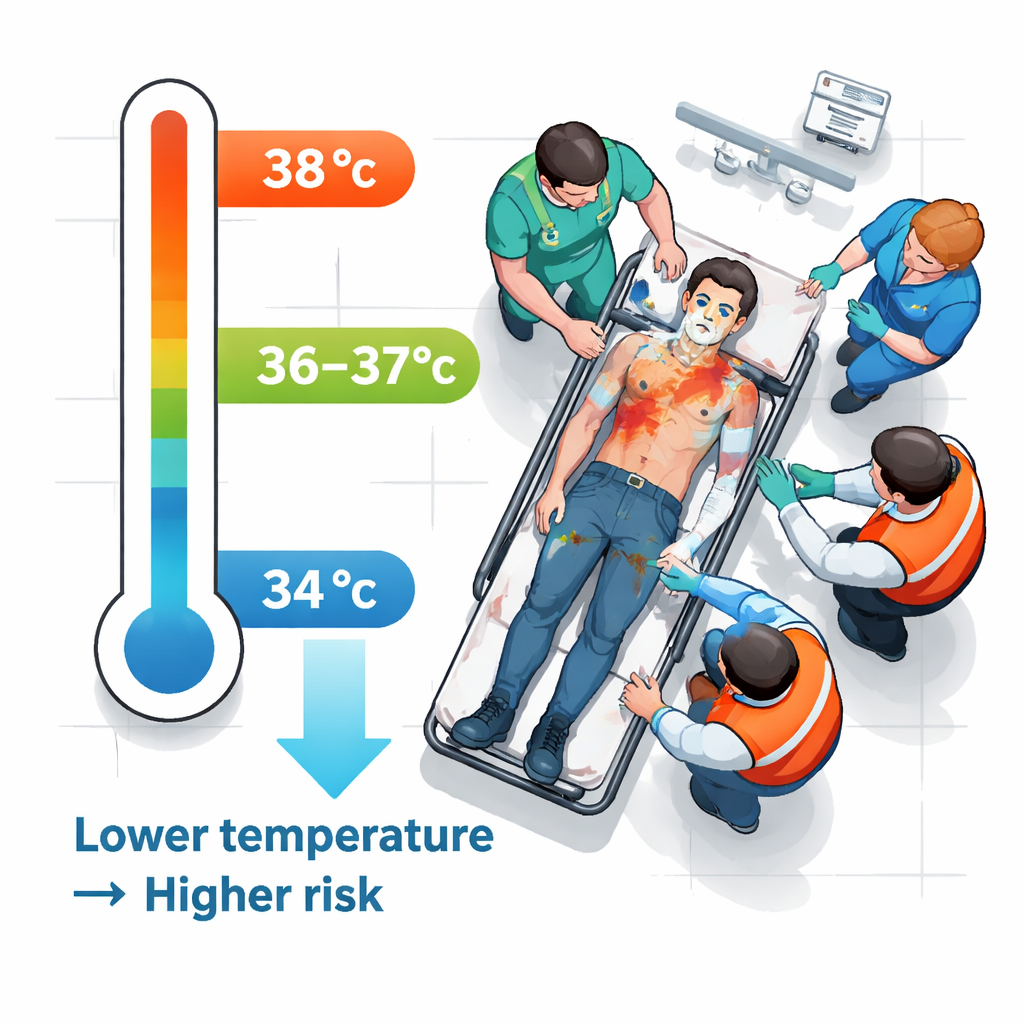
When someone suffers a major accident—such as a car crash, a bad fall, or a violent injury—doctors race to control bleeding, protect the brain, and keep vital organs working. This study argues that there is another, often overlooked, life-or-death factor: the person’s body temperature on arrival at the hospital. Even a seemingly mild drop of one or two degrees can sharply increase the chance of dying, making warmth a critical part of trauma care rather than a minor detail.
Taking a closer look at trauma and cold
Injuries are among the leading causes of death worldwide, especially in working-age adults. People with multiple serious injuries are prone to accidental drops in body temperature, or hypothermia, because of blood loss, exposure, and the procedures used to treat them. Traditionally, hypothermia has been defined as a core temperature below 35 °C. However, some military and civilian experts have warned that even temperatures under 36 °C may be dangerous in badly injured patients. The authors of this study wanted to test whether the temperature measured when patients first reach a major trauma center is independently linked to survival, and whether 36 °C is a meaningful safety threshold.
Following hundreds of patients from admission to outcome
The research team carried out a prospective cohort study at a high-level trauma center in Barcelona, Spain, between August 2022 and February 2024. They enrolled 334 adults with multiple severe injuries who needed immediate care. Body temperature was measured within minutes of arrival, using either skin or core probes, and patients were divided into four groups: below 35 °C, 35–35.9 °C, 36–37 °C, and above 37 °C. Doctors also recorded details such as age, type of accident, injury severity, need for airway support, and whether drugs like epinephrine were used. Each patient was followed for at least six months, and deaths were tracked at 24 hours, 30 days, during the hospital stay, and over the full follow-up period.
Colder patients faced much higher risk
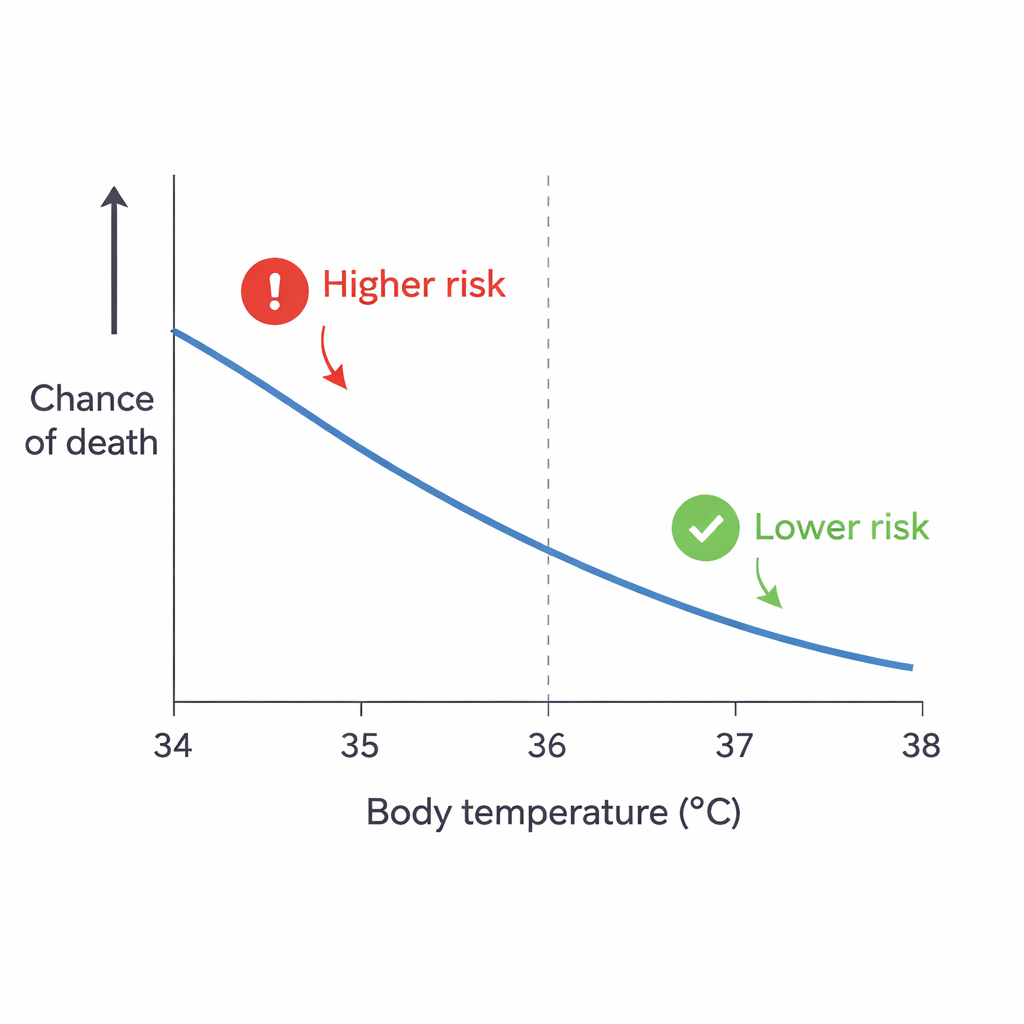
Overall, about one in ten patients died. But this risk was far from evenly spread. Among those with clear hypothermia (below 35 °C), nearly one in four died. In contrast, no deaths occurred in patients whose temperature was above 37 °C. When the researchers used statistical models that accounted for how badly injured people were, their underlying health, and how impaired their consciousness was, body temperature still stood out as a strong and independent predictor of death. For every 1 °C drop in temperature, the odds of dying rose by about 72%. The team also tested a simple split at 36 °C. Patients arriving with a temperature below this level were roughly three times more likely to die than equally injured patients at 36 °C or above, and their reduced survival persisted for up to six months.
Why warmth is so hard to keep—and so important
The study highlights how easily trauma patients lose heat. Shock, brain injury, and severe bleeding disrupt the body’s internal thermostat; open wounds and wet clothing promote rapid cooling; and prehospital procedures such as airway management and sedation can unintentionally worsen heat loss. Many emergency systems also fail to measure temperature routinely, especially before hospital arrival, meaning dangerous drops may go unnoticed. In this study, only a quarter of patients had their temperature checked before reaching the hospital, and barely a third had core measurements. Yet international guidelines recommend warm treatment rooms, actively heated fluids and blood products, and the routine use of warming blankets for injured patients.
Turning a simple vital sign into a lifesaving habit
To a layperson, a temperature of 35.5 °C might not sound alarming. This study suggests that, in the context of major trauma, it should be. The authors conclude that admission body temperature is a powerful, independent warning sign: even a mild drop below 36 °C is associated with a marked increase in the chance of dying, regardless of how severe the injuries are. Because temperature is easy to measure and body heat can be protected with blankets, warmed fluids, and better room conditions, the message is straightforward. In serious accidents, keeping patients warm—and checking that they are warm early and often—should be treated as a core part of saving lives, not an afterthought.
Citation: Blasco Mariño, R., González Posada, M.Á., Soteras Martínez, I. et al. Body temperature as a predictor of mortality in multiple trauma patients: aprospective single-centre cohort study. Sci Rep 16, 6123 (2026). https://doi.org/10.1038/s41598-026-35372-1
Keywords: trauma, hypothermia, body temperature, emergency care, mortality risk