Clear Sky Science · en
The association between nausea and vomiting of pregnancy and postpartum depression symptoms: a longitudinal study
Morning Sickness and Mood After Birth
Many people think of “morning sickness” as an annoying but harmless part of pregnancy. This study from Wuhan, China, asks a deeper question: when nausea and vomiting are especially severe, do they leave a mark on a mother’s mental health months after the baby is born? Understanding this link could help families and doctors spot women who may quietly be at higher risk of postpartum depression and offer support earlier.
Common Pregnancy Upset, Often Overlooked
Nausea and vomiting in pregnancy are extremely common, affecting most women in the first few months. Symptoms can range from mild queasiness to constant vomiting that requires medical care or even a hospital stay. While not always treated as an illness, these symptoms can seriously disrupt daily life, sleep, work, and family responsibilities. At the same time, postpartum depression is one of the most frequent complications of childbirth worldwide, bringing sadness, anxiety, and loss of enjoyment at a time when new parents are expected to feel happy. It can harm both mothers and babies, affecting bonding and a child’s emotional development.
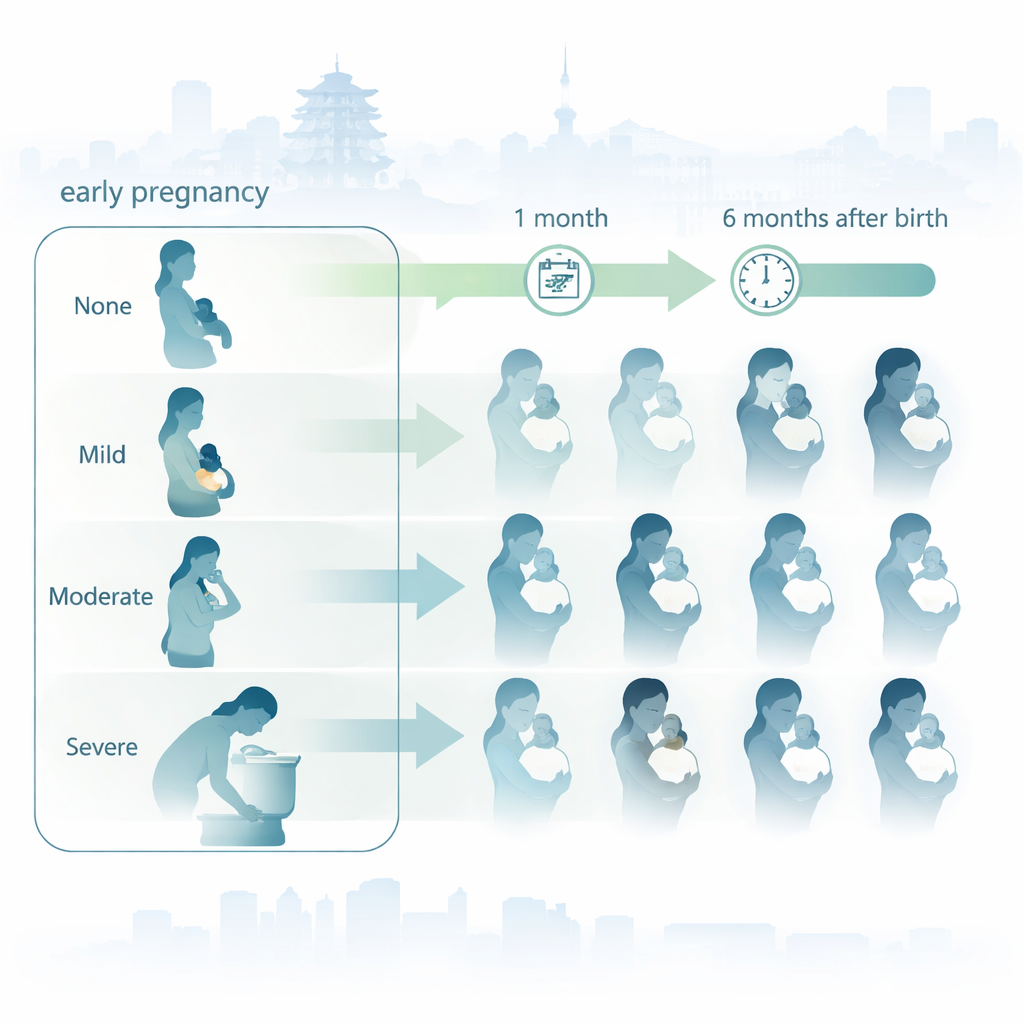
Following Mothers From Early Pregnancy to Months After Birth
The researchers followed 3,061 pregnant women who received care and delivered at a major women and children’s hospital in Wuhan between 2016 and 2019. All the women were carrying one baby and were less than 16 weeks pregnant when they joined the study. Early in pregnancy, each woman answered a simple question about whether she had vomited since becoming pregnant, and if so, how severe it was. The team grouped women into four categories: no nausea and vomiting, mild (no treatment), moderate (no treatment but more bothersome), and severe (needing medication or hospital care). After giving birth, the women filled out a standard questionnaire used worldwide to screen for postpartum depression symptoms at one month and again at six months.
How Often Symptoms Appeared
About two out of three women in the study reported some level of nausea and vomiting in early pregnancy, and just under 2% had severe symptoms that required active treatment. Postpartum depression symptoms were also common. Overall, 16% of women screened positive for possible depression after birth, similar to rates seen in other countries and regions of China. When the team looked at specific time points, 16.8% showed depressive symptoms at one month postpartum, and 13.6% did so at six months. These numbers highlight that feeling low or overwhelmed after childbirth is not rare, even in women who appear physically healthy.
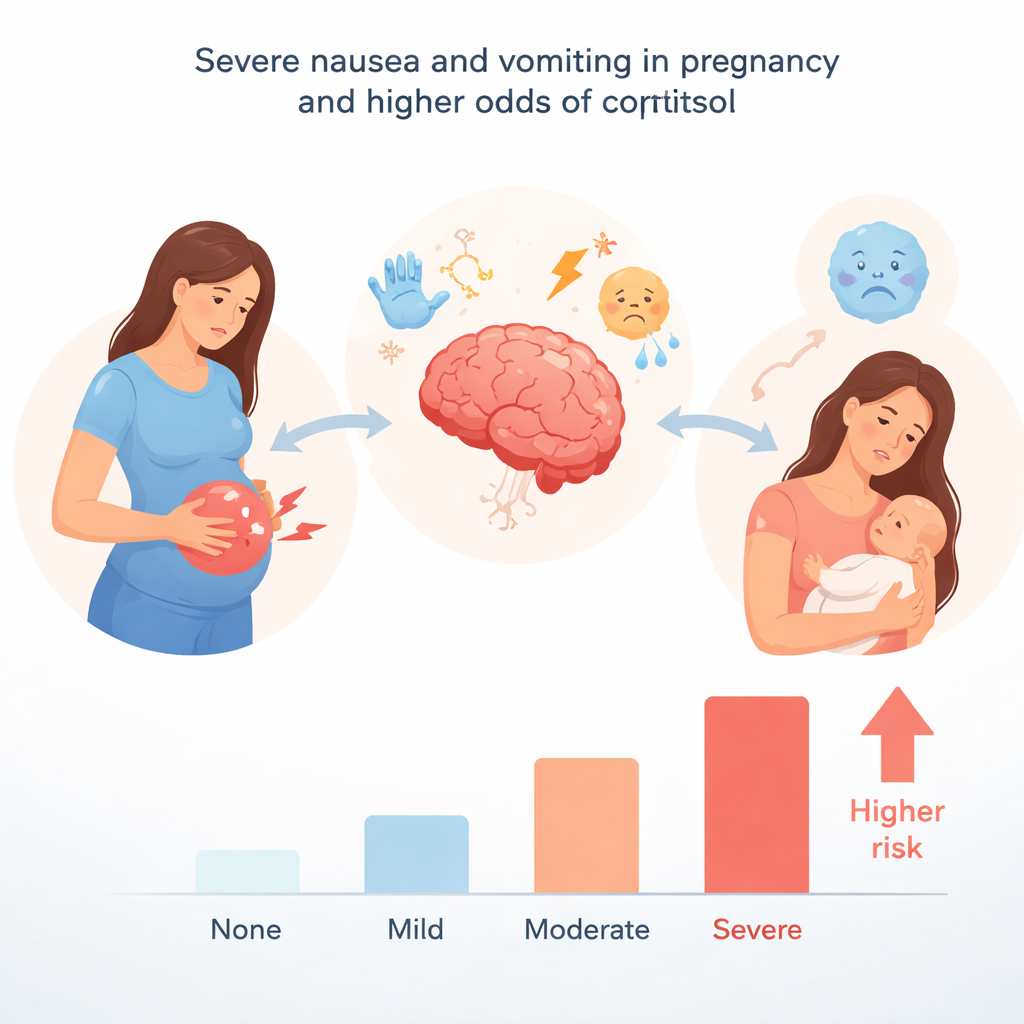
Severe Morning Sickness, Higher Risk Later
The central question was whether the intensity of nausea and vomiting in early pregnancy predicted later mood problems. After taking into account other factors such as age and whether the pregnancy was considered high-risk, the researchers found a clear pattern for the small group of women with the most severe symptoms. Compared with women who had no nausea or vomiting, those with severe symptoms were more than twice as likely to show signs of depression at one month postpartum, and again at six months. Mild and moderate symptoms were more common but did not consistently raise the risk in this study, suggesting there may be a threshold beyond which the physical and emotional strain becomes particularly damaging.
What This Means for Expectant Families
For non-specialists, the message is straightforward: very bad “morning sickness” is not just uncomfortable—it may be an early warning sign that a mother could struggle with her mood long after the baby arrives. The study does not prove that nausea directly causes depression, but it shows that women with severe symptoms deserve closer attention and support. By asking simple questions about vomiting in early pregnancy and checking in on mood after birth, health-care workers and families may be able to spot problems sooner and offer practical help, counseling, or treatment. In short, taking early pregnancy discomfort seriously could be one way to protect mothers’ mental health later on.
Citation: Zhang, H., San, S., Ding, X. et al. The association between nausea and vomiting of pregnancy and postpartum depression symptoms: a longitudinal study. Sci Rep 16, 7061 (2026). https://doi.org/10.1038/s41598-026-35367-y
Keywords: morning sickness, postpartum depression, pregnancy health, maternal mental health, nausea and vomiting