Clear Sky Science · en
Combustion performance prediction in oil and gas plants using integrated neural network models and SAP S4HANA sensor analytics
Why smarter burning matters
Oil and gas plants burn huge amounts of fuel every day to make heat and steam. Small improvements in how cleanly and efficiently that fuel burns can save companies millions of dollars and cut climate‑warming emissions at the same time. Yet operators still rely heavily on fixed rules and delayed alarms to keep furnaces and boilers in check. This article explores how combining modern sensors, enterprise software like SAP S/4HANA, and advanced neural networks can turn combustion systems into smart, self‑aware machines that constantly predict and prevent problems before they waste fuel or breach pollution limits.
From rigid rules to learning systems
Traditional combustion control in refineries and gas plants is based on static formulas and rule sets: if oxygen or carbon monoxide (CO) cross a threshold, alarms trigger and operators react. These rules struggle with the messy reality of industrial plants, where fuel quality, equipment aging, and changing loads make combustion behaviour highly non‑linear. The study argues that this disconnect leads to higher fuel use, more maintenance, and greater risk of failing tightening emissions rules such as MARPOL and IMO standards. Instead of treating each alarm as an isolated incident, the authors propose viewing combustion as a continuously evolving pattern that can be learned from rich streams of sensor data.
Connecting plant sensors to enterprise brains
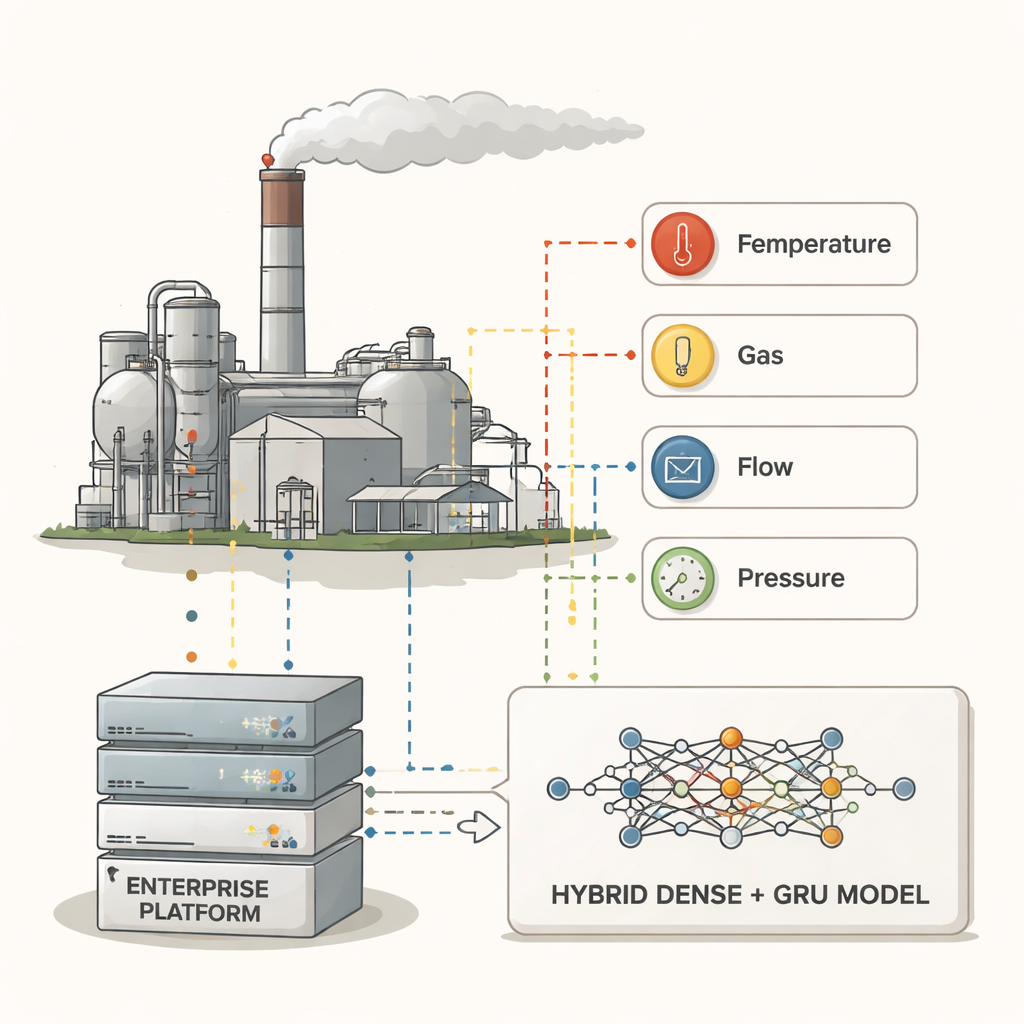
Modern plants already stream data from hundreds of sensors that track oxygen levels, flue‑gas temperature, fuel and air flow, steam pressure, and stack emissions. Enterprise systems such as SAP S/4HANA collect these signals for maintenance planning and regulatory reporting, but rarely use them for real‑time prediction. This work plugs an AI forecasting engine directly into that enterprise layer. Using SAP’s industrial gateways, data from more than 70 sensors per plant is cleaned, denoised, and synchronized in short time windows, then stored in an in‑memory database. The same architecture could sit on top of Oracle, Siemens Mindsphere, or similar platforms, making the approach largely vendor‑agnostic.
How the neural network learns to forecast fire
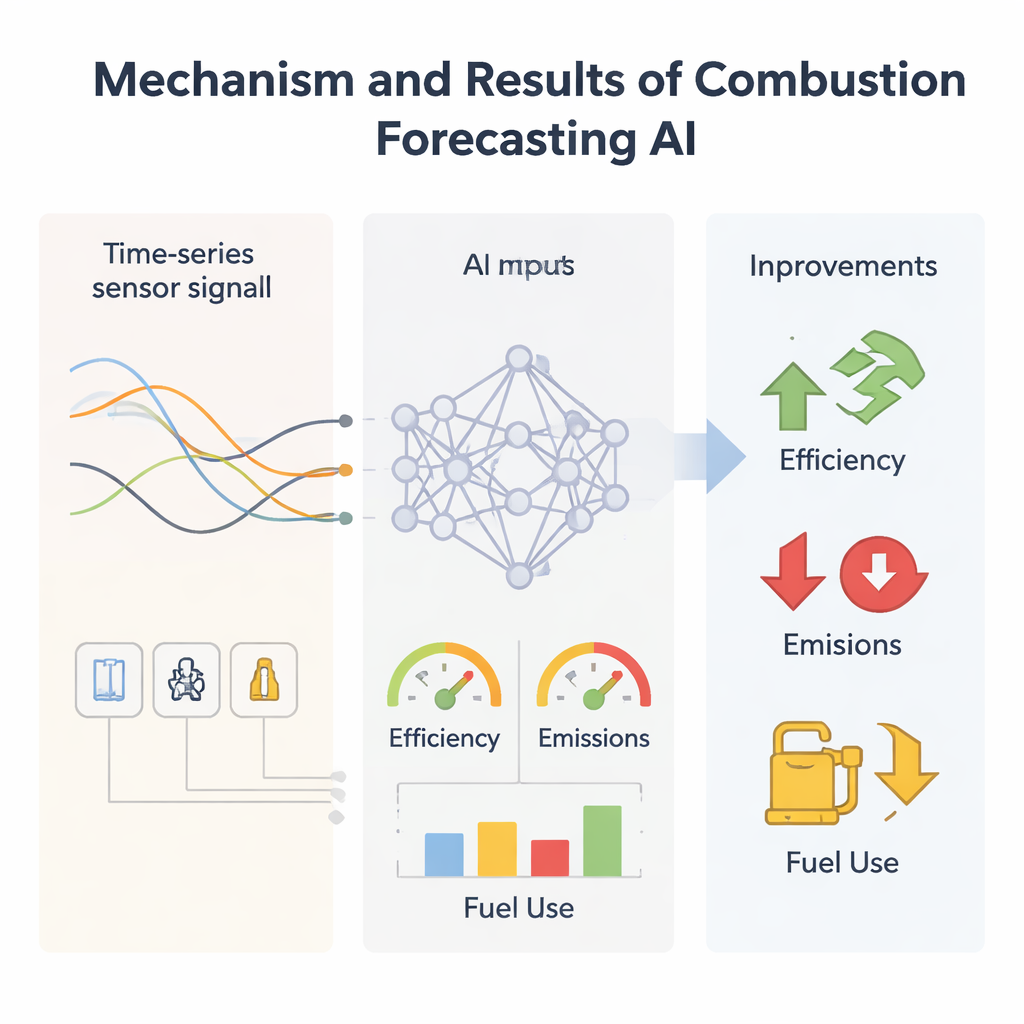
The core of the system is a hybrid neural network that blends two strengths: dense layers to capture relationships between variables at a given moment, and gated recurrent units (GRUs) to track how those variables change over time. Trained on 6.5 million sensor samples from three different plants, the model learns to predict three key outcomes ten minutes into the future: combustion efficiency, CO emissions, and a fuel‑use index that links fuel flow to useful steam output. By framing the problem as short‑term forecasting rather than simple monitoring, the AI gives operators a valuable head start to adjust burners, dampers, or fuel mixes before efficiency drops or emission limits are crossed.
Reliable predictions, faster alerts, cleaner stacks
In tests across three plants and additional simulations, the hybrid model outperformed standard tools such as linear regression, random forests, and even simpler recurrent networks. Its prediction errors for efficiency remained within about two percentage points, with strong statistical confidence and low variability over time. The system ran with an average response time of roughly a tenth of a second and an availability of 99.7%, suitable for live use in control rooms. Crucially, explainable‑AI methods were built in: the model can highlight which sensors—typically flue‑gas temperature, fuel flow, and oxygen—most influenced a given prediction. This transparency helped engineers distinguish genuine process issues from faulty instruments and increased trust in the AI’s recommendations.
What this means for energy, cost, and emissions
For a typical industrial boiler, even a 2–5% boost in combustion efficiency translates into significant annual fuel savings and direct reductions in carbon dioxide and other pollutants. The study reports average efficiency gains of around 1.7% in early deployments, enough to pay back integration costs within a few months through lower fuel bills, fewer unplanned shutdowns, and reduced regulatory penalties. Because the AI layer sits inside the existing ERP environment, it also strengthens audit trails and sustainability reporting. Looking ahead, the authors envision adding reinforcement‑learning agents that not only predict but also automatically fine‑tune burner settings, along with lightweight edge versions that can run in remote locations. Together, these steps point toward industrial plants where combustion is continuously optimized—saving money, improving safety, and shrinking the environmental footprint of the energy we rely on every day.
Citation: Keshireddy, S.R., Jamithireddy, N.H., Jamithireddy, N.S. et al. Combustion performance prediction in oil and gas plants using integrated neural network models and SAP S4HANA sensor analytics. Sci Rep 16, 5069 (2026). https://doi.org/10.1038/s41598-026-35364-1
Keywords: industrial AI, combustion efficiency, oil and gas plants, sensor analytics, SAP S4HANA