Clear Sky Science · en
A cultural memory semiotics and function behavior structure model for digital inheritance and innovation in AI generated Huizhou woodcarving images
Why Ancient Carvings and New AI Belong Together
Why should anyone outside a design lab care about AI-generated pictures of old Chinese woodcarvings? Because they sit at the crossroads of memory, identity, and technology. This study shows how modern image generators, when guided carefully, can help keep traditional arts like Huizhou woodcarving alive in the digital age—not just as pretty pictures, but as carriers of stories, values, and cultural meaning.
Old Carvings as Living Storybooks
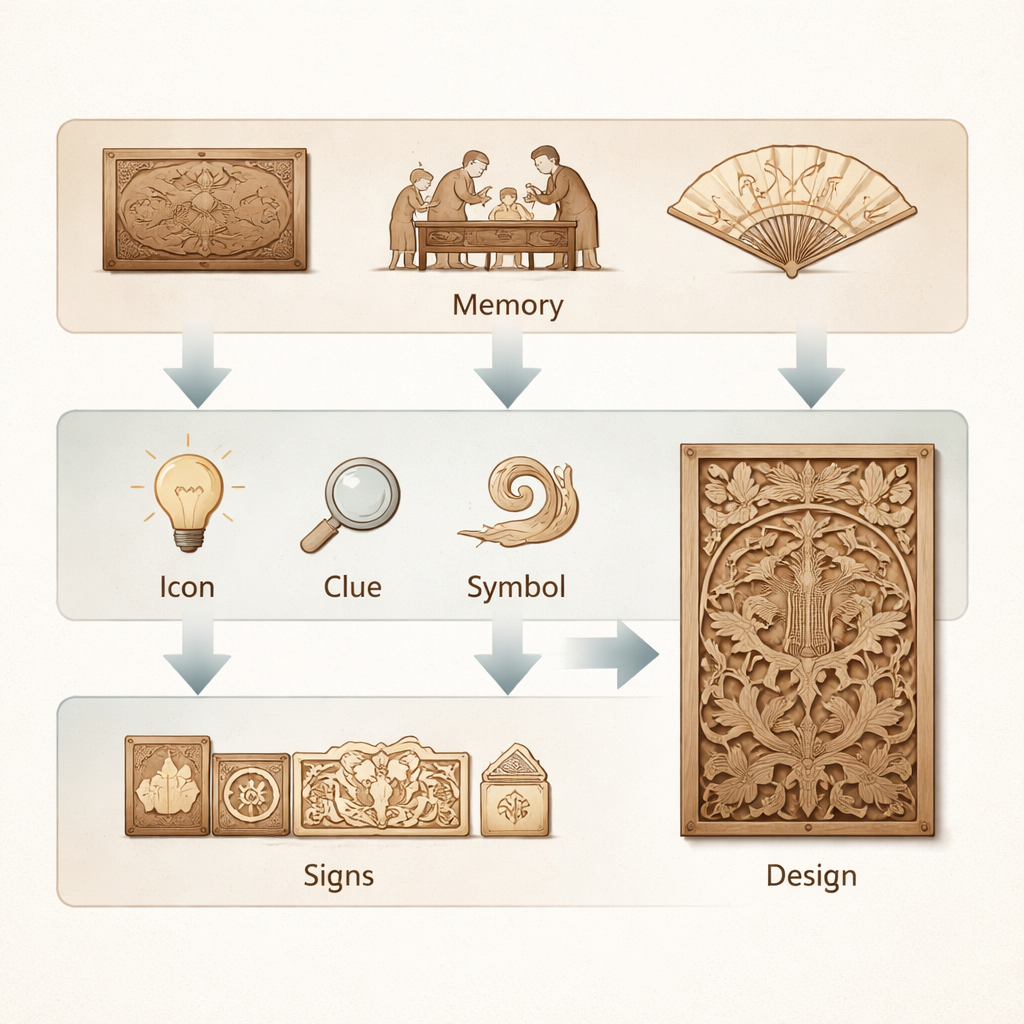
Huizhou woodcarving from eastern China is famous for its intricate panels decorating homes, temples, and furniture. At first glance these carvings seem purely ornamental, but they actually work like dense visual storybooks. Scenes of family gatherings, farm work, mythical animals, and lucky symbols compress ideas about clan ethics, prosperity, and moral rules into wood. The authors draw on “cultural memory” theory to explain this. According to that view, objects and images do not just decorate our surroundings; they help groups remember who they are, what they value, and how they relate to the past.
From Signs and Shapes to Meaning
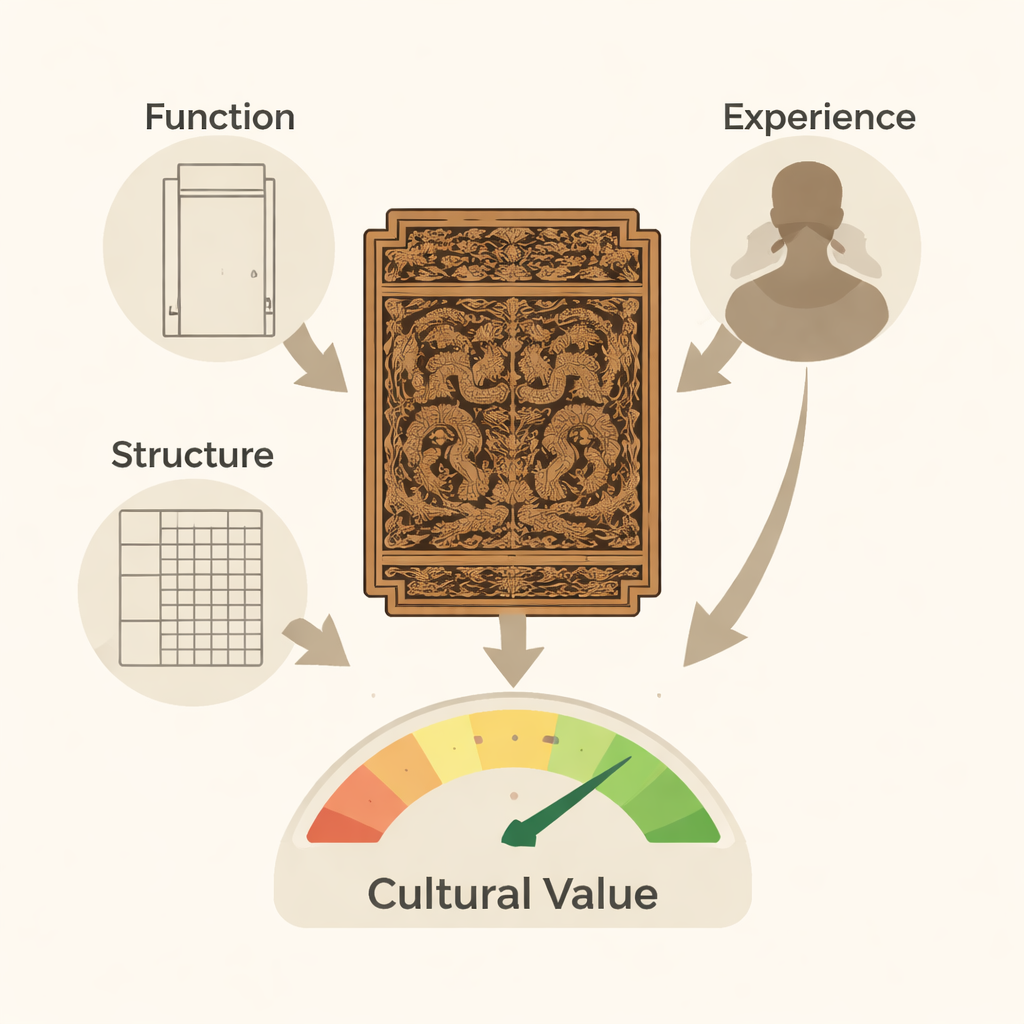
To make sense of how people read such images, the researchers borrow tools from semiotics—the study of signs. They distinguish between three kinds of visual clues. Icons look like the things they depict, such as carved people, birds, or buildings. Indices act as hints or traces of events, like smoke suggesting cooking or lanterns hinting at a festival. Symbols depend on shared cultural rules, such as specific good-luck characters or animals that stand for long life or loyalty. The team also uses a design model called Function–Behavior–Structure, which simply asks: What is the design for (function)? What does it make people do or feel (behavior)? And how are its parts arranged (structure)? Together, these ideas form a single framework tying cultural memory, visual signs, and design quality into one chain.
Teaching an AI to Respect Tradition
Rather than letting an image generator improvise, the authors treated the AI as a disciplined tool. They built prompts from small, theory-based pieces: words about materials and carving techniques, everyday scenes and rituals, and symbolic themes like family prosperity or blessings. These pieces were combined into structured instructions for Midjourney, which then produced 40 images of Huizhou-style carvings. Experts in design and heritage selected 20 images that best balanced clear composition with rich cultural content. A group of 434 adults with design interests viewed this shared set and rated what they saw: how strongly the images evoked traditional materials, functions, and symbols; how clearly they contained icons, clues, and cultural symbols; how well they communicated purpose, experience, and structure; and finally, how effectively they seemed to preserve and update Huizhou carving traditions.
What Matters Most to Viewers
Statistical models revealed that two pathways dominated people’s judgments. One ran from functional memories (how the carvings are used in real spaces) through index-like clues to evaluations of function, behavior, and structure. The other ran from symbolic memories (shared beliefs and values) through symbolic signs straight to structure. In simple terms, viewers cared less about whether the wood grain looked perfectly realistic and more about whether the images clearly suggested recognizable situations and deeper meanings. Detailed tests showed that the “material” side—faithful surfaces and textures—had little direct impact on whether people felt the images truly carried tradition forward in a fresh way. Instead, designs that clearly signaled what was happening, why it mattered, and how the parts fit together were judged to be both more authentic and more innovative.
What This Means for the Future of Heritage
To a layperson, the study’s message is straightforward: when AI is guided by cultural knowledge, it can help translate traditional arts into new digital forms without hollowing them out. Success does not hinge on copying every physical detail of an old carving. It depends on encoding the right scenes, hints, and symbols so that viewers can still “read” the stories and values behind the image. The authors argue that generative AI should be treated as a controllable medium, not a mysterious artist. Their workflow—from theory, to prompts, to images, to audience feedback—offers a blueprint for museums, educators, and designers who want to use AI to renew heritage in ways that feel both respectful of the past and meaningful in the present.
Citation: Qian, Y., Bao, Q., Zhang, S. et al. A cultural memory semiotics and function behavior structure model for digital inheritance and innovation in AI generated Huizhou woodcarving images. Sci Rep 16, 5520 (2026). https://doi.org/10.1038/s41598-026-35360-5
Keywords: digital cultural heritage, Huizhou woodcarving, AI image generation, cultural memory, design semiotics