Clear Sky Science · en
Eco-friendly synthesis of Balanites aegyptiaca-derived selenium nanoparticles: extract and assessment of their anticancer, antimicrobial, cytogenetic and molecular docking insights
Turning a Desert Tree into a Tiny Medicine Factory
Balanites aegyptiaca, sometimes called the desert date, is a hardy tree long used in traditional medicine. This study explores how an extract from its fruit can be used to make ultra‑small selenium particles in a clean, low‑waste way—and whether these particles can help fight cancer cells and dangerous bacteria. By shrinking selenium down to the nanometer scale and wrapping it in plant chemicals, the researchers hope to boost its benefits while keeping risks in check.
From Tree Fruit to Tiny Particles
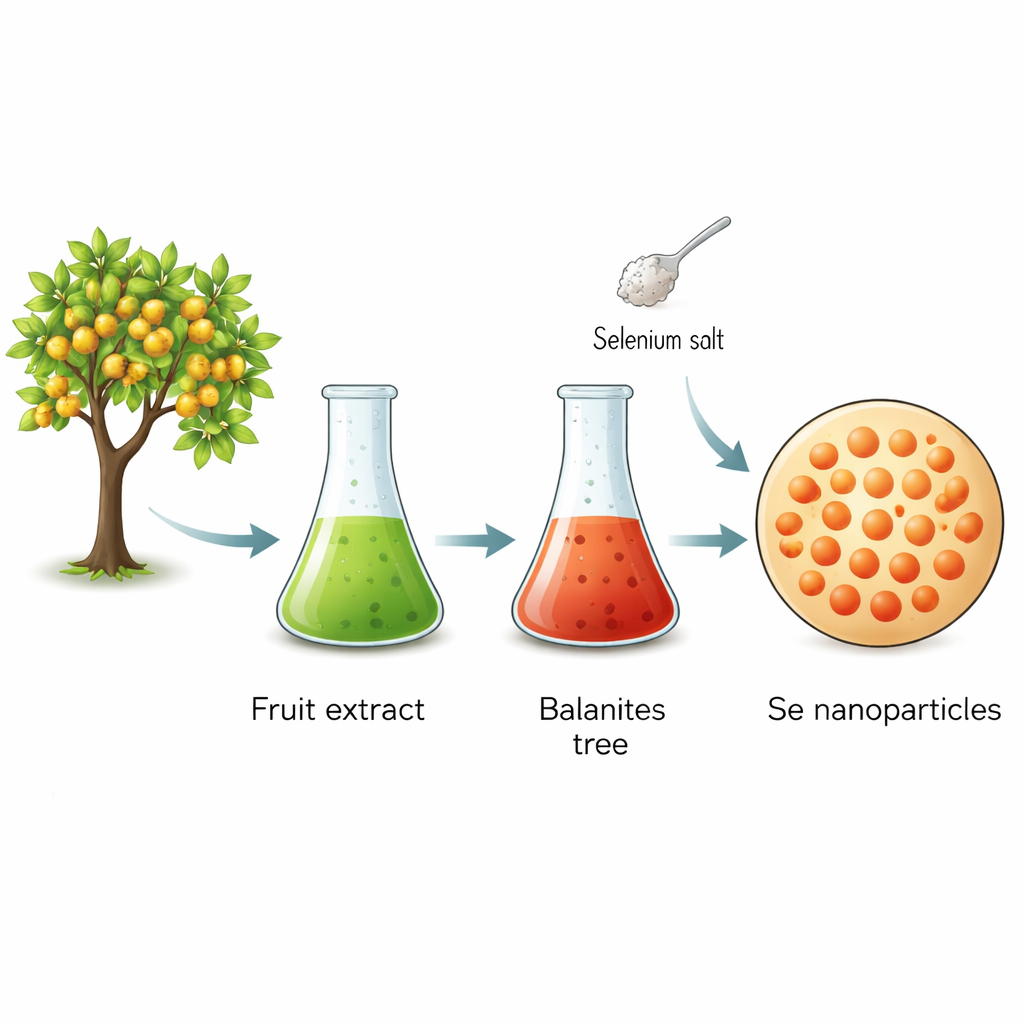
The researchers began by grinding the soft middle layer (mesocarp) of the tree’s fruits and extracting its natural chemicals with methanol. Using a technique called high‑performance liquid chromatography, they showed that the extract is rich in plant phenolics—small, antioxidant molecules such as gallic acid, chlorogenic acid, and daidzein. These compounds can donate electrons and cling to surfaces, making them ideal natural helpers for building and stabilizing nanoparticles instead of relying on harsh industrial chemicals.
Green Chemistry in Action
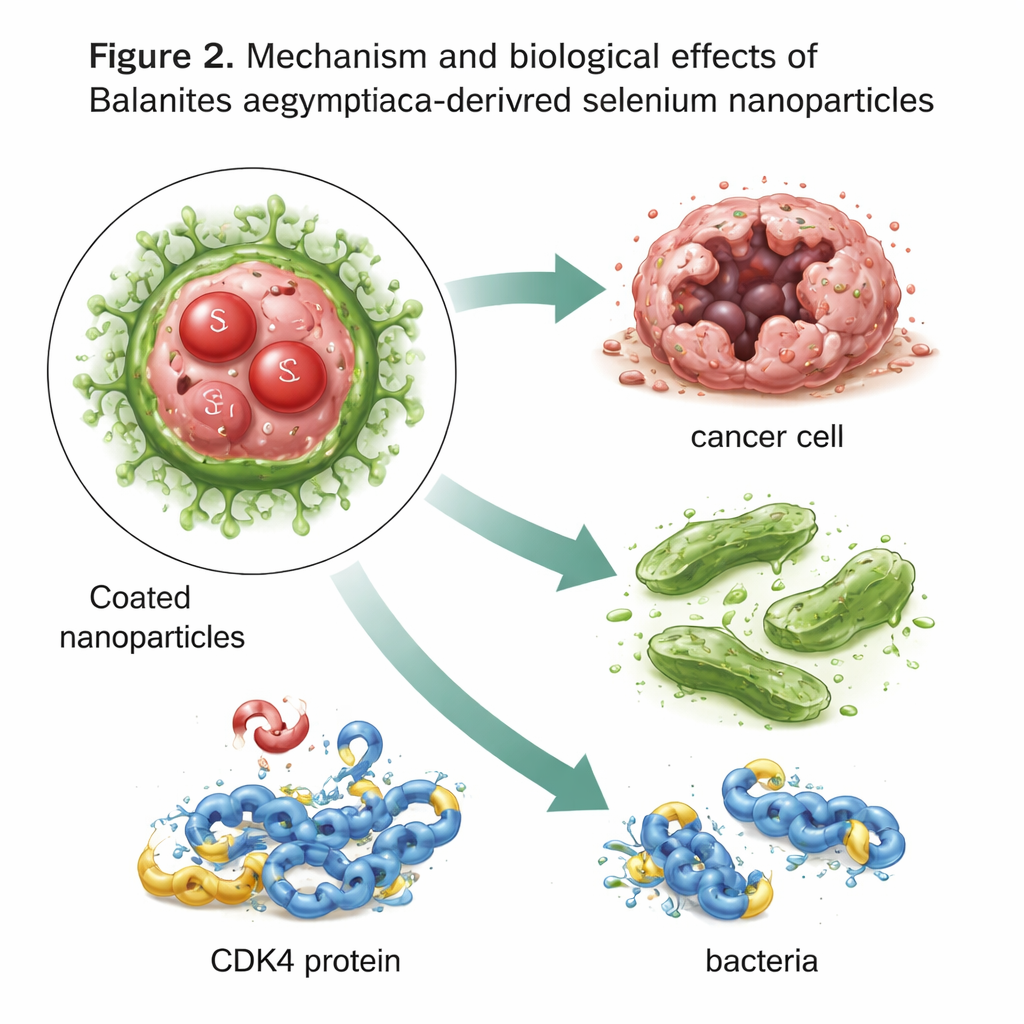
To grow the nanoparticles, the team mixed the fruit extract with a dissolved selenium salt and gently heated the solution. The liquid shifted from pale yellow to brick red, a visual sign that selenium ions were being converted into solid particles. Microscopy and light‑scattering measurements revealed that the resulting selenium nanoparticles were mostly spherical and extremely small, with sizes of just a few nanometers—tens of thousands of times thinner than a human hair. The plant phenolics formed a protective coat around the particles, giving them a strong negative surface charge that helps keep them from clumping together and improves their stability in liquid.
Testing Cancer Cells and Bacteria
The biological power of these coated particles was tested in several ways. In lab dishes containing HCT‑116 human colorectal cancer cells, increasing doses of the selenium nanoparticles sharply reduced cell survival. At around 30 micrograms per milliliter, half the cancer cells stopped growing or died. Under the microscope, treated cells appeared shrunken and detached, signs that they were undergoing programmed cell death rather than simply being poisoned. At the same time, the nanoparticles were challenged with three troublesome bacteria linked to urinary tract infections: two common Gram‑negative strains (Klebsiella pneumoniae and Escherichia coli) and one Gram‑positive strain (Enterococcus faecium). The selenium nanoparticles produced larger clear “kill zones” on bacterial culture plates than the plant extract alone and worked at lower minimum inhibitory concentrations, approaching the performance of standard antibiotics.
Safety Clues from Plants and Computer Models
Because any new material that can damage cells might also pose risks, the team probed possible genetic effects using the broad bean plant Vicia faba, a standard living test system. Root tips exposed to higher nanoparticle doses showed changes in cell division and certain chromosomal abnormalities, such as lagging or sticky chromosomes, indicating that strong exposures can stress dividing cells. However, these effects were clearly dose‑dependent, suggesting that careful control of concentration will be important for safe use. To dig into how the plant compounds themselves might contribute to anticancer action, the researchers used computer docking simulations. They virtually “fit” eight key phenolic molecules into the active pocket of CDK4, a protein that drives cell division. Several compounds, including catechin and naringenin, formed stable interactions and showed better predicted binding than a reference molecule, hinting that they may help slow cancer cell growth by interfering with this cell‑cycle switch.
What the Findings Mean for Future Treatments
Overall, the work shows that a common desert tree can supply both the raw ingredients and the natural chemistry needed to build tiny, stable selenium particles that hit hard against colorectal cancer cells and drug‑resistant bacteria in the lab. At the same time, early plant tests and the known power of selenium remind us that dose and delivery must be handled with care to avoid unwanted genetic damage. If future animal and human studies confirm their safety and effectiveness, these green‑made selenium nanoparticles could form the basis of new, more sustainable treatments for infections and cancer, blending traditional plant use with modern nanotechnology.
Citation: El-Zaidy, M.I.M., Ayoub, H.G., El-Akabawy, G. et al. Eco-friendly synthesis of Balanites aegyptiaca-derived selenium nanoparticles: extract and assessment of their anticancer, antimicrobial, cytogenetic and molecular docking insights. Sci Rep 16, 4721 (2026). https://doi.org/10.1038/s41598-026-35358-z
Keywords: selenium nanoparticles, Balanites aegyptiaca, green nanotechnology, anticancer therapy, antimicrobial agents