Clear Sky Science · en
The expression profiling of serum circPHLPP2 and LncRNA ILF3 in colorectal cancer patients
Why a blood test for colon cancer matters
Colorectal (colon and rectal) cancer is one of the world’s leading causes of cancer death, largely because it is often found late. Current blood tests pick up some tumors, but they miss many early cases and do not always show when a cancer has started to spread. This study asks a simple but important question: can we do better by looking at newer, more subtle signals in the blood—tiny RNA molecules that reflect what is happening inside tumors?
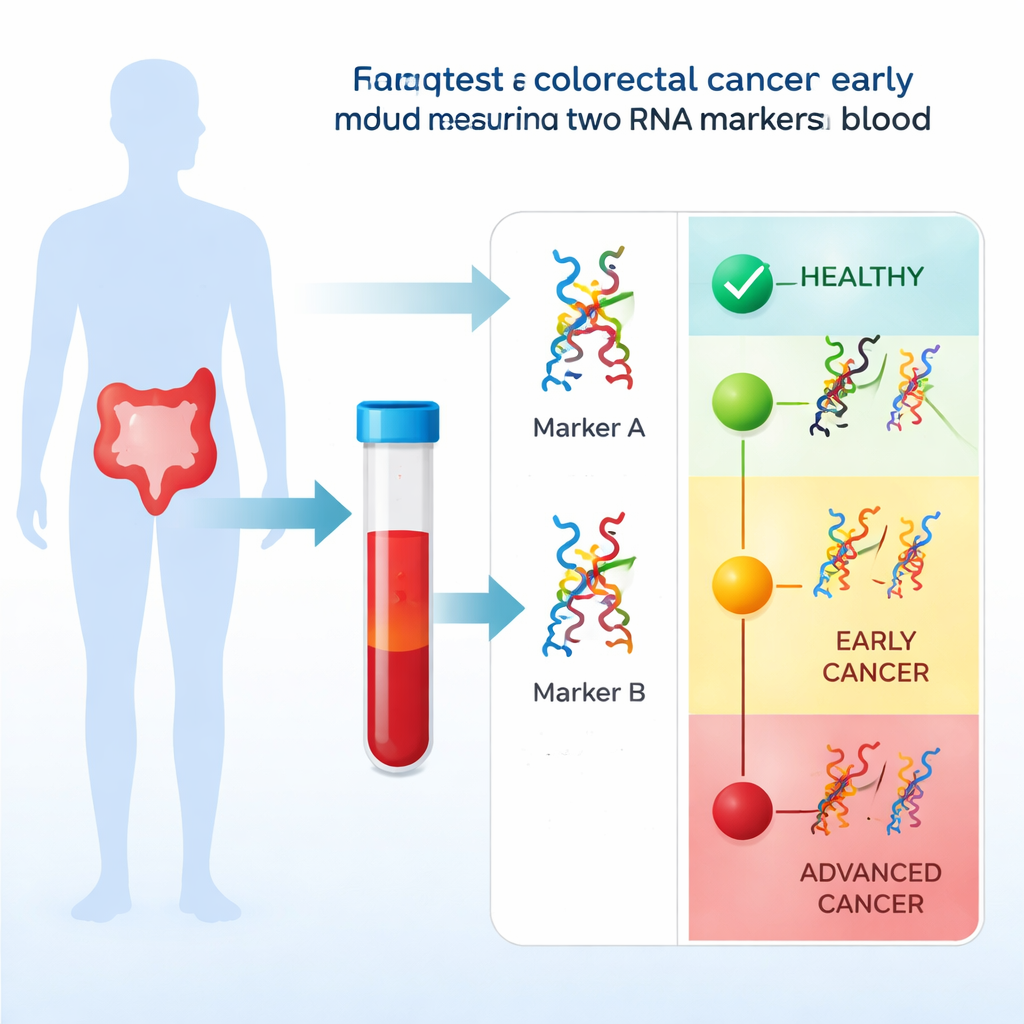
New signals hiding in the bloodstream
The researchers focused on two types of non‑coding RNA, molecules that do not build proteins but help control how genes work. One is a circular RNA called circPHLPP2; the other is a long non‑coding RNA called ILF3‑AS1. Earlier laboratory work suggested that these RNAs might help colon cancer cells grow, escape the body’s immune defenses, and resist modern immunotherapies. Because such RNAs are stable in blood, the team wondered whether their levels in a simple blood sample might reveal not just the presence of colorectal cancer, but also how advanced it is.
How the study was carried out
The team enrolled 220 people in Egypt: 130 patients with colorectal cancer and 90 healthy volunteers matched by age and sex. Among the patients, some had early‑stage disease confined to the bowel, while others had more advanced tumors that had reached lymph nodes or spread to distant organs. From each participant, the researchers collected a blood sample, separated the serum, and measured levels of circPHLPP2 and ILF3‑AS1 using a highly sensitive technique that counts RNA copies. They also measured two standard tumor markers already used in clinics—CEA and CA19‑9—for comparison.
What the new markers revealed
Both circPHLPP2 and ILF3‑AS1 were clearly higher in patients with colorectal cancer than in healthy people, and their levels rose steadily from early to late stages of the disease. Patients with metastatic cancer showed the highest amounts. Statistical tests showed a strong positive link between the two RNAs, hinting that they may act together in driving cancer behavior. When the team assessed how well each blood marker could tell patients from healthy volunteers, the new RNAs outperformed the traditional tests. ILF3‑AS1 in particular showed excellent accuracy, correctly classifying most people with or without cancer, while a combined score from both new markers did even better.
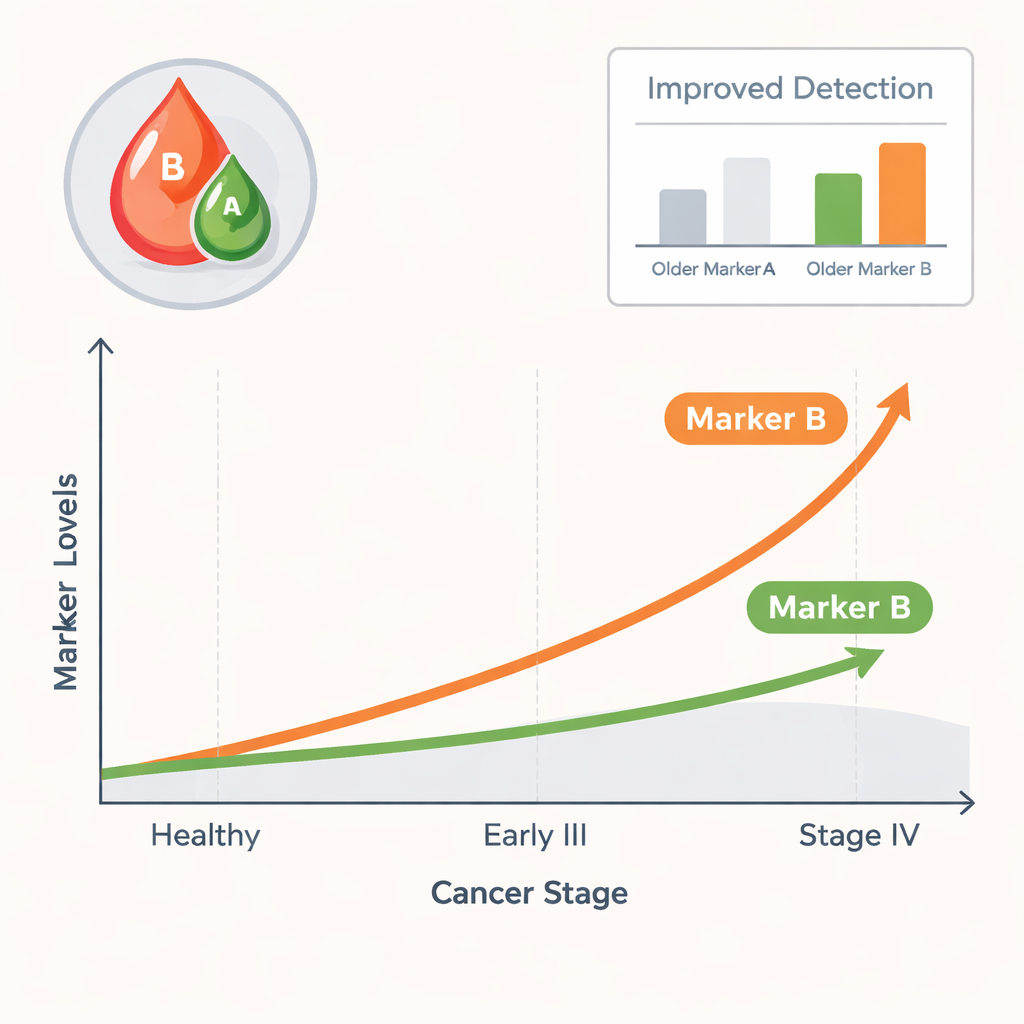
Clues about cancer spread and future use
The study also asked whether these blood signals could flag cancers that had already spread. Here again ILF3‑AS1 stood out: its levels were much higher in metastatic patients, and in more complex statistical models it emerged as an independent predictor of spread, even after accounting for CEA and other factors. CircPHLPP2 also rose with more advanced disease, though it was a weaker stand‑alone predictor. The authors argue that, together, these RNAs could form the basis of a non‑invasive “liquid biopsy” that complements, rather than replaces, current screening tools such as colonoscopy and DNA‑based blood tests.
What this means for patients and screening
For the lay reader, the take‑home message is that our blood carries detailed information about hidden cancers, and new kinds of RNA markers may unlock that information more clearly than today’s tests. In this study, two such markers, circPHLPP2 and especially ILF3‑AS1, were higher in people with colorectal cancer, climbed as the disease worsened, and signaled when tumors had spread. While these findings need to be confirmed in larger and more diverse groups, and the tests are not yet ready for routine use, they point toward a future in which a simple blood draw could help doctors detect colon cancer earlier, track how it is progressing, and decide who needs the most aggressive treatment.
Citation: Alobaida, A., Alhilal, T., Alshammari, A.D. et al. The expression profiling of serum circPHLPP2 and LncRNA ILF3 in colorectal cancer patients. Sci Rep 16, 4363 (2026). https://doi.org/10.1038/s41598-026-35356-1
Keywords: colorectal cancer, blood biomarkers, non-coding RNA, early cancer detection, liquid biopsy