Clear Sky Science · en
Chemical and biological profiling of bioactive metabolites from the invertebrate-pathogenic fungus Gibellula scorpioides BCC 39989
Spider-Hunting Fungus With Hidden Medical Promise
Deep in Thai forests, a tiny fungus that grows on spiders is yielding big surprises in the lab. Scientists have discovered that this unusual organism, Gibellula scorpioides, produces natural chemicals that can calm inflammation, curb the build‑up of fat in cells, and slow the growth of colon cancer cells—all without obvious damage to DNA. For people interested in new, nature‑derived treatments for chronic diseases such as obesity, diabetes, and cancer, this spider‑parasitic fungus offers a striking example of how strange life forms can harbor powerful medicines.
From Forest Waterfall to Laboratory Bench
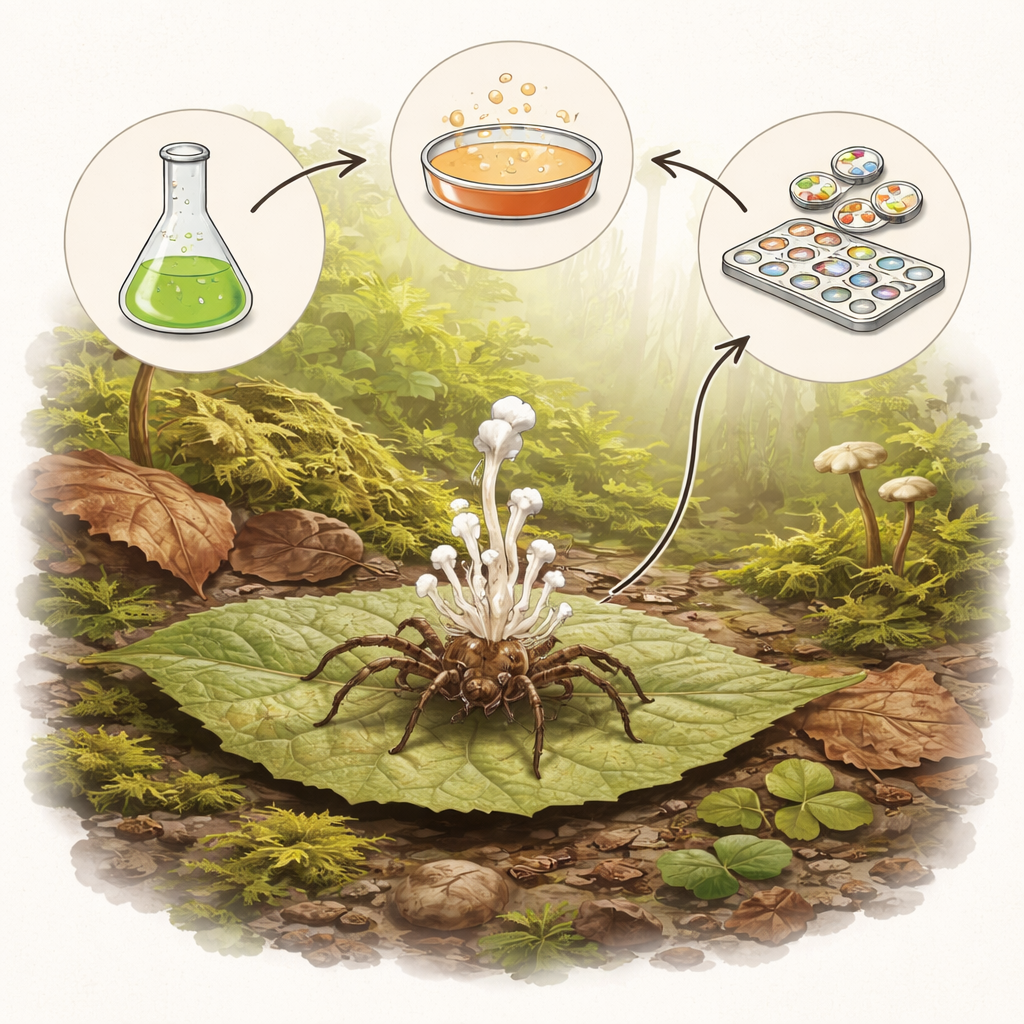
Researchers first collected G. scorpioides on a spider near a waterfall in northern Thailand and brought it into pure culture. In controlled flasks, they grew the fungus in a nutrient liquid, then separated the broth from the fungal threads and extracted the chemicals each contained. Using modern tools that read how molecules absorb light and respond to magnetic fields, they identified eight known compounds, including fatty acids common in many organisms and two key molecules called ergosterol peroxide and methyl o‑hydroxycinnamate. Though these chemicals were already known from other fungi and plants, they had never before been reported from any Gibellula species.
Taming Inflammation in Immune Cells
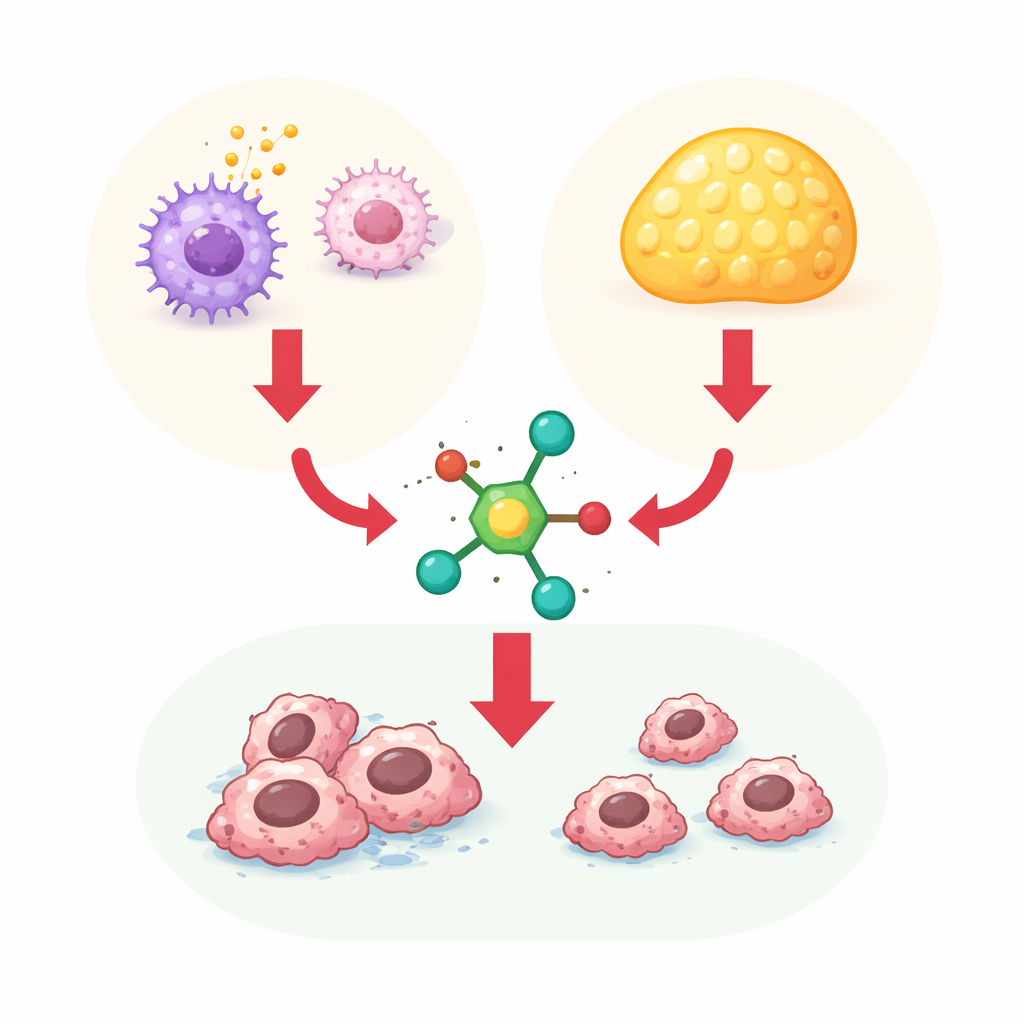
To test how these compounds behave in living systems, the team turned to a standard mouse immune cell line that responds strongly to a bacterial component called LPS. When these cells are exposed to LPS, they release nitric oxide and inflammatory messenger proteins such as IL‑6 and TNF‑α, mimicking an overactive immune response. At moderate doses that did not kill the cells, both ergosterol peroxide and methyl o‑hydroxycinnamate sharply reduced nitric oxide and IL‑6. Methyl o‑hydroxycinnamate was especially good at lowering TNF‑α, even outperforming diclofenac, a common anti‑inflammatory drug, in this cell system. These results suggest that the two fungal molecules can dial down several arms of the inflammatory response at once.
Keeping Fat Cells From Overfilling
Because chronic inflammation and obesity often go hand in hand, the researchers next examined the compounds in mouse fat‑cell precursors, a model widely used to study weight‑related disorders. As these precursor cells mature in the presence of hormones, they fill with oily droplets and store triglycerides, a form of fat. When ergosterol peroxide, methyl o‑hydroxycinnamate, or oleic acid—a common dietary fat also produced by the fungus—were added, the cells accumulated noticeably less fat. At higher but still tolerated doses, ergosterol peroxide and oleic acid reduced visible fat droplets and triglyceride levels more than simvastatin, a cholesterol‑lowering drug used as a benchmark. This suggests that, under the right conditions, these natural molecules can interfere with the processes that drive fat storage in cells.
Testing Cancer Cells and Checking DNA Safety
The team also explored whether the compounds could affect human colorectal cancer cells, a relevant target because ergosterol peroxide has been linked to anti‑tumor effects in other studies. In colon cancer cells known as SW480, ergosterol peroxide strongly slowed cell growth at relatively low concentrations, while methyl o‑hydroxycinnamate required much higher amounts to achieve a similar effect. In separate experiments with lung‑derived hamster cells, ergosterol peroxide was tested for its ability to damage DNA, using a sensitive assay that counts tiny extra nuclei formed when chromosomes break. Across a broad range of doses, both with and without added liver enzymes that mimic metabolism, ergosterol peroxide did not increase DNA damage markers compared with untreated cells, indicating no detectable genotoxicity under these conditions.
What This Means for Future Medicines
Taken together, the study shows that a little‑known spider‑parasitic fungus can be a rich source of bioactive chemicals. Two of its main products, ergosterol peroxide and methyl o‑hydroxycinnamate, can calm inflammatory signals in immune cells, while ergosterol peroxide and oleic acid also help limit fat build‑up in fat cells. Ergosterol peroxide further slows the growth of colon cancer cells and, importantly, does not appear to harm DNA in standard lab tests. While much more work—including animal studies and safety testing—is needed before any of these substances could be used as drugs, the findings highlight how exploring unusual fungi can open new paths toward treatments for inflammation, obesity, and cancer.
Citation: Rerk-am, U., Soontornworajit, B., Tantirungrotechai, Y. et al. Chemical and biological profiling of bioactive metabolites from the invertebrate-pathogenic fungus Gibellula scorpioides BCC 39989. Sci Rep 16, 4927 (2026). https://doi.org/10.1038/s41598-026-35326-7
Keywords: fungal natural products, anti-inflammatory compounds, anti-obesity research, colorectal cancer cells, Gibellula scorpioides