Clear Sky Science · en
Development of a banana stem fiber-reinforced chitosan–xanthan gum wound healing patch loaded with Tridax procumbens extract for biomedical applications
Turning Waste Plants into Smart Bandages
What if parts of a banana plant that are normally thrown away could help stubborn wounds heal faster? This study explores exactly that idea. The researchers turned banana stem fibers and a traditional medicinal weed, Tridax procumbens, into a soft, flexible patch designed to protect wounds, fight germs, reduce damaging molecules, and gently release natural medicine as the skin repairs itself. Their lab tests suggest this plant-based patch could one day offer a greener, more effective alternative to many conventional dressings.
Why Wounds Need More Than Just a Cover
Chronic wounds—such as diabetic ulcers or pressure sores—often refuse to heal even with standard care. The problem is not only infection, but also poor tissue growth, excess fluid, and a build-up of harmful "free radicals" that damage cells. Modern wound dressings try to do more than simply cover the injury: the ideal patch should be kind to living tissue, soak up excess fluid while keeping the wound moist, block bacteria, calm inflammation, and even release helpful drugs over time. Many natural polymers, like those from seaweed or crustacean shells, are gentle on the body but can be weak and hard to load with medicine on their own.
Building a Layered Plant-Based Patch
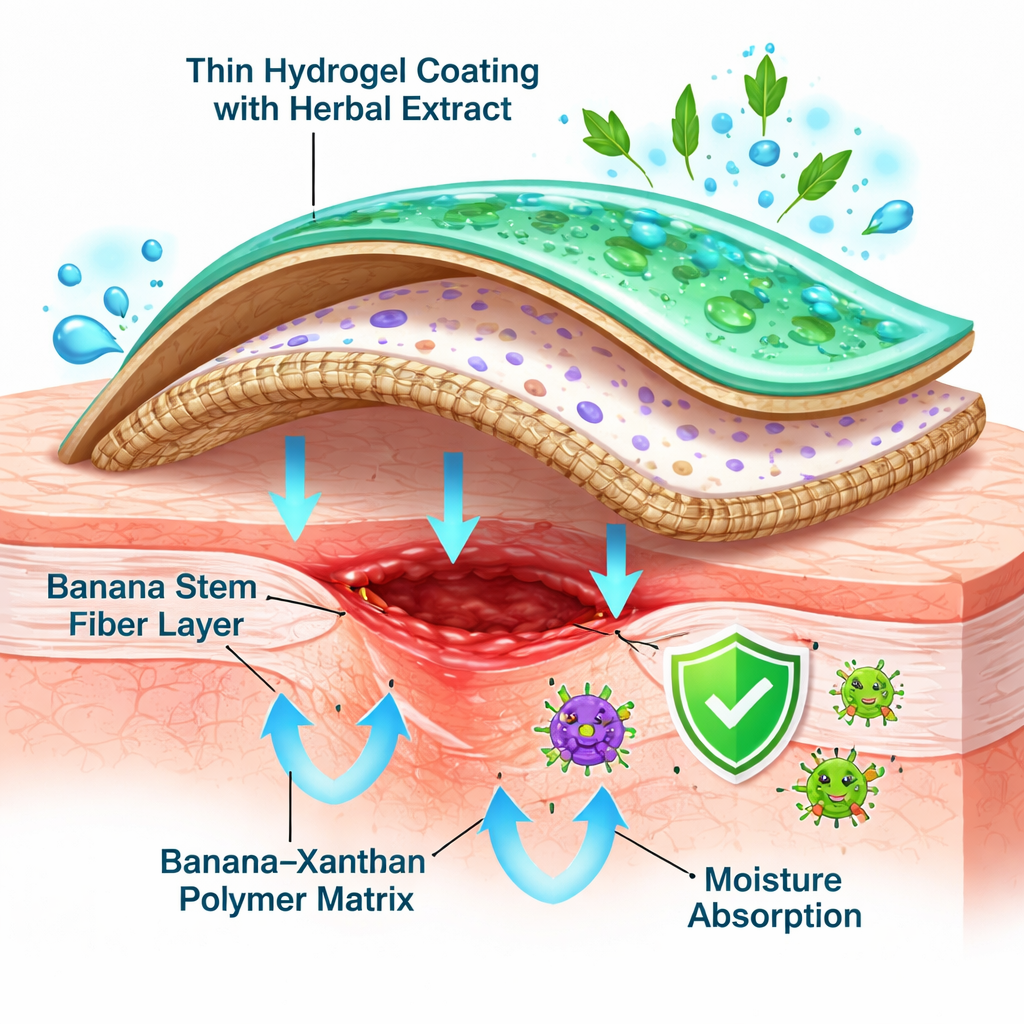
The team designed a patch that combines the strengths of several natural ingredients. At its core are fibers from the banana pseudostem—the thick, fibrous part of the plant left in the field after harvesting fruit. These fibers are rich in cellulose and add toughness, helping the patch keep its shape on the skin. The fibers are embedded in a blend of two natural gums: chitosan, which carries a positive charge and is known for its compatibility with living cells, and xanthan gum, a negatively charged thickener often used in foods. When mixed, these two form a tight but swellable network that can hold water and trap active compounds. Into this structure the scientists repeatedly soaked an extract from Tridax procumbens, a common weed long used in traditional medicine for its wound-healing, antibacterial, and antioxidant effects.
Adding a Gentle Gel for Steady Medicine Release
To prevent the herbal extract from leaking out too quickly, the researchers added one more layer: a soft hydrogel made from guar gum and sodium alginate (a seaweed derivative), lightly crosslinked with a borax solution. This gel forms a second network that interlocks with the inner banana–chitosan–xanthan structure, creating what is called an interpenetrating polymeric network. In simple terms, it is like weaving two nets together so they move as one. This outer gel helps keep the patch moist, improves comfort on the skin, and slows the escape of the plant compounds so the wound can receive a steadier dose over time.
How the Patch Behaved Under the Microscope
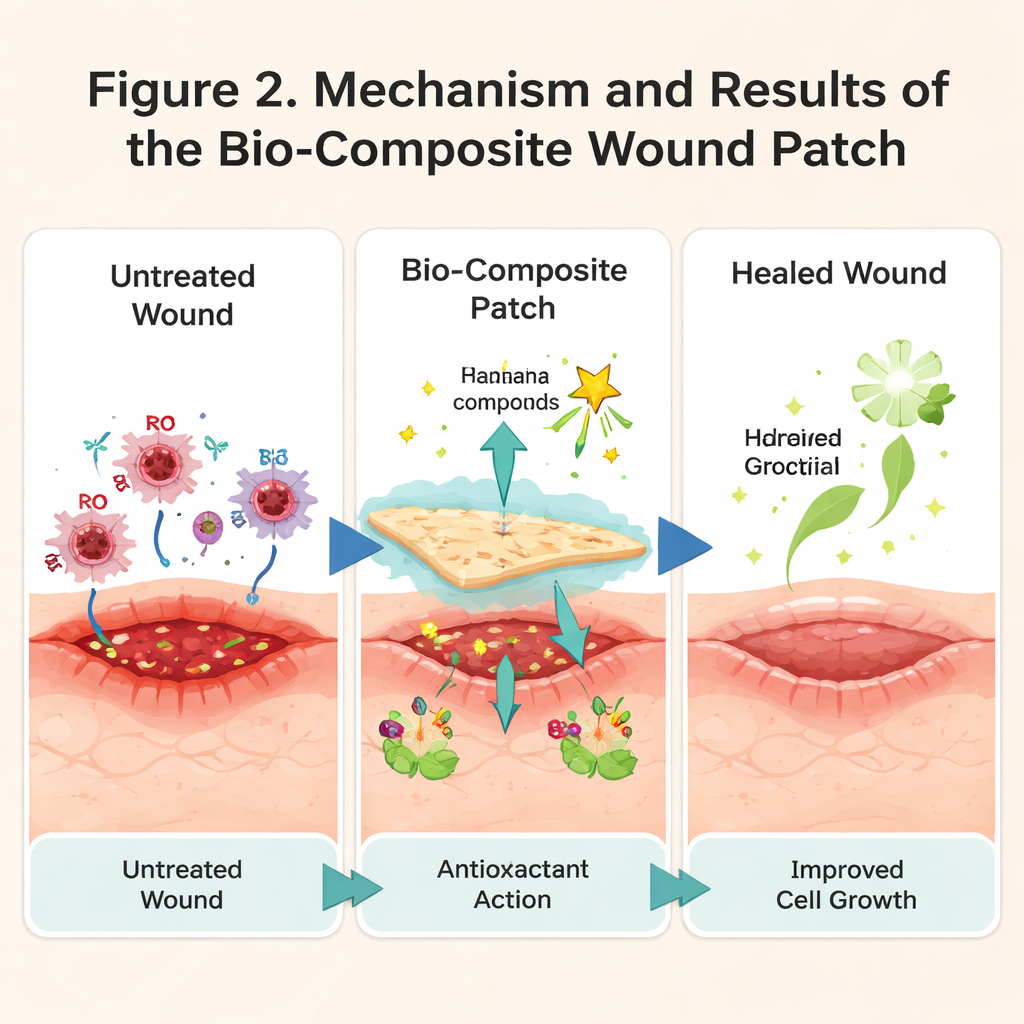
Using high-powered imaging, the team saw that the banana fibers were evenly spread through the material and that the surface had a slightly rough, porous texture. This kind of structure allows fluid and air to move while giving cells places to attach and grow. Other tests, which look at how light and X-rays interact with the material, confirmed that all the ingredients were successfully combined and that the patch had a relatively ordered internal structure, which should help it resist breaking down too quickly on the skin. The scientists then examined its behavior in biological tests: the patch clearly slowed the growth of both gram-positive and gram-negative bacteria, showed about 60% ability to neutralize free radicals at modest doses, and promoted the movement of fibroblast cells—key cells that close wounds—so that about three-quarters of a simulated wound area was covered within 24 hours at an optimal low concentration.
What This Could Mean for Future Wound Care
From a layperson’s perspective, the message is straightforward: this plant-based patch did several helpful things at once in lab tests. It protected against common bacteria, reduced harmful reactive molecules, and encouraged skin cells to spread and survive, all while being only mildly irritating even at higher doses. Because it is built from abundant, renewable ingredients—banana waste, food and seaweed gums, and a humble medicinal weed—it also points toward more sustainable wound care products. Animal and clinical studies are still needed before this becomes a real medical dressing, but the work shows that everyday natural materials can be engineered into smart bandages that actively help the body heal rather than just covering the damage.
Citation: Krishnamoorthy, U., J K, H., Siddiqui, M.I.H. et al. Development of a banana stem fiber-reinforced chitosan–xanthan gum wound healing patch loaded with Tridax procumbens extract for biomedical applications. Sci Rep 16, 6275 (2026). https://doi.org/10.1038/s41598-026-35318-7
Keywords: wound healing patch, banana fiber, natural biomaterials, herbal wound care, hydrogel dressing