Clear Sky Science · en
Chelesta-8,24-dien-3-ol in Ficus exasperata leaves enhances the prevention of sodium nitrite-induced hypoxia by binding to HIF-1 and NF-κB
Why a common food additive matters
Many of the cured meats, canned foods, and processed snacks that line supermarket shelves owe their bright color and long shelf life to a chemical called sodium nitrite. While useful for food preservation, long-term exposure to high levels of this additive can damage our cells by reducing oxygen delivery and stirring up harmful reactive molecules. This study explores whether a leaf extract from Ficus exasperata, a tree widely used in African traditional medicine, can help the body fend off this kind of hidden damage.
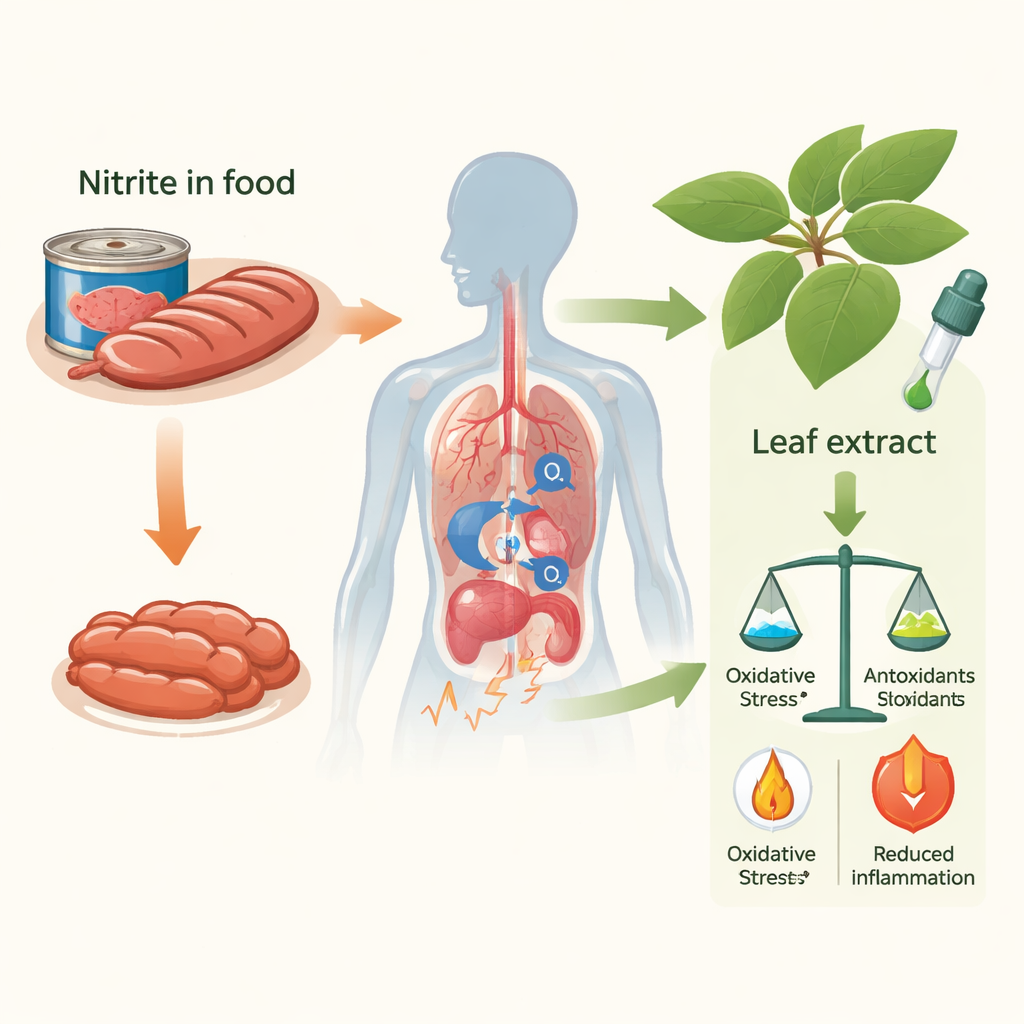
From everyday foods to low-oxygen stress
Inside the body, sodium nitrite can be converted into nitric oxide, which then reacts with hemoglobin, the protein that carries oxygen in red blood cells. This reaction forms methemoglobin, a form of hemoglobin that cannot carry oxygen efficiently. When enough of it builds up, tissues experience hypoxia—a state of oxygen shortage. At the same time, nitrite-driven chemistry produces reactive species that overwhelm the body’s natural antioxidant defenses. Earlier work has linked this cascade to oxidative stress, inflammation, tissue injury, and an increased risk of cancer and organ failure.
A medicinal tree under the microscope
Ficus exasperata is a common tree in tropical Africa whose leaves, bark, and roots are used in folk remedies for ailments ranging from pain and inflammation to fertility problems. The researchers focused on an n-hexane:ethyl acetate fraction of the leaves (called NHEAF), which is especially rich in oily compounds known as terpenoids. Using gas chromatography–mass spectrometry, they catalogued 28 different phytochemicals. One sterol-like molecule, cholesta-8,24-dien-3-ol, 4-methyl-, (3β), stood out both for its abundance and for its strong predicted ability to interact with proteins that sense low oxygen and drive inflammation.
Testing protection in living animals
To see whether the leaf fraction could protect against nitrite damage, the team used female Wistar rats divided into several groups. Some received only olive oil (the vehicle), others were given a single oral dose of sodium nitrite at a level high enough to cause toxicity without killing the animals, and three groups were pretreated for two weeks with either a standard antioxidant regimen (vitamin E plus omega-3 fatty acids) or low and high doses of the Ficus leaf fraction before nitrite exposure. After treatment, the researchers examined blood, liver, and kidney tissues for key antioxidant enzymes, small-molecule antioxidants such as glutathione and vitamins C and E, markers of lipid damage, and the activity of oxygen- and inflammation-sensing proteins HIF‑1 and NF‑κB.
How the leaf fraction shields cells
Rats exposed to sodium nitrite alone showed clear signs of stress: antioxidant enzymes dropped, protective molecules such as glutathione and total thiols were depleted, and malondialdehyde—a marker of fat and membrane damage—rose. At the molecular level, the nitrite surge switched on HIF‑1 and NF‑κB, signaling hypoxia and inflammation, while dampening Nrf‑2, a protein that normally helps turn on antioxidant defenses. Pretreatment with the Ficus leaf fraction largely prevented these changes. Enzyme activities and antioxidant levels stayed close to normal, lipid damage was reduced, and the expression of HIF‑1 and NF‑κB was kept in check, similar to or better than the standard vitamin E and omega‑3 treatment in several measures.
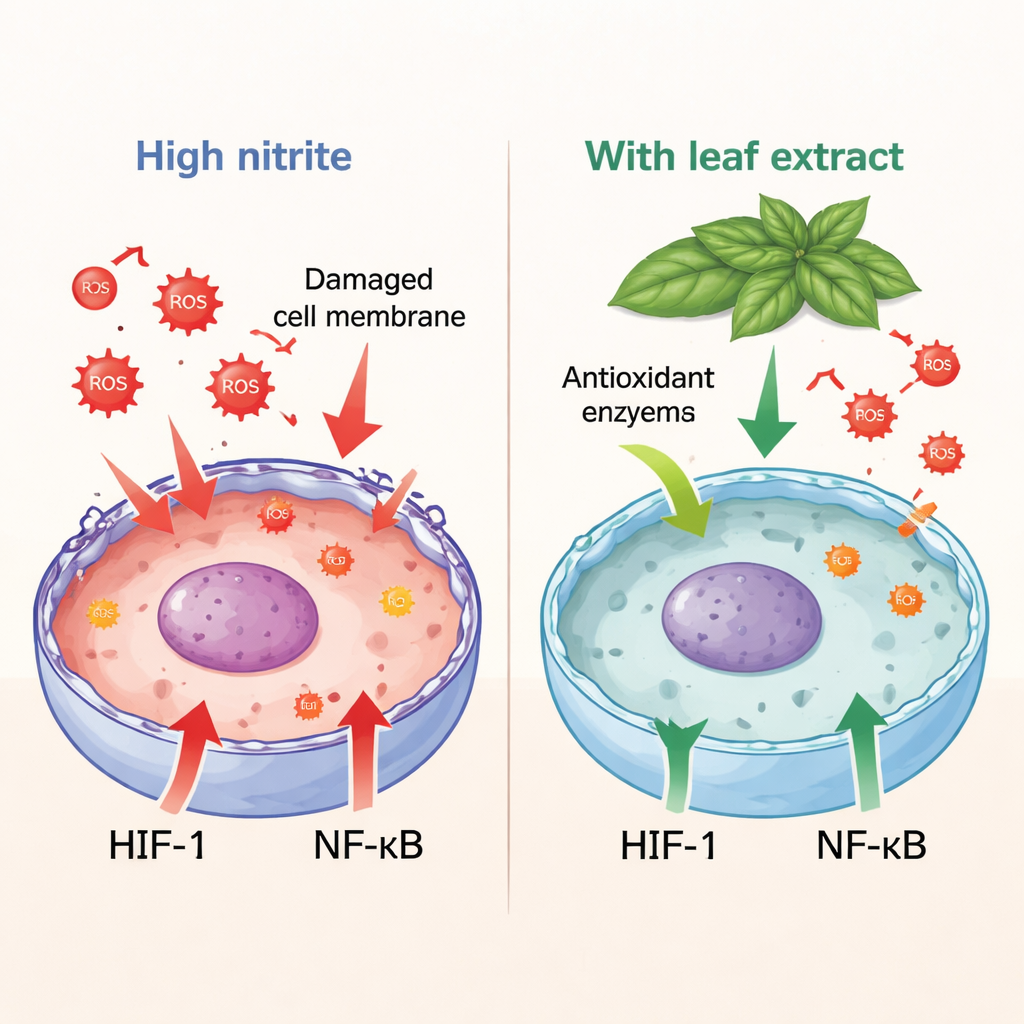
A key plant molecule and its targets
Using computer-based molecular docking, the scientists probed how individual compounds from the leaf fraction might latch onto HIF‑1 and NF‑κB. Cholesta-8,24-dien-3-ol, 4-methyl-, (3β) showed the strongest binding to both proteins, with calculated affinities better than a known reference inhibitor of HIF‑1. The modeling suggests this sterol nests snugly into pockets on the protein surfaces, forming multiple stabilizing interactions that could blunt their activity. Another compound, a bulky phenol, also bound well but less strongly. Together with the animal data, these results point to cholesta-8,24-dien-3-ol, 4-methyl-, (3β) as a major contributor to the extract’s protective power.
What this could mean for everyday health
In simple terms, this work shows that a carefully prepared fraction of Ficus exasperata leaves can help laboratory animals withstand a surge of sodium nitrite—a stand‑in for heavy exposure to a common food additive—by supporting their antioxidant systems and dialing down signals of low oxygen and inflammation. While this does not mean people should self-medicate with the plant, it highlights how traditional medicinal species can yield molecules that counteract modern dietary stresses. With further research and safety testing, cholesta-8,24-dien-3-ol–rich extracts or derived compounds might one day form part of natural strategies to limit the subtle, long-term harms associated with high nitrite intake.
Citation: Akinloye, D.I., Moses, C.A., Alum, E.U. et al. Chelesta-8,24-dien-3-ol in Ficus exasperata leaves enhances the prevention of sodium nitrite-induced hypoxia by binding to HIF-1 and NF-κB. Sci Rep 16, 4822 (2026). https://doi.org/10.1038/s41598-026-35307-w
Keywords: sodium nitrite, oxidative stress, Ficus exasperata, hypoxia, plant antioxidants