Clear Sky Science · en
Associations between postnatal cerebral oxygen availability and utilization in very to late preterm infants and neurodevelopmental outcome
Why early brain health in preterm babies matters
Every year, many babies are born a few weeks too early. Most grow up healthy, but as a group they have a higher risk of difficulties with thinking, language, and movement. Doctors would like to know, shortly after birth, which children might need the closest support. This study asked a simple but important question: can harmless light shone on a baby’s forehead tell us how well the brain is using oxygen, and does that relate to how the child develops by age two?
Looking into the brain using gentle light
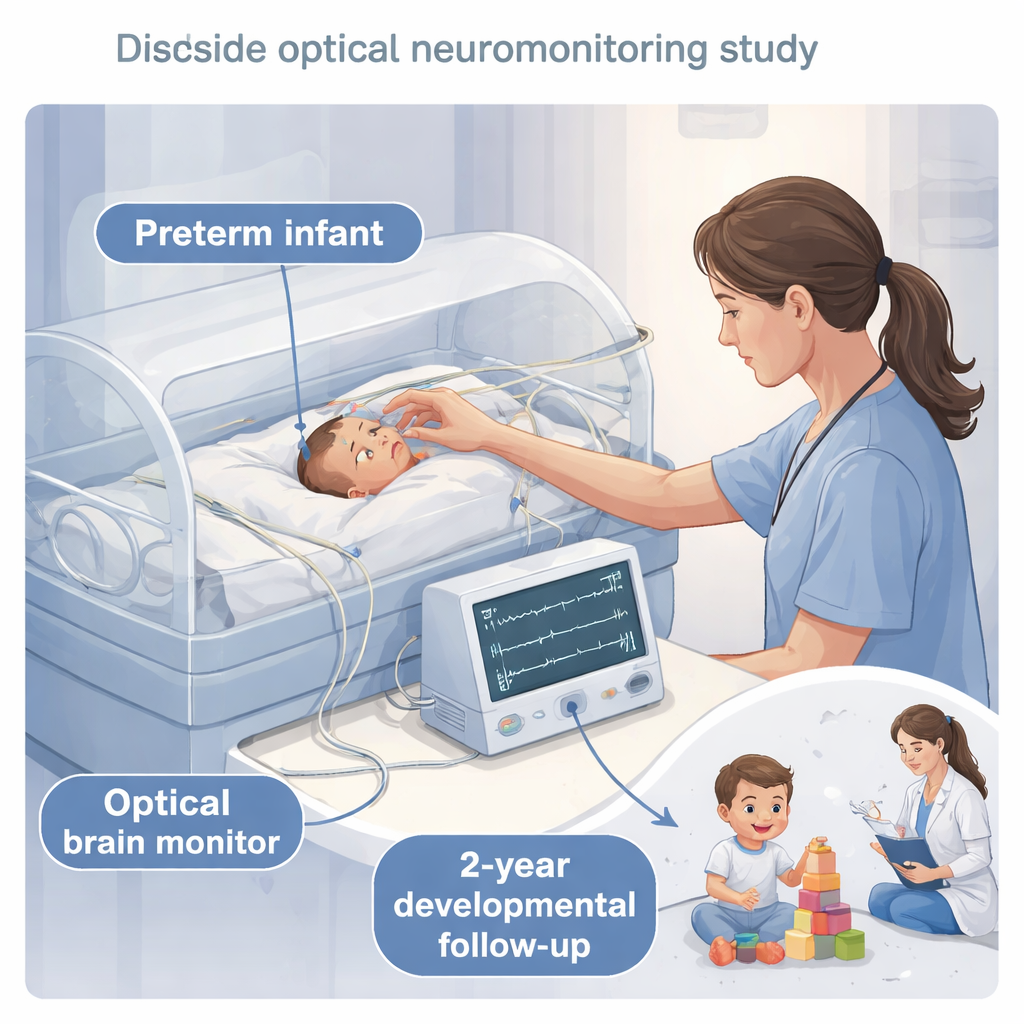
Instead of putting fragile infants into large scanners, the research team used a bedside device that sends near-infrared light through the forehead and measures the returning signal. From this, they estimated how much blood flows through the brain, how much oxygen is delivered, and how much oxygen the brain actually uses. These measures together give a picture of how hard the brain is working and how mature it is. The test was done once, when the babies had reached an age similar to full-term birth, but were still in the hospital nursery.
Following preterm babies into toddlerhood
The study followed 227 infants born between 29 and 36 weeks of pregnancy at a single hospital. All had spent at least two days in the neonatal intensive care unit, and most had no major brain injuries. At around 40 weeks after conception, when they were close to the age of a full-term newborn, the babies received the light-based brain test. About two years later, trained specialists who did not know the brain test results evaluated the children using a standard exam of thinking skills, language, and movement. This allowed the researchers to compare early brain oxygen measures with later development.
More oxygen use, better early abilities
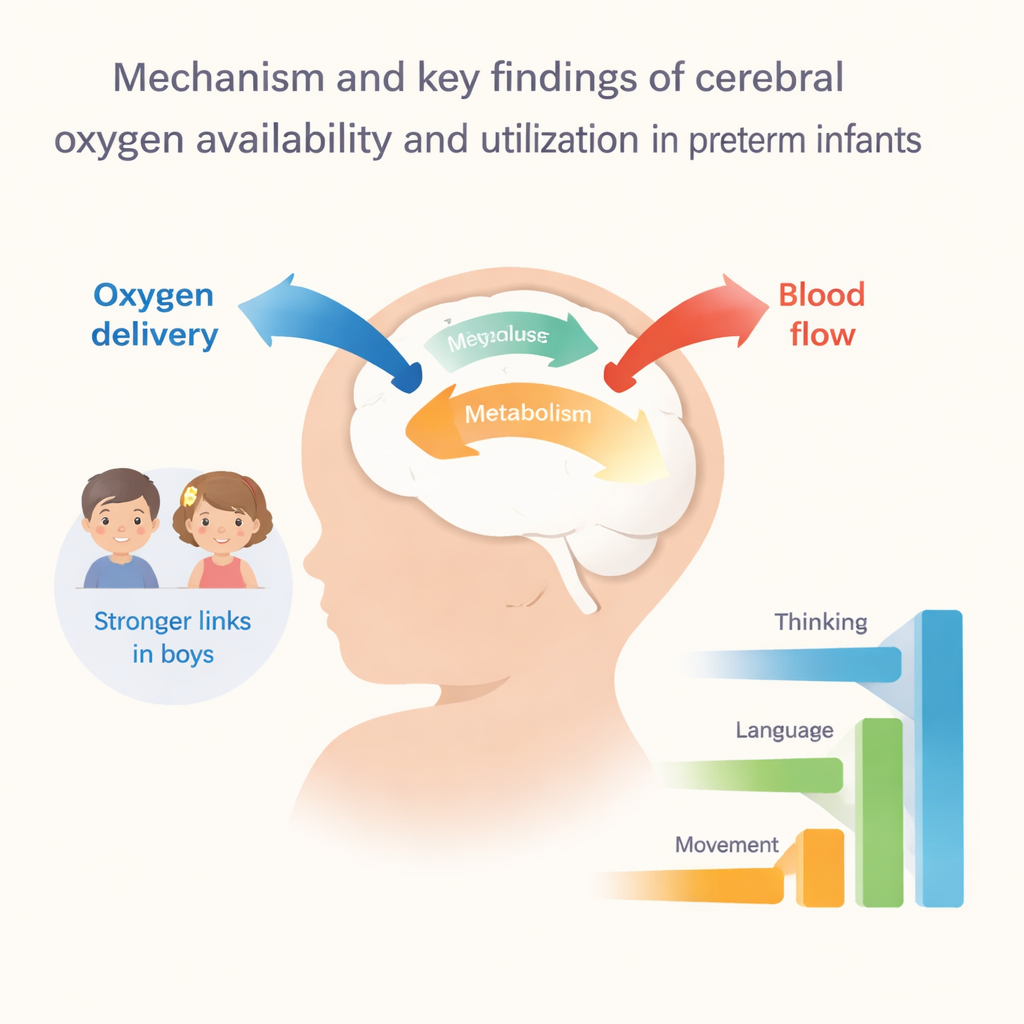
When the researchers looked at all infants together, they found a clear pattern: babies whose brains showed higher oxygen delivery and higher oxygen use around the time of hospital discharge tended to have better thinking and language scores at age two. A measure called oxygen extraction fraction, which reflects how much oxygen the brain pulls out of the blood, was also linked to stronger scores. Interestingly, a simple average oxygen level in the brain was less helpful and in some cases showed the opposite trend, suggesting that how actively the brain uses oxygen matters more than just how much oxygen is present at any moment.
Boys and girls show different patterns
When the team separated the data by sex, important differences appeared. In boys, nearly all the brain oxygen measures were tied to later development: more blood flow, more oxygen delivery, and more oxygen use were each associated with better thinking, language, and movement scores. These models explained as much as a quarter of the differences in abilities between boys. In girls, the links were weaker and mostly limited to a couple of measures. The study also showed that as babies reached older postmenstrual ages—that is, more weeks since conception—their brains generally delivered and used more oxygen, in line with ongoing brain growth and wiring.
What this means for families and care teams
For parents and clinicians, the message is cautiously hopeful. A short, non-invasive light test at the bedside may offer an early window into how a preterm baby’s brain is growing and how that growth relates to later thinking, language, and movement. The results suggest that brains that are more active and hungrier for oxygen near the time of discharge belong, on average, to toddlers who perform better at two years of age, especially among boys. While this kind of monitoring is not yet a routine screening tool, it hints at a future in which doctors can identify at-risk preterm children sooner and tailor follow-up and early interventions to support each child’s developing brain.
Citation: Karthikeyan, A., Luu, T.M., Chowdhury, R. et al. Associations between postnatal cerebral oxygen availability and utilization in very to late preterm infants and neurodevelopmental outcome. Sci Rep 16, 5019 (2026). https://doi.org/10.1038/s41598-026-35303-0
Keywords: preterm infants, brain oxygenation, neurodevelopment, bedside monitoring, near infrared spectroscopy