Clear Sky Science · en
Research on the synergistic variation law of wheat and soil quality under gradient high-temperature treatment
Turning Up the Heat on Farmland
As heat waves and extreme weather become more common, farmers are looking for ways to protect both crops and soil. This study explores a surprising idea: briefly heating the soil on purpose, at carefully controlled temperatures, to see whether it can improve wheat growth and soil health—or push them past a breaking point. By watching how plants, soil nutrients, and microbes respond, the researchers offer clues for how agriculture might adapt in a warming world.
Testing Heat in Real Wheat Fields
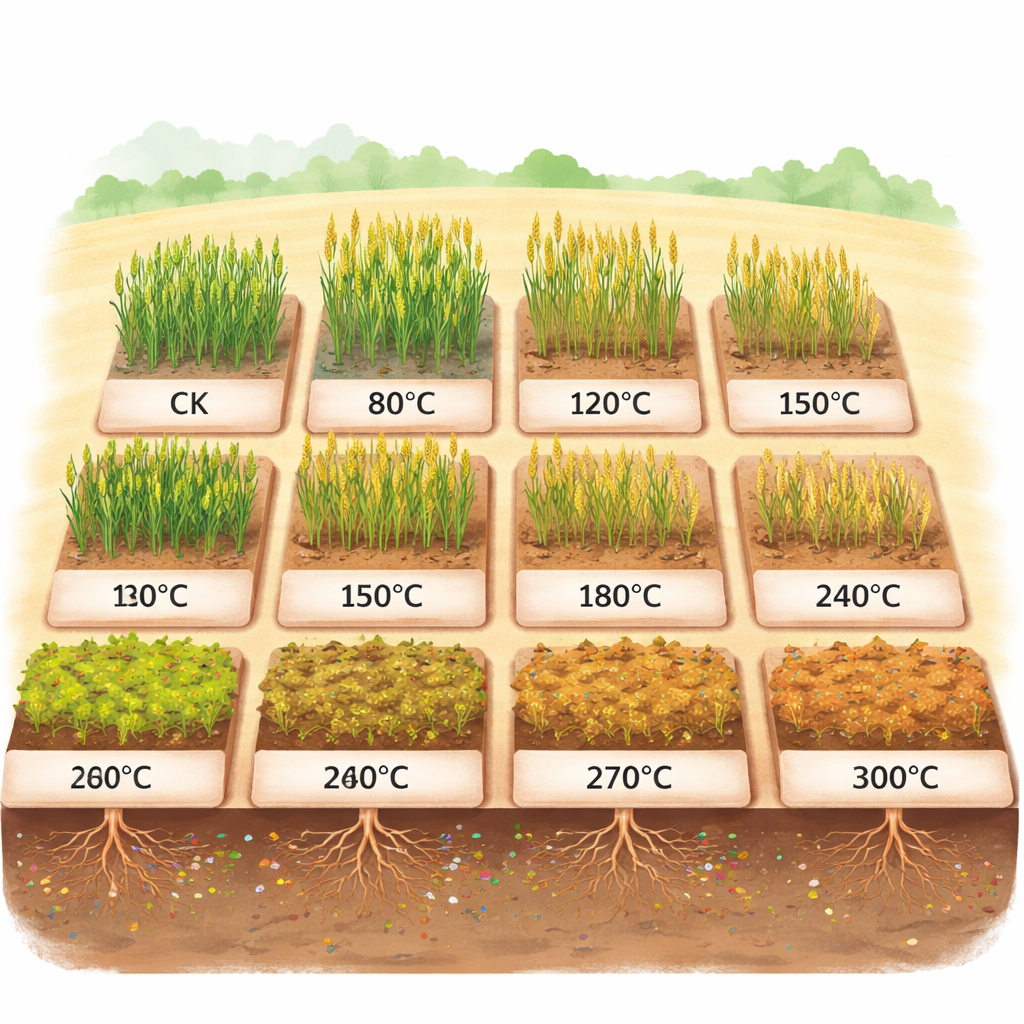
The team carried out a field experiment on loess soil in northern China, using wheat as a test crop. They divided the land into small plots and briefly heated the top few centimeters of soil with a custom electric coil before sowing. Ten treatments were used: one unheated control that followed natural weather, and nine heat treatments from 80 °C up to a scorching 300 °C. After the soil cooled back to normal, all plots were managed the same way and planted with wheat, allowing the scientists to isolate the effects of the prior heat exposure.
How Wheat Plants Reacted Below and Above Ground
The wheat plants showed that heat subtly reshapes growth rather than simply helping or hurting. At moderate temperatures, such as 100–210 °C, plant height and leaf length were similar to or slightly better than the unheated control. At the highest temperatures, 270–300 °C, the wheat became shorter with smaller leaves, suggesting that the shoots were stressed. Yet the roots told a different story: under hotter treatments, especially toward the upper range, dry and fresh root weights increased by about 25–64% compared with the control. In other words, intense soil heating tended to hold back the above-ground part of the plant while prompting the roots to become thicker and heavier, a shift that could influence how well crops tolerate drought and poor soils.
Soil Nutrients and Structure Under Fire
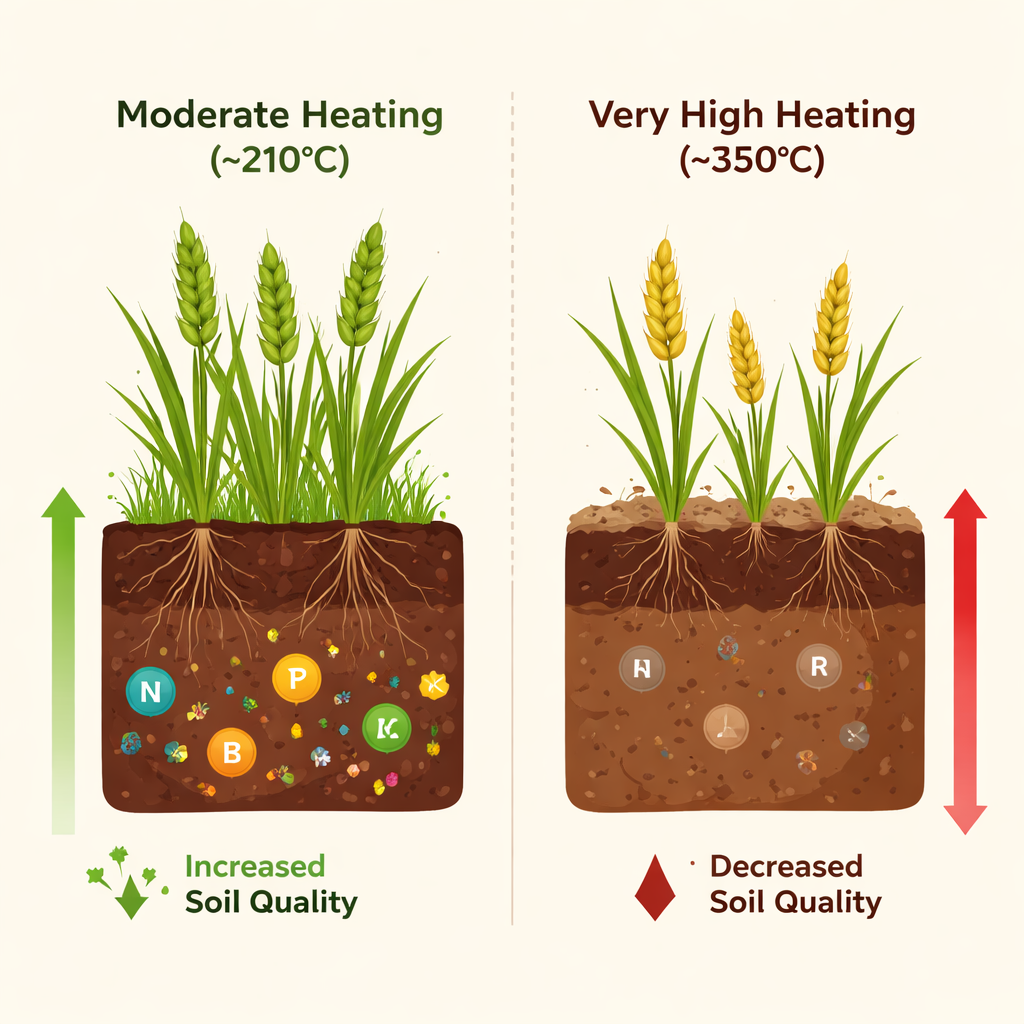
Soil chemistry and physical structure also changed in complex ways as the temperature rose. A moderate heat treatment around 120 °C boosted soil organic carbon, suggesting faster breakdown of plant residues into forms that feed microbes and plants. At the same time, very high temperatures (270–300 °C) sharply reduced a more fragile form of carbon that is easily oxidized, effectively burning off part of the soil’s quick-energy reserve. Key nutrients behaved differently across treatments: total nitrogen was highest under 270 °C, available phosphorus peaked near 120 °C, and available potassium was greatest around 240 °C. Enzyme activity related to decomposition increased in most heated plots, showing that soil life and chemistry were temporarily energized. Changes in sand, silt, and clay proportions hinted that heating could even alter soil texture and its ability to hold water and nutrients.
Microbes: Winners and Losers in Hot Soil
Because microbes drive nutrient cycling and support plant health, the researchers examined soil bacteria and fungi using DNA sequencing. Despite the heat, the main groups of bacteria remained similar, dominated by Proteobacteria, Acidobacteriota, and several other phyla. Under moderate heating around 210 °C, bacterial diversity and richness were slightly higher than in unheated soil, suggesting a more varied and potentially more resilient community. Some bacterial groups declined, while others, such as Verrucomicrobiota, increased, reflecting how different microbes cope with thermal shocks. Fungal communities were surprisingly stable: the dominant group, Ascomycota, still made up about 80% of species, and overall fungal diversity changed little. This pattern indicates that bacteria are more sensitive “first responders” to soil heating than fungi.
Finding the Sweet Spot for Soil Quality
To combine all this information—plant traits, nutrient levels, soil texture, and microbial activity—the scientists built a single soil quality score. This score showed that a mid-range heat treatment at 210 °C consistently produced the best overall outcome for both wheat and soil. The 210 °C plots balanced stronger root systems, favorable nutrient availability, and richer bacterial communities without the severe losses in sensitive carbon forms seen at the highest temperatures. In contrast, extreme heating pushed the system too far, undermining some aspects of soil biology and crop growth.
What This Means for Future Farming
For non-specialists, the take-home message is that soil can sometimes benefit from a controlled “thermal shock,” but only within limits. A brief, moderate heating of the upper soil layer—similar in spirit to some flame-weeding or sanitation practices—may help suppress pests and reshape the underground environment in ways that improve soil quality and help wheat seedlings get established. However, pushing temperatures too high risks burning away valuable organic matter and stressing plants and microbes. As climate change drives more intense heat events, understanding this fine balance will be crucial for designing farming practices that protect both yields and the living soil they depend on.
Citation: Guo, Z., Hui, W., Li, J. et al. Research on the synergistic variation law of wheat and soil quality under gradient high-temperature treatment. Sci Rep 16, 4896 (2026). https://doi.org/10.1038/s41598-026-35300-3
Keywords: wheat, soil heating, soil microbes, soil quality, climate adaptation