Clear Sky Science · en
Changes in peripheral IR thermography and energy expenditure on cooling in men and women following sustained strenuous activity in Antarctica
Why life in extreme cold matters to all of us
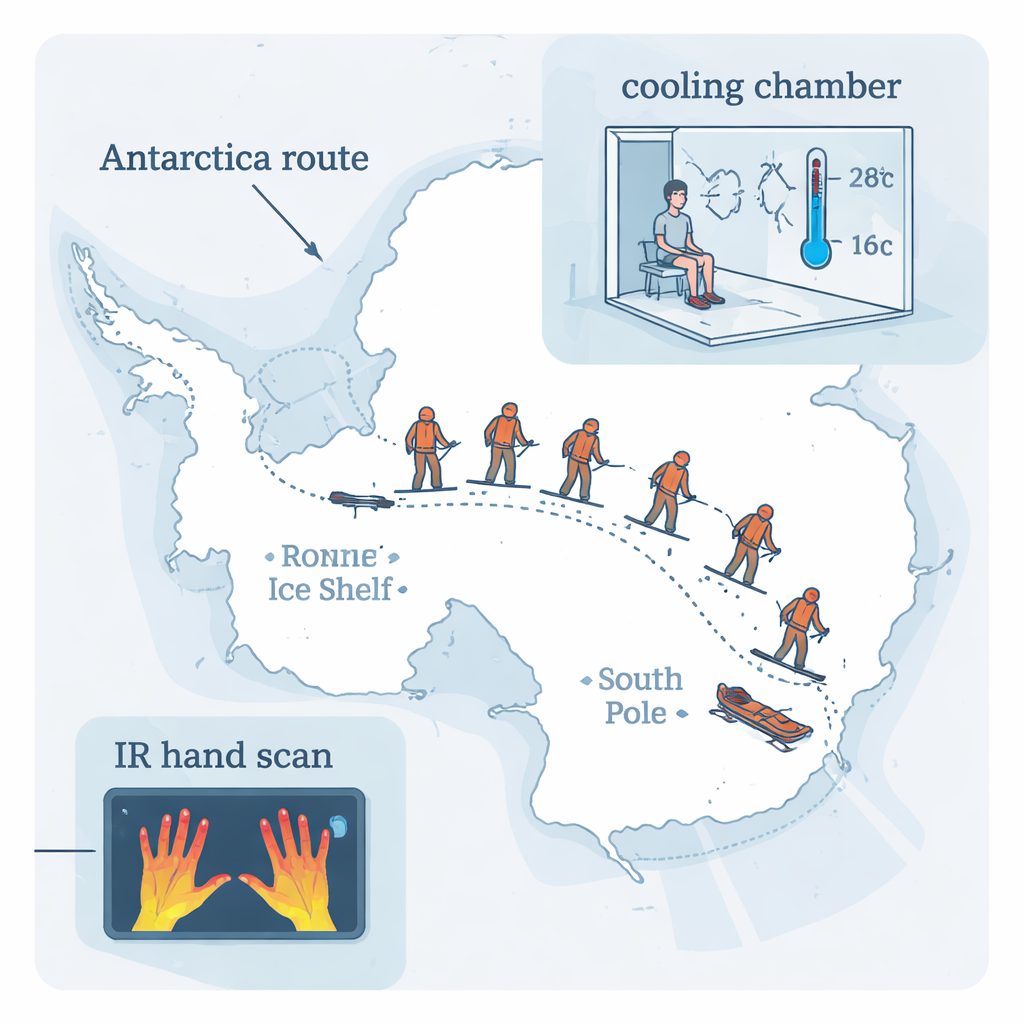
Imagine skiing nearly 1,000 kilometers across Antarctica for more than six weeks, in temperatures that can plunge far below freezing—and then coming home so scientists can see how your body copes with being cold. This study followed nine men and women from the INSPIRE-22 South Pole expedition to ask a deceptively simple question with wide relevance: when we get chilled, does our body always burn more energy to keep us warm, or are some people wired to save energy instead?
How our bodies usually fight the cold
Humans stay at a nearly constant internal temperature thanks to a mix of behavior (putting on a jacket) and automatic responses (changing blood flow and heat production). At mild levels of cold, we can boost our heat output without shivering, in part by activating brown fat—specialized tissue that burns calories to make heat. With more intense or prolonged cold, we start to shiver, using muscle activity as an emergency furnace. Classic thinking is that cold should push energy use upward. Yet earlier experiments with short, daily bouts of cold exposure found something puzzling: in some people, overall energy use actually went down.
A Polar trek put to the test back home
The INSPIRE-22 expedition offered a rare chance to study what happens after truly sustained cold exposure in the real world. Nine healthy adults (six men and three women), who had skied 47 days hauling heavy sledges in Antarctica, were tested in a special whole-body calorimeter—an airtight room that can precisely measure how many calories a person is burning. Each volunteer was studied both before leaving for Antarctica and again within about two weeks of returning. On the second morning in the chamber, the room’s air temperature was gradually lowered from about 22 °C to 16 °C over two hours while participants sat quietly, not shivering, in light clothing. At the end of this cooling period, and again after an hour of re-warming, the researchers took infrared thermal images of the front and back of each hand to see how warm the skin remained.
Watching fingers, hands, and energy use
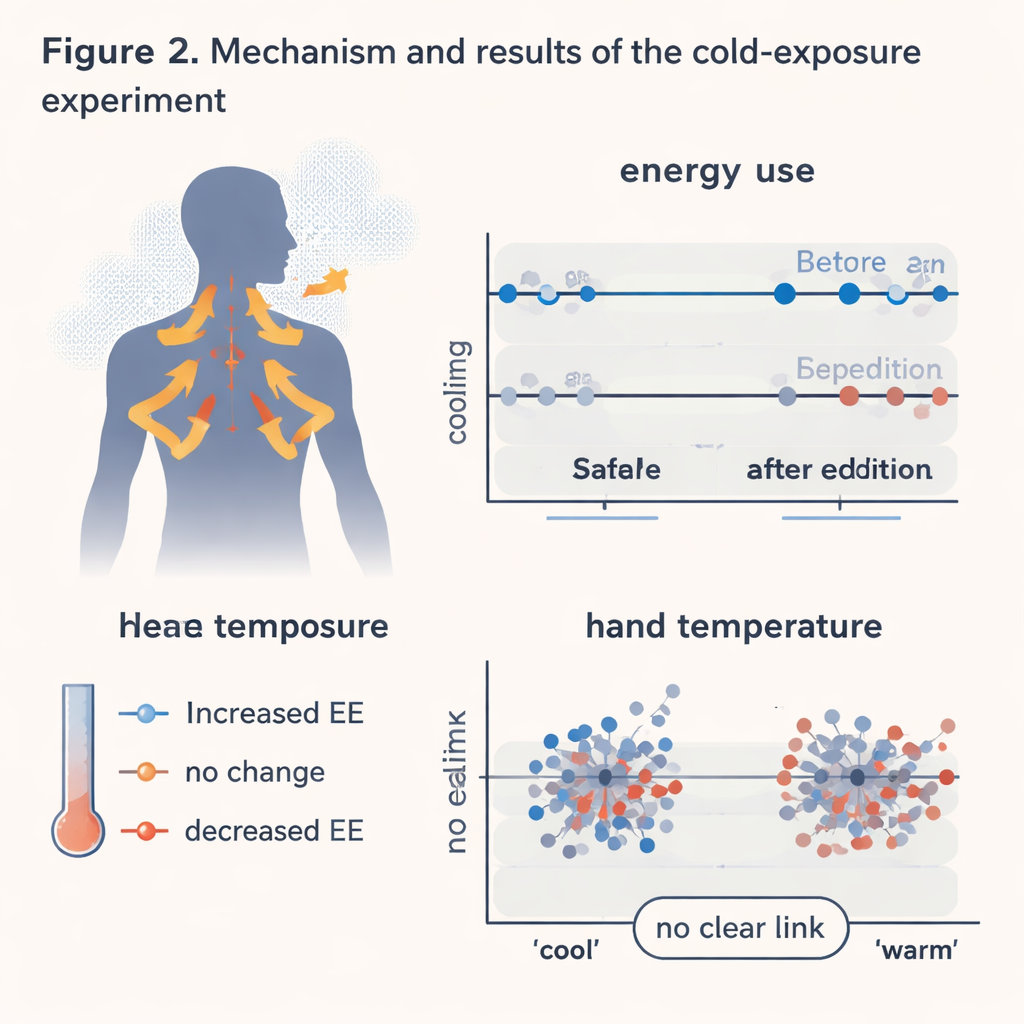
From the chamber data, the team used lines-of-best-fit to estimate how each person’s energy expenditure changed over 100 minutes of cooling. Before the expedition, five people showed increased energy use with cooling, two showed no clear change, and two actually used less energy. After the Antarctic journey, the pattern was surprisingly similar: five increased, one showed no change, and three decreased. Statistical tests found no overall shift toward more or less heat production after weeks in the Polar environment. At the same time, the infrared images were carefully analyzed to separate finger regions from the rest of the hand. As expected, fingers generally cooled more than the broader hand areas, and dominant (right) hands showed slightly different temperature responses than left hands. But these differences did not depend on whether measurements were taken before or after the expedition, nor did they differ reliably between men and women, although the number of women was small.
Testing the “shut down the limbs to save energy” idea
The researchers had proposed that people whose energy use drops in the cold might be saving fuel by cutting blood flow to the arms and hands, lowering metabolism in those outer tissues. If that were true, participants who showed a fall in energy expenditure should also have particularly cold fingers and hands relative to the surrounding air. To check this, the team compared, participant by participant, the difference between hand skin temperature and room temperature under cool and warm conditions, color-coding each person according to whether their energy use rose, fell, or stayed the same. No consistent pattern emerged. Those who conserved energy did not have colder hands than the others, and those whose energy use rose did not have distinctly warmer hands. In short, there was no sign that reduced blood flow to the extremities explained why some people burn fewer calories when chilled.
What this means for life in the cold
For the INSPIRE-22 team, weeks of hard work in Antarctica did not fundamentally change how their bodies responded to a controlled cold challenge once they were back home and dressed comfortably. Some individuals did show a drop in energy use during mild cooling, but this trait appeared to be personal rather than a result of Polar adaptation, and it was not tied to visibly colder hands. For non-scientists, the takeaway is that human responses to cold are more varied and subtle than the simple idea that “cold always makes you burn more calories.” Understanding these differences could one day help tailor clothing, work-rest schedules, or medical care for people who must operate in harsh environments—from soldiers and explorers to people who work in walk-in freezers.
Citation: Hattersley, J., Imray, C. & Wilson, A.J. Changes in peripheral IR thermography and energy expenditure on cooling in men and women following sustained strenuous activity in Antarctica. Sci Rep 16, 4931 (2026). https://doi.org/10.1038/s41598-026-35294-y
Keywords: cold exposure, energy expenditure, infrared thermography, Antarctic expedition, human thermoregulation