Clear Sky Science · en
Acceptance of entomophagy among Canadians at an insectarium
Why Bugs Are on the Menu
As the world looks for greener ways to feed a growing population, one surprising candidate keeps showing up on the plate: insects. Around the globe, billions of people already eat them, but in countries like Canada the idea often triggers a quick “yuck.” This study peeks into that reaction by asking visitors at the Montreal Insectarium how they really feel about insect‑based foods, and what might be needed to turn curiosity into an actual bite.

Meeting the People Who Were Asked
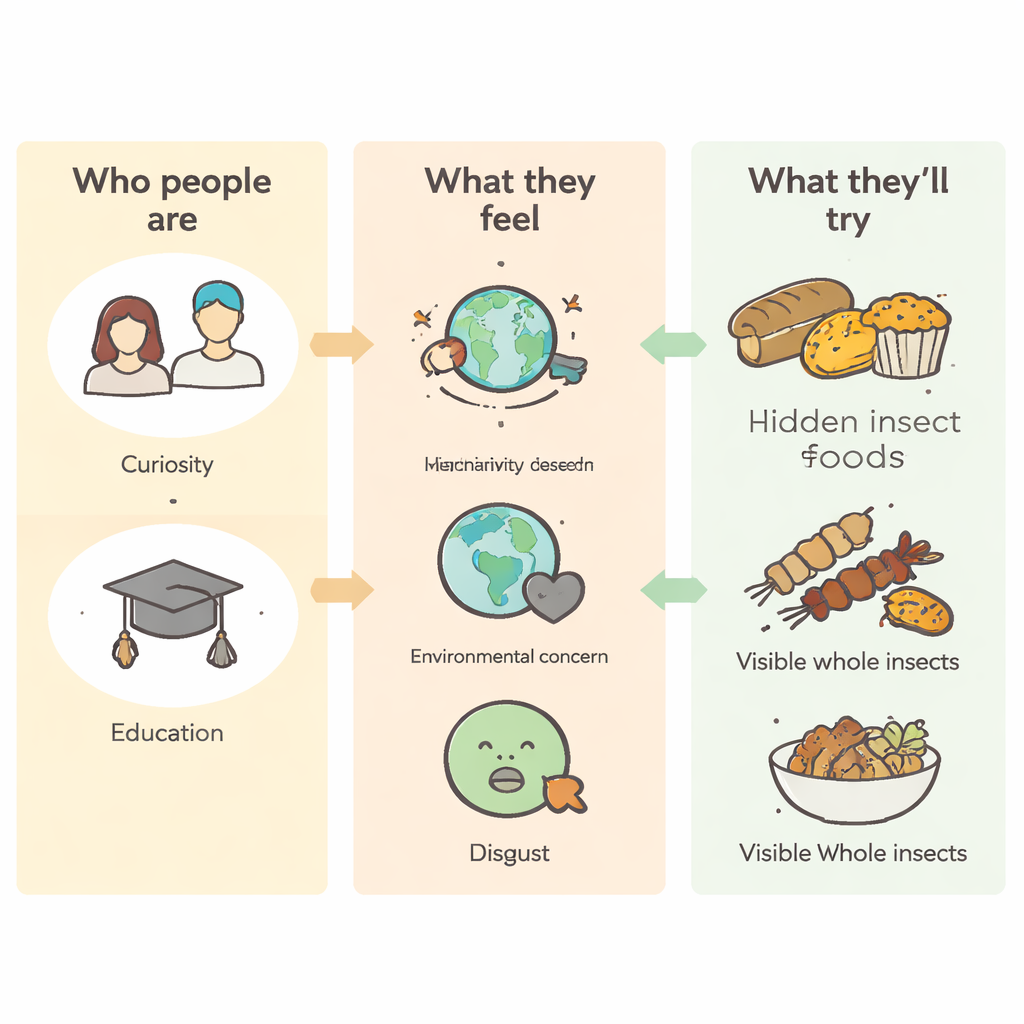
The researchers surveyed 252 adults visiting the Insectarium between late 2024 and early 2025. These visitors were mostly young adults and highly educated, and they came from many regions of the world. Nearly nine out of ten were omnivores, and many said they sometimes like to experiment with new foods. This makes them a kind of “early audience” for novel protein sources: not the whole Canadian public, but a group that is already interested in insects, nature, and sustainability.
How Willing Are People to Eat Insects?
About 44% of participants were at least open to eating insects—either they had eaten them before or said they would be willing to try. But that openness shrank when the question became more concrete. Only about a quarter were willing to include insects in their regular diet, and fewer than one in five said they would cook insects at home. People were far more comfortable with products where the insects were ground up and hidden—such as bread, fritters, or muffins made with cricket flour—than with foods that showed whole larvae or recognizable insect parts. Disgust, safety worries, and fear of insects were the main reasons given for saying no.
Who Is More Likely to Take a Bite?
Gender stood out as a strong dividing line. Men were more willing than women to try a wide range of insect‑based foods, from protein bars to dishes made with larvae, and were also more likely to have eaten insects before. They were more open to putting insects on the menu at home and ordering them in restaurants. Age by itself did not explain much, but age and gender together told a more tangled story: for some foods, younger men were the most open, while older women were more positive than younger women. Education also mattered. People with graduate degrees, especially women, were more likely to have tried insects and to say they would experiment with them in their cooking, suggesting that learning and exposure can soften initial resistance.
Curiosity, Caution, and Hidden Ingredients
When people did say yes to insects, curiosity was the top reason, closely followed by health and environmental concerns. Many visitors liked the idea that insects can be a high‑protein, low‑impact alternative to meat. Still, emotional reactions often overruled these rational motives. More than two thirds of participants named disgust as a key barrier, and most were uneasy about seeing whole insects in their food. Products that hide the insect content—using finely ground insect flour mixed into familiar recipes—were clearly more acceptable. The study also found that those who had already tried insects were much more willing to eat them again, include them in their diet, and cook them at home, hinting that a single positive experience can shift attitudes.
What This Means for the Future Dinner Plate
For a layperson, the takeaway is that insects are unlikely to replace meat overnight, but there is a real, if cautious, appetite for them among certain groups of Canadians. Men and highly educated visitors, in particular, form a small “starter market” that may grow as more people encounter insect‑based foods in safe, familiar forms like breads and snack bars. The study suggests that if companies and educators want insects to become a normal part of the food system, they should focus on appealing flavors, reassuring information about safety, and products where the bugs are out of sight. Over time, repeated exposure, clear communication, and culturally sensitive outreach could help turn today’s squeamishness into tomorrow’s sustainable habit.
Citation: Velchovska, N., Khelifa, R. Acceptance of entomophagy among Canadians at an insectarium. Sci Rep 16, 5533 (2026). https://doi.org/10.1038/s41598-026-35288-w
Keywords: edible insects, alternative protein, consumer attitudes, food sustainability, entomophagy Canada