Clear Sky Science · en
Exploring spatial heterogeneity and influencing factors of cultural inheritance level in mountain traditional villages: a case of Leishan County
Why mountain villages matter
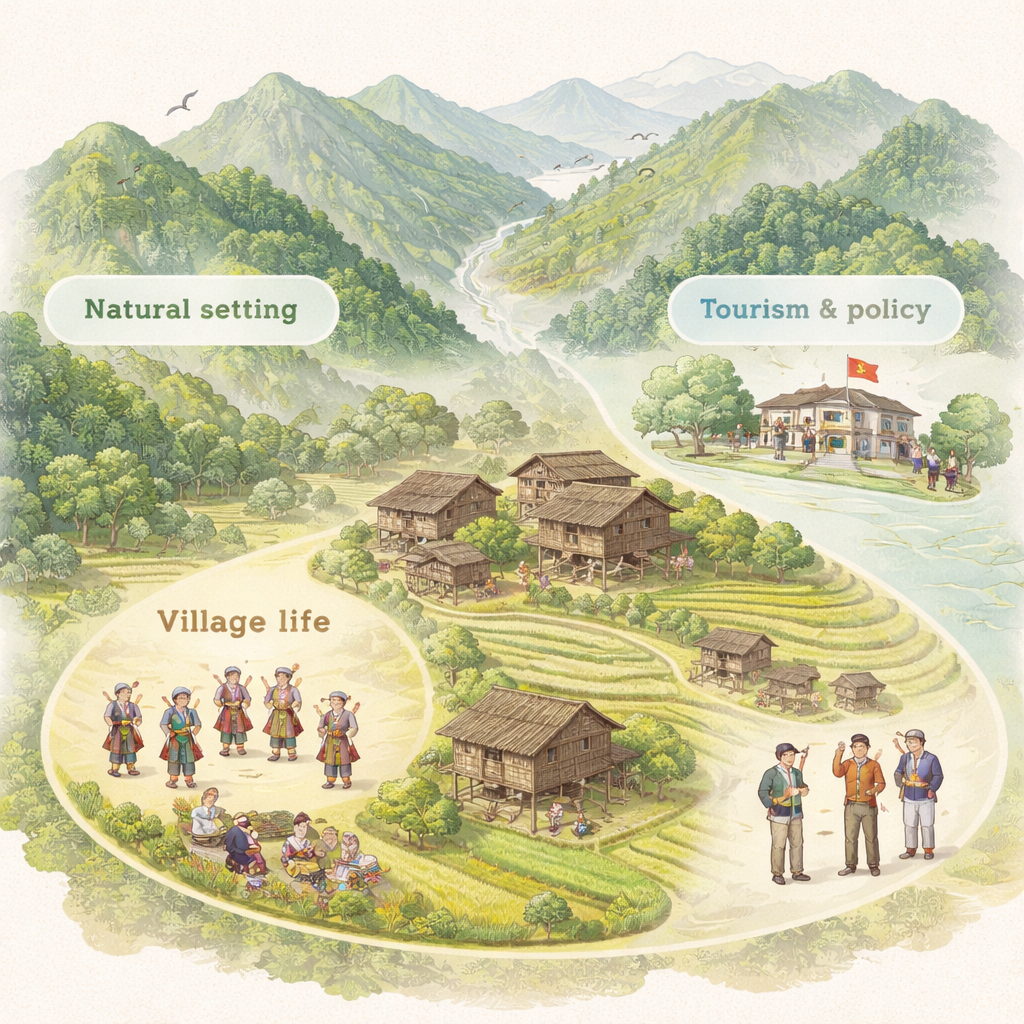
High in the green mountains of southwest China, many traditional villages still keep age-old wooden houses, festivals, and crafts alive. Yet roads, tourism, and migration are rapidly changing these places. This study asks a simple but urgent question: how well are these villages passing their culture from one generation to the next, and what helps or harms that inheritance?
Measuring living traditions
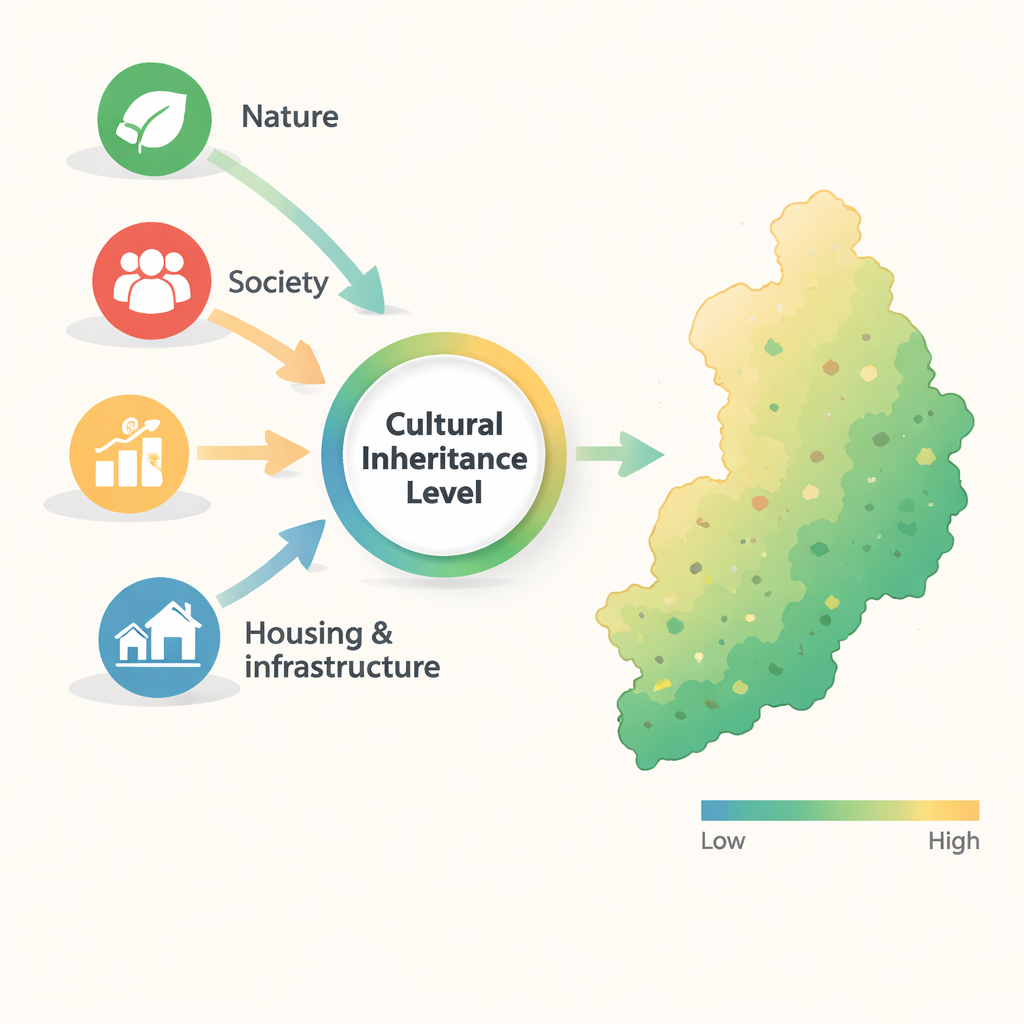
The researchers focus on 43 traditional villages in Leishan County, Guizhou Province, a region where ethnic minority communities such as the Miao and Dong have long shaped the landscape and local customs. To compare very different villages, the team created an index called the Cultural Inheritance Level (CIL). Instead of counting just old buildings or famous festivals, CIL combines three aspects: how many kinds of cultural assets exist (diversity), how intact and authentic they are (integrity), and how actively they are being passed on (continuity)—for example through apprenticeships, rituals, and community participation.
A patchwork of strong and weak culture
When the index was calculated, most villages scored low overall, with CIL values clustering below 0.3 on a 0–1 scale. A few places, such as Maliao Village, stood out with comparatively strong scores across all three aspects. The map of Leishan shows a scattered pattern: islands of higher cultural strength sit amid large areas where traditions are fragile. Cultural diversity is especially rare and patchy, suggesting that many villages now retain only a limited set of buildings, crafts, or ceremonies. Cultural integrity is weakest in the county’s more accessible core, where modernization and commercial development have altered buildings and everyday practices. By contrast, cultural continuity—how often traditions are performed and how many people take part—is relatively better in villages near main roads, where easier travel supports teaching, performances, and government programs.
Forces that help and harm heritage
To understand why villages differ, the team examined dozens of potential influences, from elevation and forest cover to incomes and tourist numbers. Using an advanced mapping technique that allows relationships to vary across space, they identified six main drivers. Strong, well-targeted government policies for heritage protection emerged as the single most powerful positive factor, especially in rugged eastern townships where support is otherwise hard to obtain. Villages recognized for their intangible cultural heritage—such as distinctive music, dance, or crafts—also tend to have higher CIL, particularly in the high mountain core. Jobs in tourism can help: where more residents work as guides, performers, or hosts, income from visitors often encourages communities to maintain ceremonies and skills.
When tourism becomes too much
Yet tourism is a double-edged sword. The study found that a higher overall number of tourists is linked to lower cultural inheritance. In hotspots where visitor flows are intense, traditional houses are more easily converted into shops and guesthouses, and performances may be simplified to suit tourist schedules. Over time, this can erode both the authenticity of rituals and the depth of local knowledge. More specialized, small-scale activities—such as villagers who sell local food while still farming—can support culture, but their influence is modest compared with the disruptive power of mass tourism. Funding for cultural projects has a broad positive effect, especially in poorer areas, but is less decisive in wealthier villages that already earn substantial tourism income.
Finding balance for the future
In plain terms, the study shows that mountain villages can keep their cultural heart beating if policies, money, and tourism are carefully tuned. Strong rules and resources for protecting both old buildings and living traditions work best when they reach remote, less developed communities. Moderate, community-led tourism and everyday businesses rooted in local food and crafts can reinforce pride and transmission. But when tourism numbers become overwhelming, the very culture that attracts visitors begins to fade. The authors argue that tailored policies—supporting underdeveloped areas, managing tourist pressure, and empowering local residents as guardians of their own heritage—are essential if Leishan’s mountain villages, and others like them worldwide, are to carry their distinctive cultures into the future.
Citation: Wei, H., Fan, L. & Wu, C. Exploring spatial heterogeneity and influencing factors of cultural inheritance level in mountain traditional villages: a case of Leishan County. Sci Rep 16, 4311 (2026). https://doi.org/10.1038/s41598-026-35275-1
Keywords: mountain villages, cultural heritage, rural tourism, ethnic minorities, China Guizhou