Clear Sky Science · en
Increasing trust in science through a “Do Your Own Research” intervention
Why This Study Matters to You
In everyday life, we’re told both to “trust the science” and to “do your own research.” It can be hard to know whom or what to believe, especially after the turmoil of the COVID‑19 pandemic. This study explores whether a short online exercise that lets people walk through real scientific evidence for themselves can rebuild trust in science, public health, and vaccines—or whether it might sometimes backfire.
A World of Shaken Confidence
Across many countries, trust in scientists, health agencies, and vaccines rose during the first wave of COVID‑19, only to fall as the pandemic dragged on and political tensions grew. Yet trust is crucial: people who do not trust health authorities are less likely to support measures like masking or vaccination. At the same time, many individuals feel sure they can find their own health information online, and some believe that “doing your own research” makes them as knowledgeable as doctors. This sense of personal expertise can reduce the feeling of vulnerability that makes trust in experts necessary in the first place.
Turning a Slogan into a Test
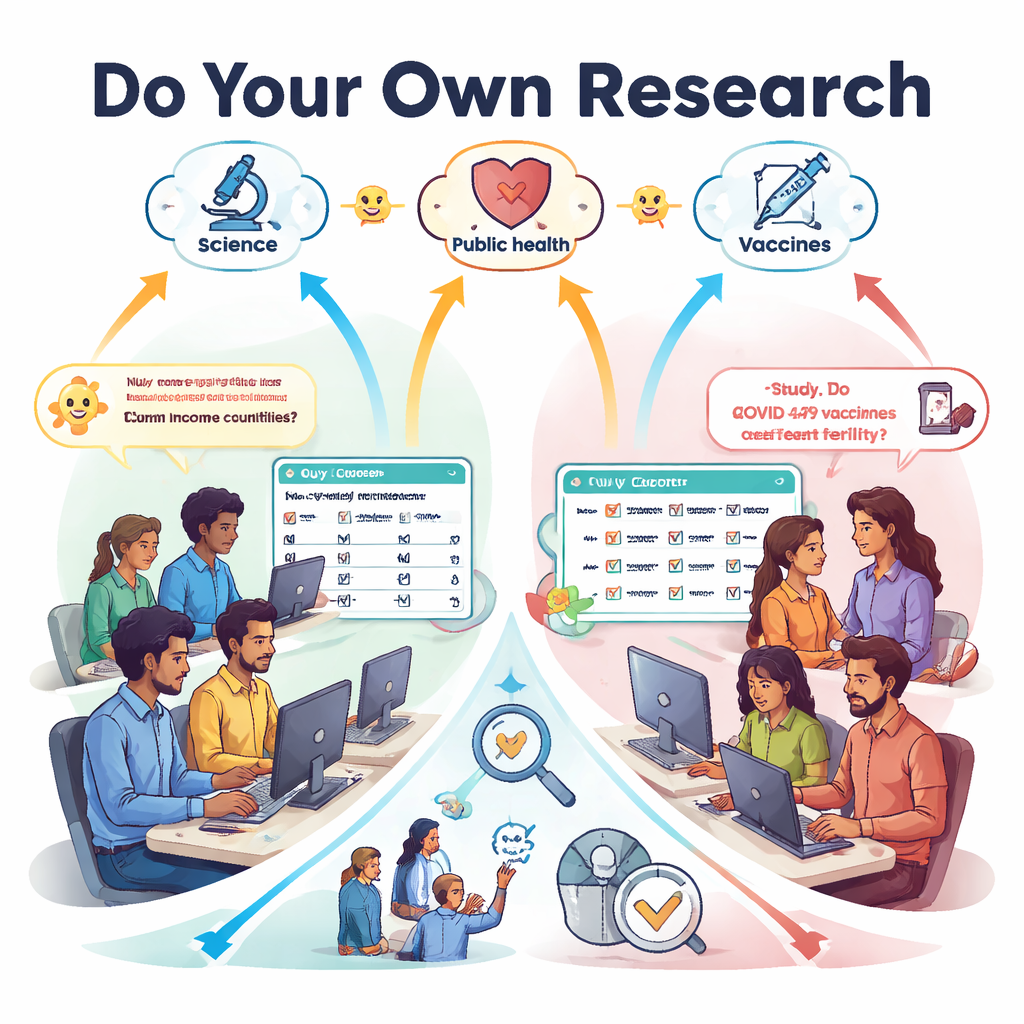
The researchers wondered whether the energizing side of “do your own research”—critical thinking and active engagement—could be used in a constructive way. They designed a brief online intervention for adults in the United States and tested it in a randomized controlled trial. Everyone first answered questions about their background and how much they trusted science, public health, and vaccines on a 0–10 scale. They also reported whether they believed a common false claim: that COVID‑19 vaccines cause infertility. Then participants were randomly assigned either to a control activity about bird feeding or to the new “Do Your Own Research” exercise.
Feeling Less Certain, Then Walking Through a Study
The intervention had two steps. First, people answered three multiple‑choice questions about global development, such as what share of the world’s children are vaccinated against some disease. These questions are known from previous work to be widely answered incorrectly. After each answer, participants rated how sure they were and then saw the correct response. This was meant to gently puncture the “illusion of knowledge” and create a sense of intellectual humility. Second, participants were guided through a real, peer‑reviewed study on whether COVID‑19 vaccines affect fertility in couples trying to become pregnant. They answered six simple questions about how the study was set up, again judged their certainty, and then saw the correct answers. The idea was that, by successfully following how the research worked, they would feel empowered to accept its conclusions and increase their trust in science and vaccines.
Trust Rises—But Not for Everyone
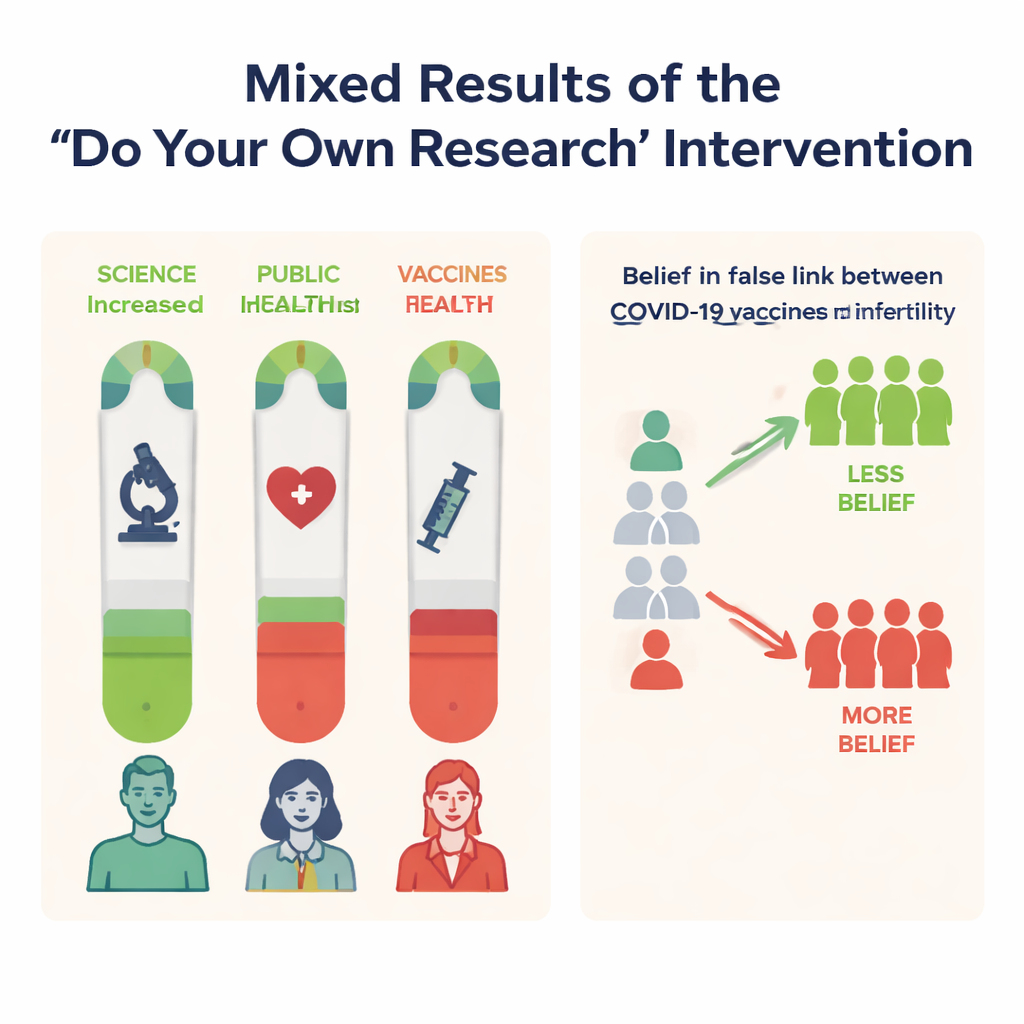
Among the 1,613 adults who completed the study, the intervention did raise trust for many. Compared with the control group, people in the “Do Your Own Research” group were more likely to report higher trust in science, public health, and vaccines after the exercise. Those who started out with extremely low trust (a score of zero) showed particularly large gains. However, there was also a darker side. Some participants ended up trusting science less afterward than before. This drop was most common among those who had low confidence and answered many intervention questions incorrectly. For them, instead of feeling thoughtfully vulnerable and then reassured, the experience may have heightened emotional discomfort or embarrassment, leading them to pull away from trust rather than lean into it.
Mixed Effects on Vaccine Myths
The same pattern appeared when the team looked at the infertility myth. In the intervention group, nearly three in ten people became less likely to believe that COVID‑19 vaccines harm fertility, far more than in the control group. Yet at the same time, a sizable minority in the intervention group actually moved in the opposite direction and became more convinced of the false claim. Measures of overall vaccine trust showed a similar split: the exercise made some participants more trusting and others less so, cancelling out simple average effects.
What This Means Going Forward
For a layperson, the main takeaway is that giving people a chance to reason through real scientific evidence can boost trust—but only if it is done carefully and with sensitivity to how secure or insecure people already feel. A one‑size‑fits‑all “do your own research” approach can both correct myths and unintentionally strengthen them. The authors argue that future efforts should be more tailored and empathetic, perhaps combined with conversation‑based techniques used in medical settings, so that people who start out uncertain are supported rather than alienated. With thoughtful design, short, interactive experiences like this may become one tool among many for rebuilding public confidence in science, health agencies, and vaccines.
Citation: Winters, M., Warren, J.L., Melchinger, H. et al. Increasing trust in science through a “Do Your Own Research” intervention. Sci Rep 16, 6790 (2026). https://doi.org/10.1038/s41598-026-35268-0
Keywords: trust in science, vaccine confidence, COVID-19 misinformation, public health communication, do your own research