Clear Sky Science · en
Associations of phase angle and its change with all-cause mortality among community-dwelling older Japanese adults
Why a Simple Body Test Matters for Healthy Aging
As people grow older, small changes inside the body can quietly raise the risk of early death long before serious illness appears. This study explored whether a quick, painless measurement called “phase angle,” taken with a common body composition scale, can reveal which older adults are more fragile and more likely to die over the next decade. If so, a two‑minute test at a routine checkup could help doctors and public health workers spot hidden weakness early and encourage steps to protect independence and longevity.
A Window Into Cells, Muscles, and Nutrition
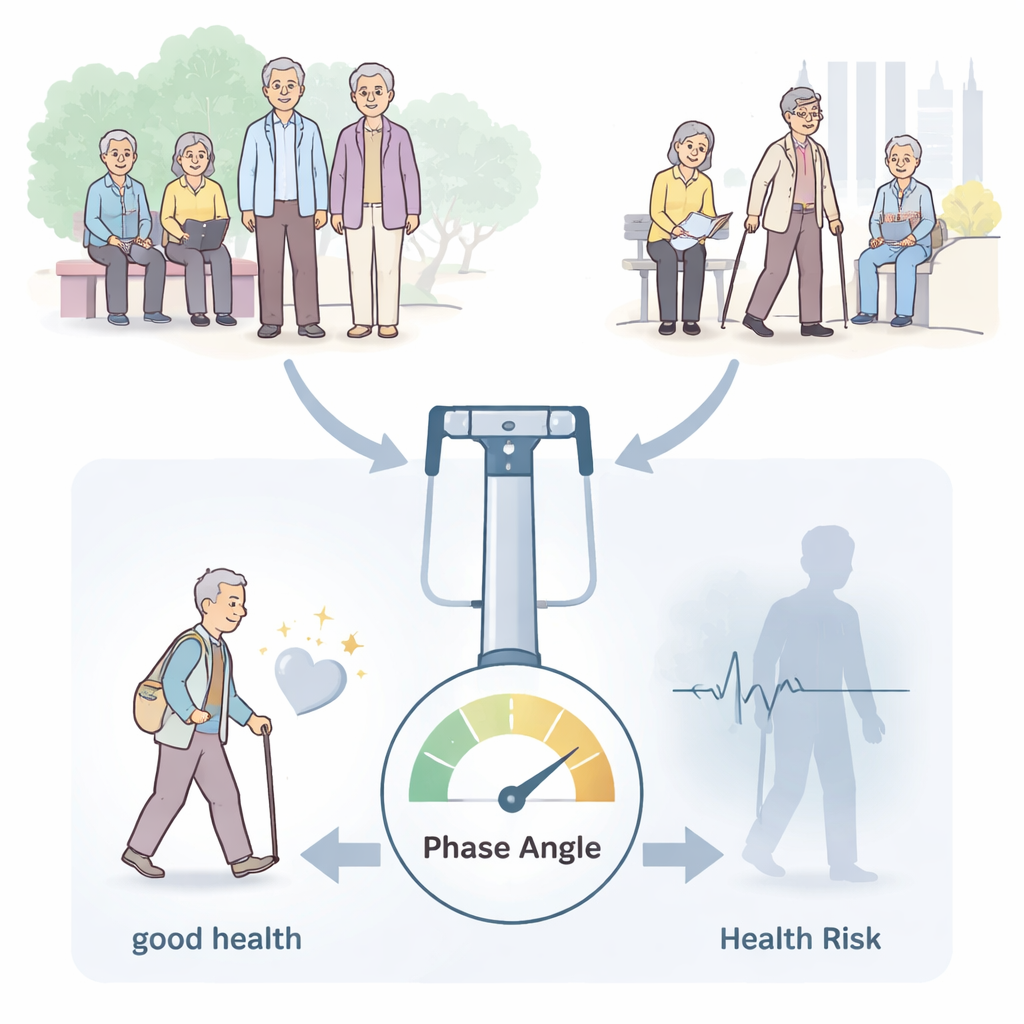
Phase angle is calculated from a mild electrical current that passes through the body during bioelectrical impedance analysis—the same type of device often used to estimate body fat. Rather than focusing on fat, phase angle reflects how healthy body cells are, how much living cell mass a person has, and how much water is inside versus outside those cells. Higher values usually mean stronger muscles and better nutrition; lower values suggest weaker muscles, poorer nourishment, or ongoing inflammation. Earlier studies in patients with serious diseases hinted that a low phase angle goes hand in hand with higher death rates, but evidence in generally healthy communities—especially in Asian populations—was limited.
Following a Japanese Town Over a Decade
The researchers drew on the long‑running Hisayama Study, which has tracked the health of residents in one Japanese town for more than 60 years. They focused on 1,291 men and women aged 65 and older who had their phase angle measured in 2012 and were then followed for about 10 years. Many of these participants had also been tested in 2007, allowing the team to see not only their phase angle at one point in time but also how much it changed over five years. To account for the fact that phase angle naturally falls with age and is lower in women, the investigators compared people within similar age and sex groups, and they carefully adjusted for other influences such as blood pressure, diabetes, cholesterol, body weight, smoking, drinking, and exercise habits.
Low Readings, Weaker Muscles, and Higher Death Risk
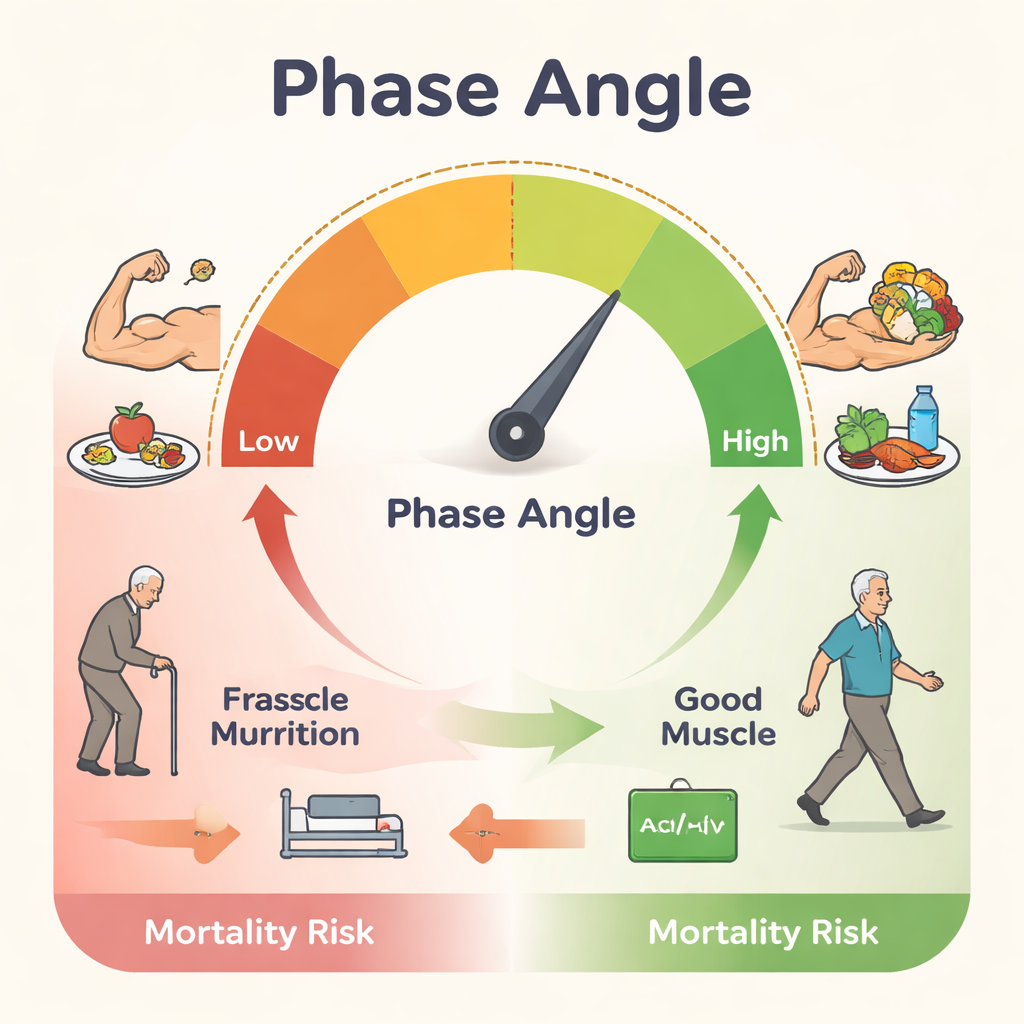
At the start of the study, people with lower phase angle tended to have more high blood pressure and diabetes, lower body weight, and weaker muscles, as shown by poorer grip strength and slower walking speed. Over the next decade, 347 participants died. After accounting for many other risk factors, those in the lowest quarter of phase angle had about a 50% higher risk of dying from any cause than those in the highest quarter. When the researchers looked at the data more closely, the risk began to climb noticeably once phase angle dropped below about 4.6 degrees. The link between low phase angle and death was similar in men and women and across different health and lifestyle groups, suggesting that this measure captures a broad picture of physical robustness.
When Decline Outpaces Normal Aging
The study also asked whether a faster‑than‑expected fall in phase angle signals extra danger. Using measurements from 2007 and 2012, the team estimated how much phase angle should decline over five years simply due to aging. They then calculated how far each person’s actual change fell above or below this expected line. Older adults whose phase angle dropped much more than predicted had higher death rates than those whose values stayed stable or improved, even after adjusting for many health factors. However, once the researchers added detailed markers of nutrition and inflammation to their calculations, this extra risk became weaker. This pattern suggests that poor diet and ongoing low‑grade inflammation may drive both a steeper fall in phase angle and higher chances of dying.
What This Means for Everyday Health
For a layperson, the message is that phase angle acts like a simple “check‑engine light” for the body. A low reading, or a faster drop than expected over a few years, likely reflects shrinking and weakening muscles, poorer nutrition, and the slow buildup of illness, all of which make older adults more vulnerable to serious health problems and early death. Because phase angle can be measured quickly, without needles or radiation, the authors suggest it could be added to routine health checks in clinics and community programs. While it does not replace medical diagnosis, tracking this number over time may help identify older adults who could benefit most from strength‑building exercise, better diet, and closer medical follow‑up.
Citation: Teshima, E., Honda, T., Setoyama, Y. et al. Associations of phase angle and its change with all-cause mortality among community-dwelling older Japanese adults. Sci Rep 16, 5539 (2026). https://doi.org/10.1038/s41598-026-35266-2
Keywords: phase angle, bioelectrical impedance, muscle health, older adults, mortality risk