Clear Sky Science · en
Optimization of ultrasound extraction of phlorotannin rich extract from Dictyopteris justii with tyrosinase Inhibition
Why Seaweed Matters for Skin Care
Many people want gentler ways to manage dark spots and uneven skin tone without relying on harsh chemicals that can irritate or damage the skin. This study explores a tropical brown seaweed, Dictyopteris justii, as a natural source of compounds that could safely lighten dark patches. By fine-tuning how these substances are extracted, the researchers show how ocean plants might help power tomorrow’s skin-brightening products.
From Ocean Algae to Beauty Jars
Brown seaweeds have long fascinated scientists because they are packed with special plant chemicals called phlorotannins. In nature, these molecules help protect algae from sunlight, predators, and stressful conditions. In the lab, they have shown antioxidant, anti-inflammatory, and skin-lightening effects. The team focused on Dictyopteris justii, a seaweed found in the warm waters around Colombia’s San Andrés and Providencia islands. Earlier work hinted that this species could slow the process that creates skin pigment, making it a promising candidate for gentle, ocean-inspired cosmetic ingredients.
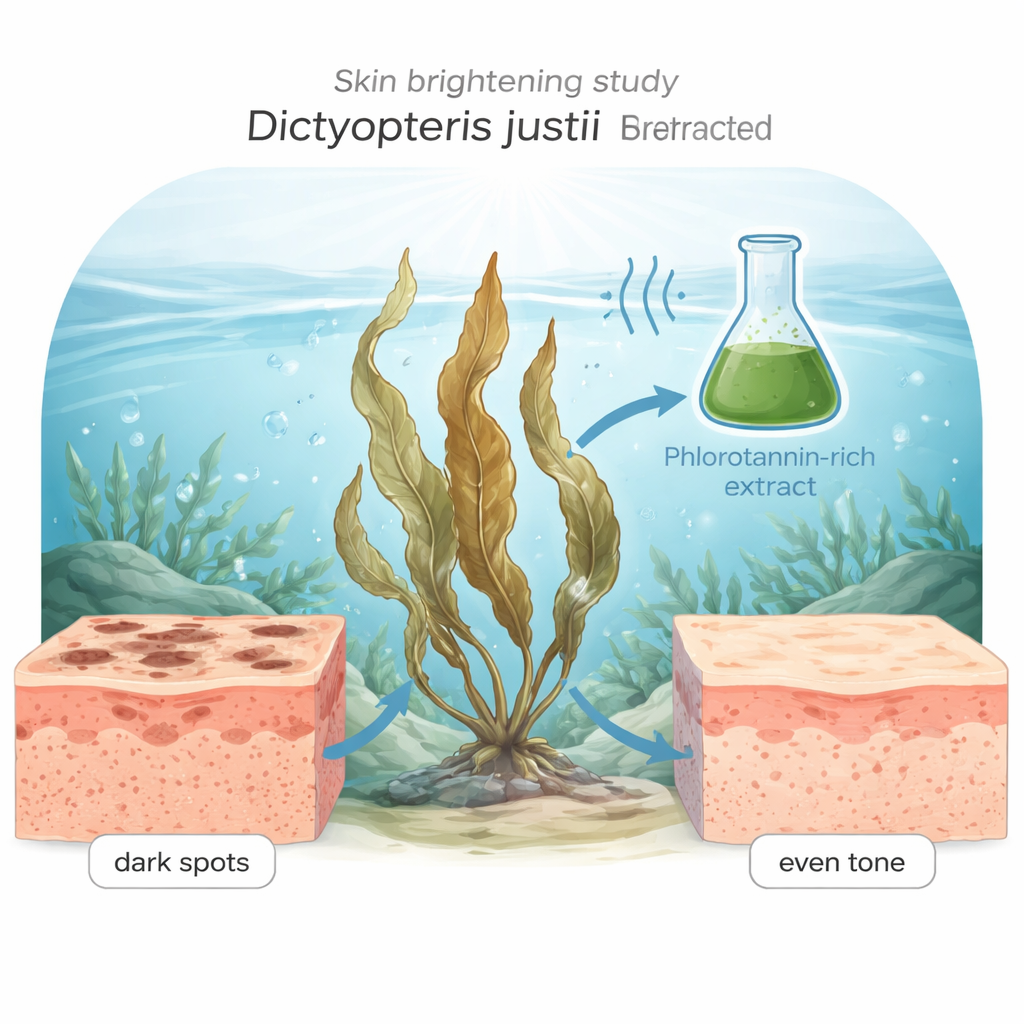
Tuning the Extraction “Recipe”
To turn frozen seaweed into a useful extract, the scientists used ultrasound-assisted extraction, a technique where sound waves help break open cells and release their contents. They systematically varied four simple conditions: how strong the alcohol in the solvent was, how much liquid they used per gram of seaweed, the temperature, and how long the process ran. Using a statistical approach usually applied in engineering, they tested 27 combinations and measured how much phlorotannin they obtained each time with a color-based test that is especially good at spotting this family of compounds.
Finding the Sweet Spot
The analysis revealed that one factor mattered more than any other: the strength of the ethanol–water mixture. Higher ethanol content, cooler temperatures, and using less solvent relative to the seaweed all boosted the amount of phlorotannins they could recover. Longer extraction times did not help much once a certain point was reached. The “sweet spot” recipe turned out to be 70% ethanol, a 1:10 solid-to-liquid ratio, 25 °C, and just 20 minutes of sonication. Under these mild conditions, the extract was rich in phlorotannins, with a good yield and highly consistent results, suggesting that this process could be scaled up reliably for industrial use.
Testing the Dark-Spot Target
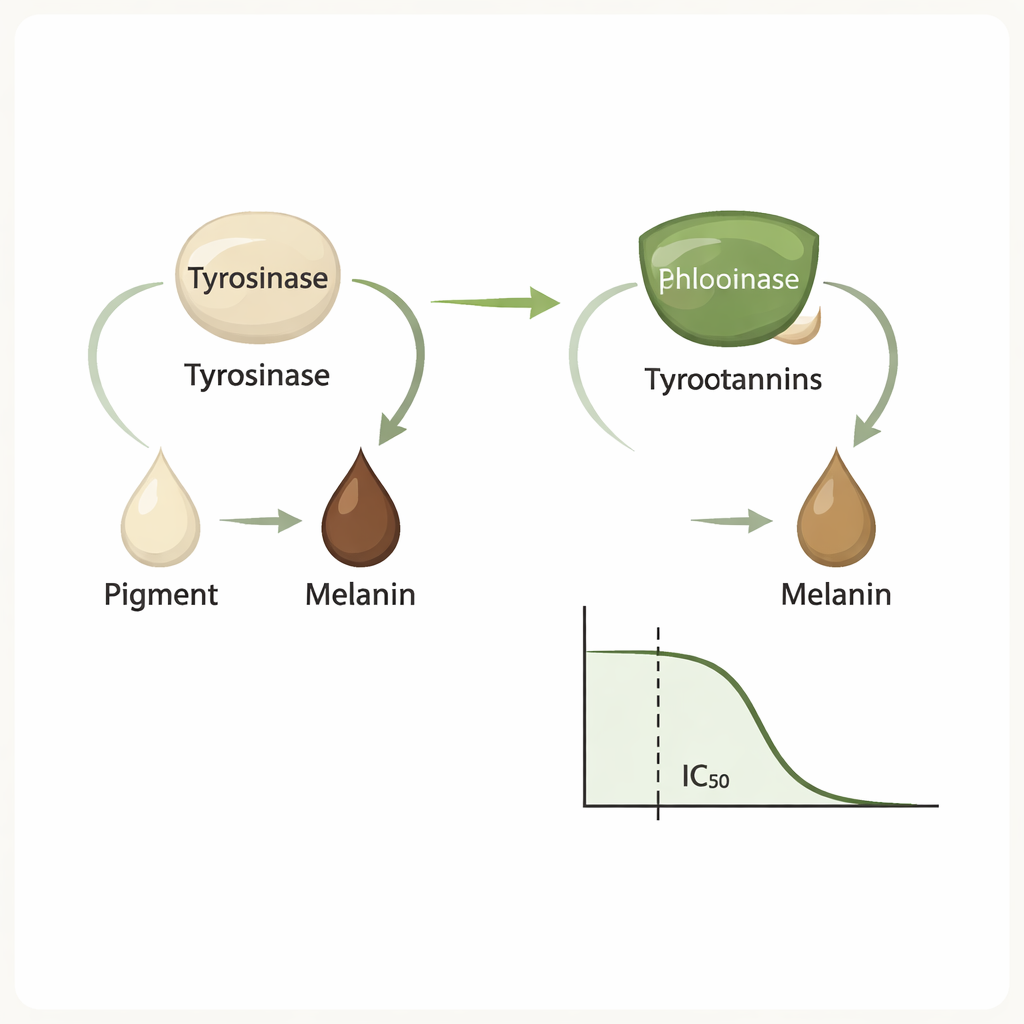
To see whether this optimized extract could actually influence skin pigmentation, the researchers tested its effect on tyrosinase, the key enzyme that helps turn simple building blocks into melanin, the pigment that darkens skin. In a standard lab assay, the seaweed extract significantly slowed the enzyme’s activity, reaching half-maximal inhibition at 0.51 milligrams per milliliter. While this was less potent than kojic acid, a common synthetic brightening agent, the result is notable because it comes from a crude, minimally processed extract rather than a purified drug. Chemical profiling also suggested the presence of specific phlorotannins and related plant acids that may be responsible for the observed activity.
What This Means for Future Products
For non-specialists, the takeaway is that this brown seaweed, when processed under carefully chosen conditions, yields a stable extract that meaningfully interferes with the production of skin pigment in the lab. Although further work is needed to refine the active molecules, test them on skin cells and living skin, and confirm safety, the study offers a blueprint for creating standardized, ocean-derived ingredients. In the long run, such extracts could support safer, more sustainable formulations aimed at gently evening out skin tone and reducing dark spots without the downsides of some existing treatments.
Citation: Hernández, A.C., Costa, G.M. & Aragón, M. Optimization of ultrasound extraction of phlorotannin rich extract from Dictyopteris justii with tyrosinase Inhibition. Sci Rep 16, 7229 (2026). https://doi.org/10.1038/s41598-026-35253-7
Keywords: seaweed skincare, natural skin lightening, brown algae extracts, hyperpigmentation, marine cosmetics