Clear Sky Science · en
Acute autonomic modulation during Jacobson’s progressive muscle relaxation in normal-weight vs. overweight male recreational athletes
Why relaxing your muscles can calm your heart
Many people turn to relaxation exercises to unwind after work or sports, but what do these techniques actually do inside the body? This study looked at a classic method called Jacobson’s Progressive Muscle Relaxation and asked whether it changes how the heart responds to stress, and whether those changes differ between normal‑weight and overweight young men who exercise regularly.
A simple tension-and-release routine
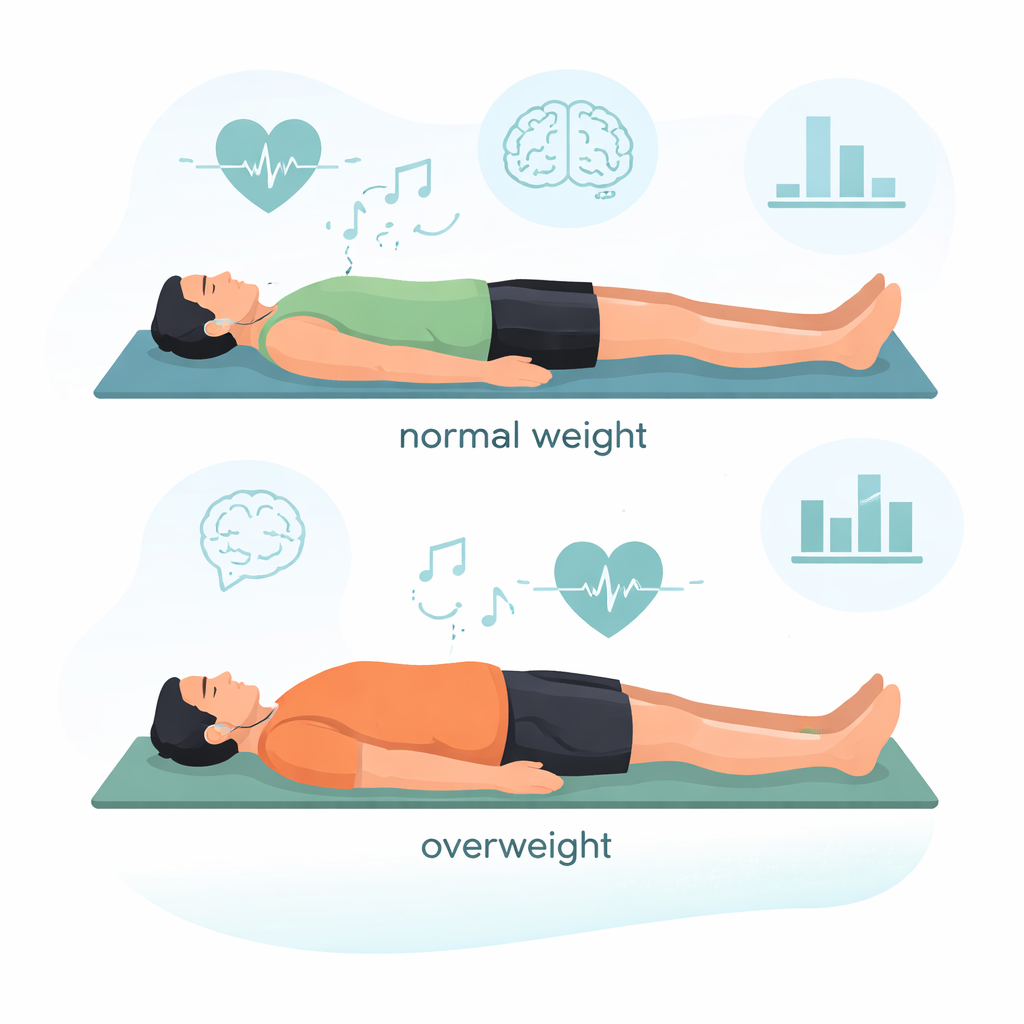
Progressive Muscle Relaxation (PMR) is a structured routine where you deliberately tense different muscle groups and then let them go. In this study, 63 young male recreational athletes lay on their backs with eyes closed while a trained instructor guided them through a 20‑minute PMR session. They tightened muscles in the feet, legs, abdomen, arms, shoulders, neck, and face for about five seconds, then relaxed them for ten seconds, moving gradually from lower to upper body. At the same time, they followed slow, deep breathing—around four breaths per minute—to help reinforce the feeling of letting go.
Listening to the body’s automatic signals
The researchers were interested in the autonomic nervous system, which quietly controls heart rate, breathing, and other vital functions. They tracked heart rate variability (HRV)—tiny, beat‑to‑beat changes in heart rhythm that reveal how strongly the “rest-and-digest” (parasympathetic) branch is acting compared with the “fight-or-flight” (sympathetic) branch. The athletes were split into two groups based on body mass index: 38 with normal weight and 25 who were overweight, though none were obese. The team measured HRV, a simple rating of perceived stress, and basic physical performance (grip strength, standing long jump, flexibility, and a test of visual alertness) before PMR, during the final minutes of the relaxation period, and shortly after the session.
Heart and stress responses during relaxation
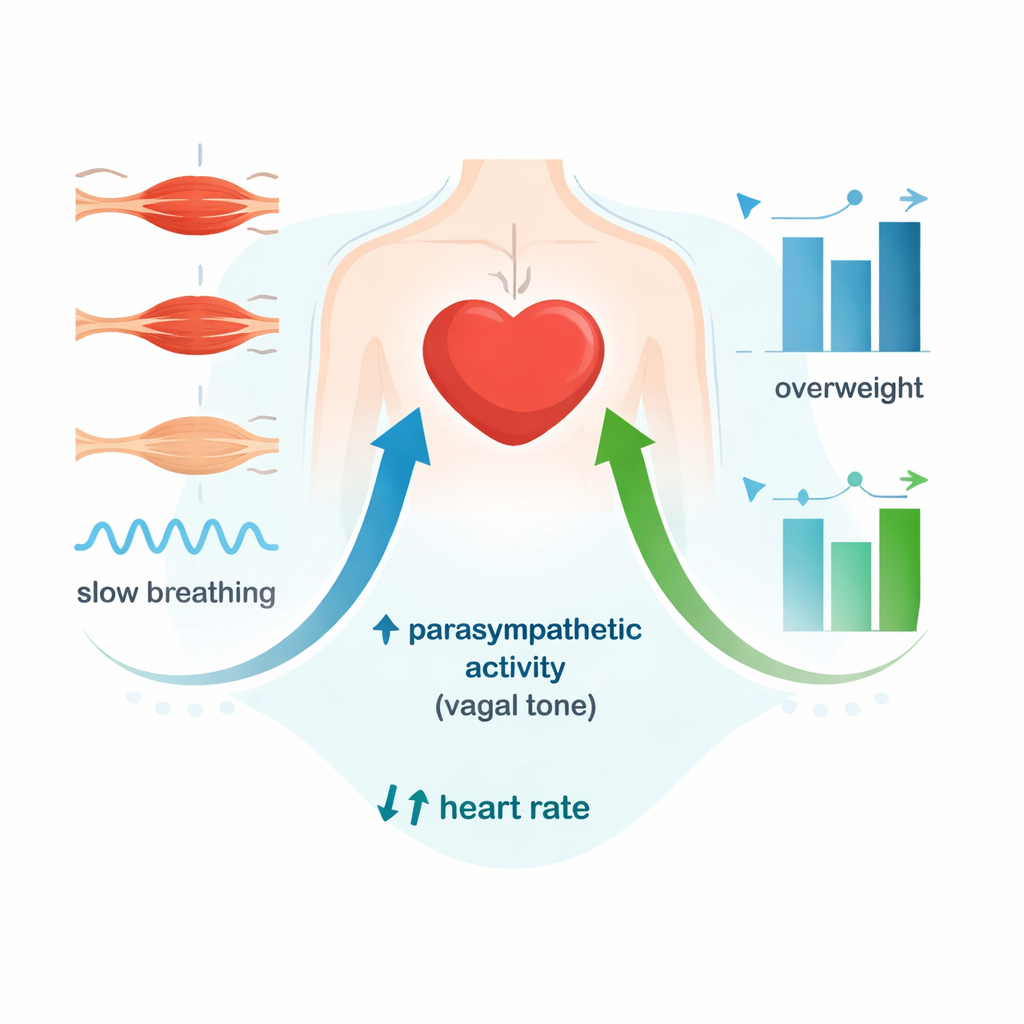
During the PMR phase, clear signs of the body shifting into a calmer state emerged in both weight groups. Heart rate dropped, and HRV measures linked to parasympathetic activity rose, showing that the nervous system was tilting toward rest and recovery while the athletes lay quietly tensing and releasing their muscles. At the same time, low‑frequency signals in the HRV spectrum—often associated with a mix of stress and breathing rhythms—fell, while high‑frequency signals tied more closely to restful breathing increased. Subjective stress ratings also decreased after the session, suggesting that participants not only showed calmer physiology but felt less tense as well.
Overweight athletes showed a stronger calm rebound
One of the most intriguing findings concerned differences between the weight groups. The researchers expected normal‑weight athletes to show a stronger calming response, but the opposite pattern emerged. Two key HRV indicators of parasympathetic activity rose significantly only in the overweight group during PMR. This suggests that these athletes may have had more “room to improve” because people with higher body weight often start with a more stressed autonomic profile—higher sympathetic drive and lower baseline vagal tone. When they engaged in a focused relaxation technique, their hearts showed a pronounced rebound toward a more relaxed state, even though the absolute size of the changes was modest.
What this means for everyday life
The study suggests that a single 20‑minute session of progressive muscle relaxation can nudge the body toward a calmer, more heart‑friendly state in both normal‑weight and overweight recreational athletes, and that overweight individuals may benefit at least as much, if not more, in the short term. Physical performance changes right after the session were small and mixed, and the study did not test long‑term practice, so it cannot claim lasting health benefits. Still, the results support the idea that a simple, low‑cost, learn‑in‑one‑session routine of tensing and relaxing muscles—paired with slow breathing—can temporarily reduce perceived stress and promote a healthier balance in the body’s automatic control of the heart, regardless of body size.
Citation: Bustamante-Sánchez, Á., de la Torre-Gómez, S. & Clemente-Suárez, V.J. Acute autonomic modulation during Jacobson’s progressive muscle relaxation in normal-weight vs. overweight male recreational athletes. Sci Rep 16, 4732 (2026). https://doi.org/10.1038/s41598-026-35237-7
Keywords: progressive muscle relaxation, heart rate variability, stress reduction, overweight athletes, autonomic nervous system