Clear Sky Science · en
Effects of physical activity program on psychomotor and psycho-social characteristics of autistic children
A New Way to Support Autistic Children
Many families and teachers of autistic children search for approaches that go beyond classroom learning and therapy sessions. This study explores a simple but powerful idea: could a well‑planned program of games, movement, and exercise help autistic children move better, feel fitter, and cope more easily with everyday life? Over ten weeks, researchers tested a structured physical activity program in real schools to see how it affected children’s bodies, behavior, and daily experiences.
How the Activity Program Worked
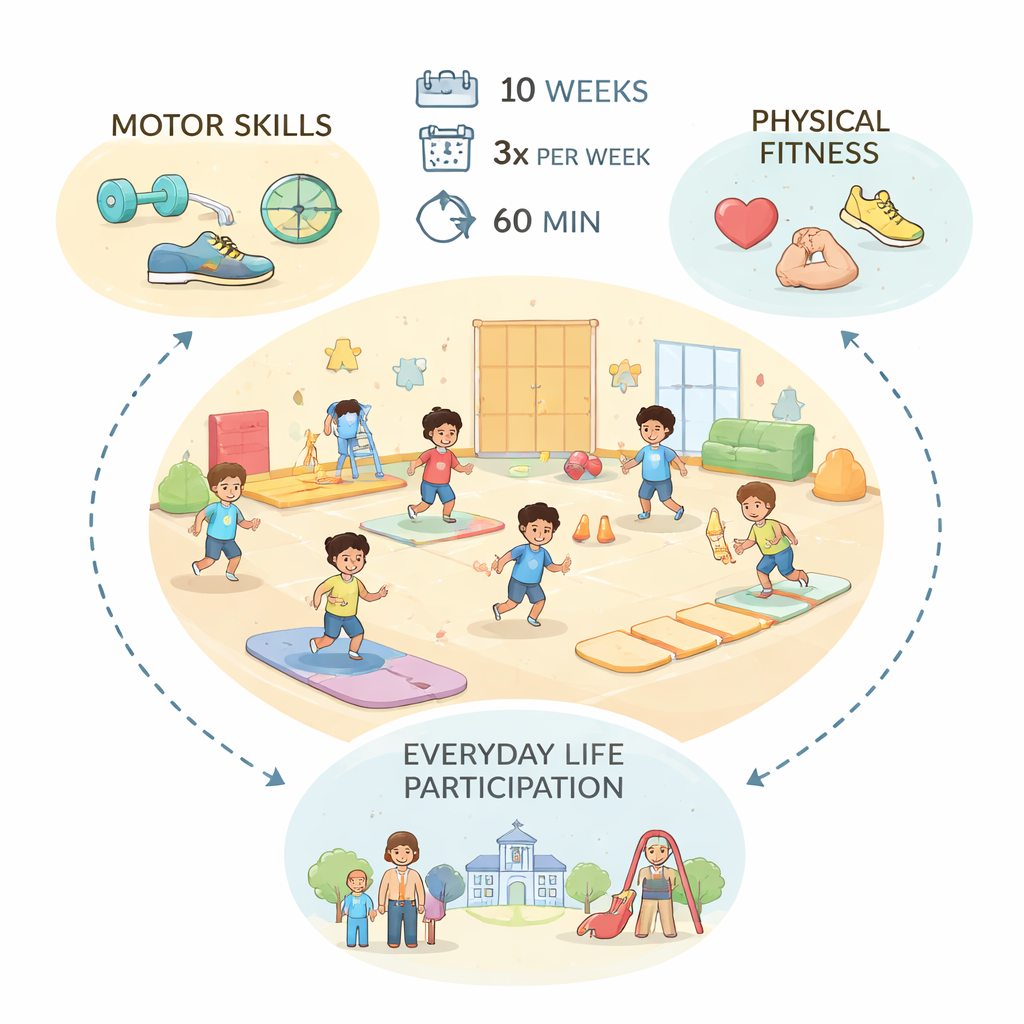
The research team designed a 10‑week Physical Activity Program for 40 autistic children aged 8 to 12. Half of the children joined the new program while also continuing their usual special‑education classes, and the other half continued with their regular school routines only. The program ran three times a week for an hour each session and followed a clear structure: a short warm‑up, simple exercises to prepare the body, focused practice of basic motor skills, and group games to wind down. Activities included walking, running, jumping, hopping, throwing, catching, and balance tasks, all adapted to each child’s abilities and sensory needs. Visual schedules and calm, predictable environments helped children know what would happen next and feel safe taking part.
Measuring Changes in Movement and Fitness
Before and after the 10‑week period, all children took several standardized tests. These measured motor skills such as coordination, balance, speed, agility, strength, and upper‑body control, as well as broader physical fitness through jump tests, sprint times, agility runs, flexibility, and body weight. At the start, the two groups were similar in their motor and fitness levels. By the end, children who had joined the activity program showed striking gains. Their scores improved across all motor tests, with especially large jumps in balance, running speed, agility, strength, and arm coordination. Fitness tests painted a similar picture: the program group jumped farther, ran faster, and maintained their weight, while children who did not join the program tended to slow down and gain weight over the same period.
Shifts in Autistic Traits and Everyday Behavior
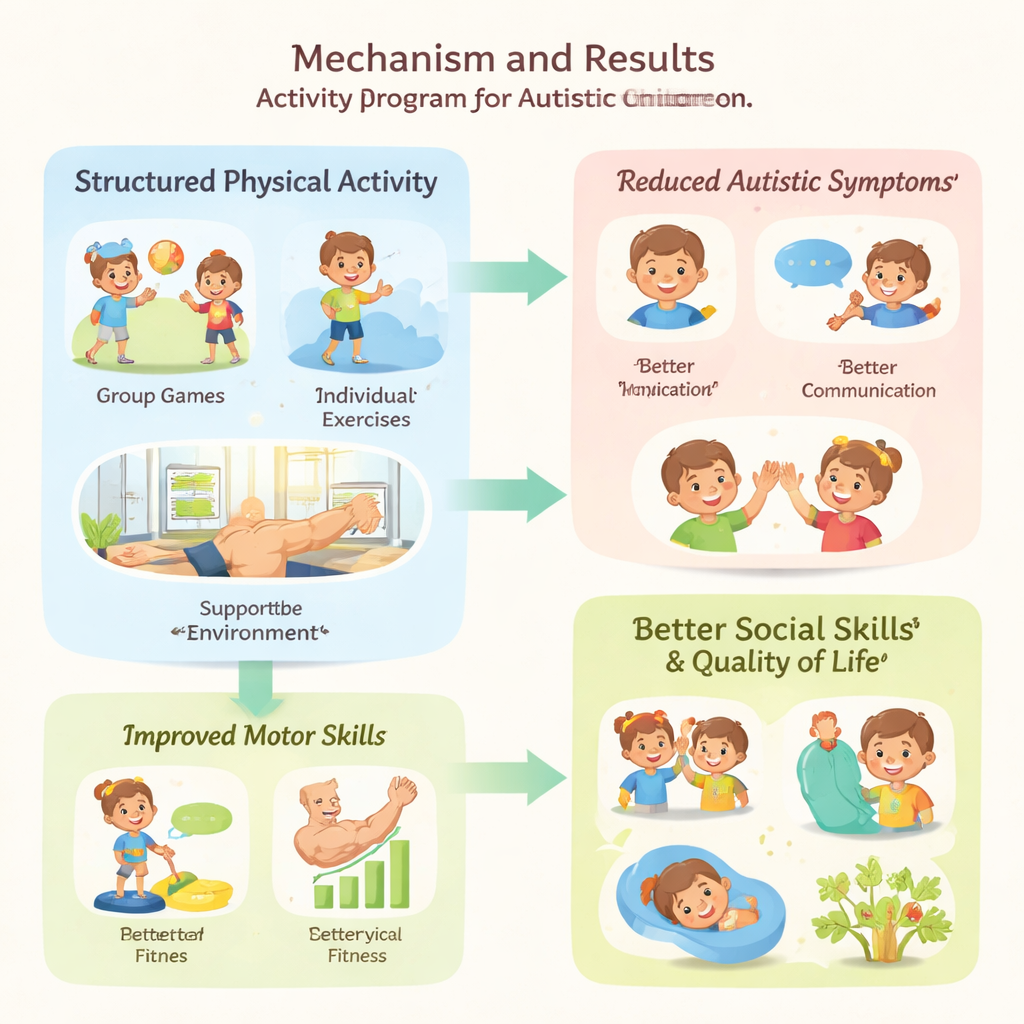
The researchers also used a widely accepted rating scale to track core features of autism, including repetitive behaviors, communication difficulties, and social interaction. After ten weeks, scores in the activity group showed moderate but meaningful improvement, suggesting a reduction in autistic symptoms compared with the control group. Parents and teachers added their voices through focus group interviews. They reported that children who took part in the program were more willing to join group play, followed instructions more easily, showed fewer tantrums and self‑injuring behaviors, and seemed calmer on days when they were active. Some children began playing sports at home, tried new playground equipment, or took more initiative in daily tasks.
Quality of Life: Promising Signs, But More Time Needed
To understand broader well‑being, families completed a standard quality‑of‑life questionnaire covering physical health, emotions, friendships, and school life. On paper, scores did not change enough to be considered statistically significant after ten weeks, even though small improvements appeared. Yet parents and teachers described meaningful day‑to‑day shifts: children became more physically active, some lost excess weight, sleep patterns became more regular, and several children showed new confidence—going to the park more often, shopping independently, or eagerly joining siblings’ games. The researchers suggest that such subtle, real‑world changes may need longer programs and follow‑up to show up clearly in formal tests.
What This Means for Families and Schools
Overall, the study shows that a well‑structured, school‑based physical activity program can greatly boost motor skills and physical fitness in autistic children within just ten weeks, while also easing some core autistic traits. Early signs of better social behavior and everyday functioning were clear in parents’ and teachers’ stories, even if not yet fully captured by questionnaires. For families and educators, the message is hopeful: regular, enjoyable movement—built into the child’s weekly routine and tailored to their needs—can be a powerful, practical tool alongside other supports. However, the authors stress that exercise should be seen as a long‑term part of life, not a short experiment; longer‑lasting programs are likely needed to firmly improve social skills and overall quality of life.
Citation: Ayaz, E., Özcan, G.H., Şahin, M. et al. Effects of physical activity program on psychomotor and psycho-social characteristics of autistic children. Sci Rep 16, 5039 (2026). https://doi.org/10.1038/s41598-026-35228-8
Keywords: autism spectrum disorder, physical activity, motor skills, child fitness, social skills