Clear Sky Science · en
Molecular identification and optimization of indole acetic acid production by Fusarium oxysporum AUMC 16,438 for biofertilizer application
Turning Waste into Plant Power
Modern farming relies heavily on synthetic fertilizers and growth boosters, which can be costly and harmful to the environment. This study explores a greener alternative: using a naturally occurring soil fungus to produce a plant growth hormone and feeding that fungus with everyday farm waste such as banana peels. The work shows how this microbe-made growth aid can boost wheat seed germination and early growth, pointing toward safer, cheaper tools for supporting global food production.
A Helpful Hormone from Nature
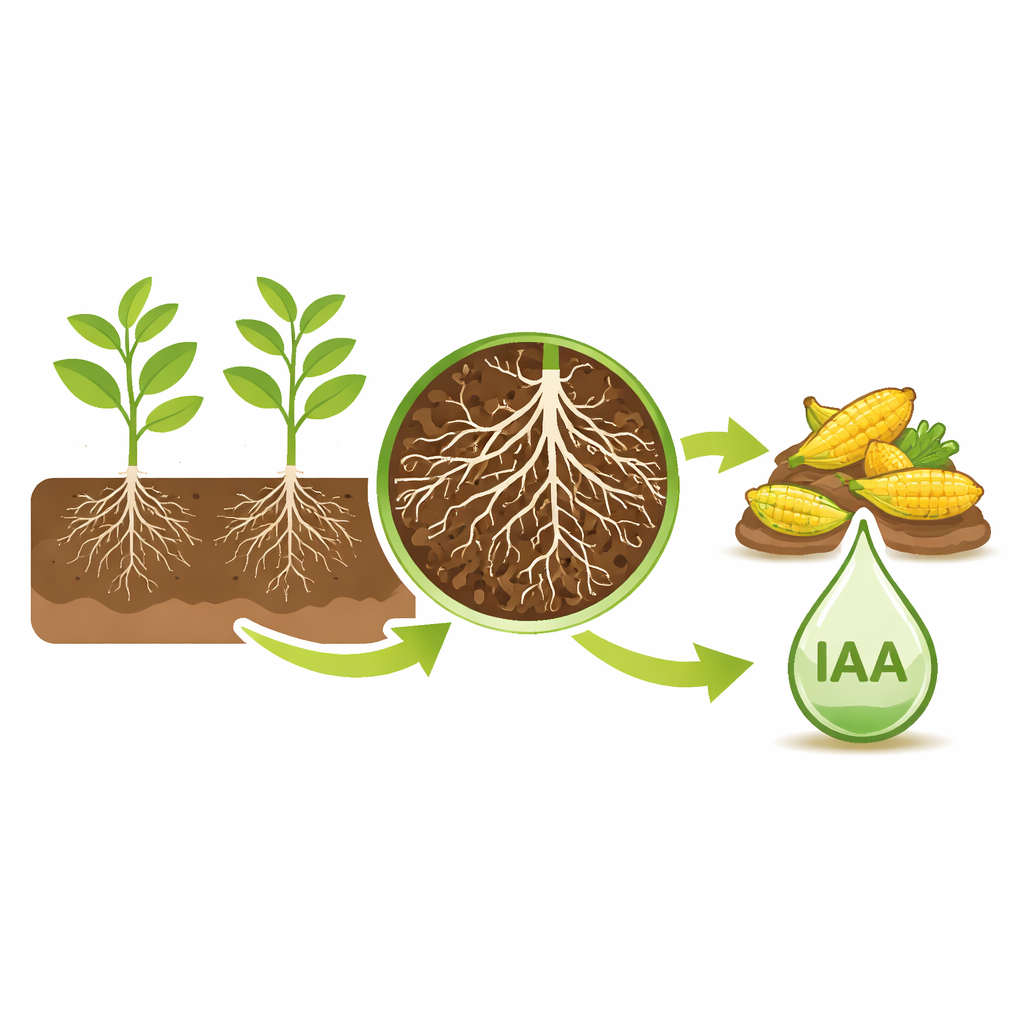
Plants rely on a family of hormones to guide their growth, and one of the most important is indole-3-acetic acid, or IAA. IAA helps roots branch and elongate, allows shoots to stretch toward light, and prepares plants to cope with stresses. Farmers already use synthetic relatives of IAA, but these chemicals can be expensive, unstable, and raise health and environmental concerns. Meanwhile, many soil microbes quietly manufacture the same hormone in and around plant roots. If scientists can harness these natural producers, it may be possible to replace part of the chemical fertilizer load with living or fermented “biofertilizers” that support growth more gently and sustainably.
Finding the Right Fungus Partner
The researchers began by collecting soil from the root zones of crops in Egypt and isolating twenty different fungi. Each strain was grown in a simple liquid broth enriched with a small amount of the amino acid tryptophan, which many microbes convert into IAA. When the team measured IAA levels, one candidate, labeled FSA12, clearly outperformed the rest. Careful checks using chemical analysis confirmed that the substance it released really was IAA, and safety tests showed no detectable mycotoxins—poisonous compounds that some fungi can make. Using a combination of classical microscopy and modern DNA sequencing, the authors identified FSA12 as a strain of the common soil fungus Fusarium oxysporum, catalogued under the name F. oxysporum AUMC 16,438.
Tuning Conditions for Maximum Output
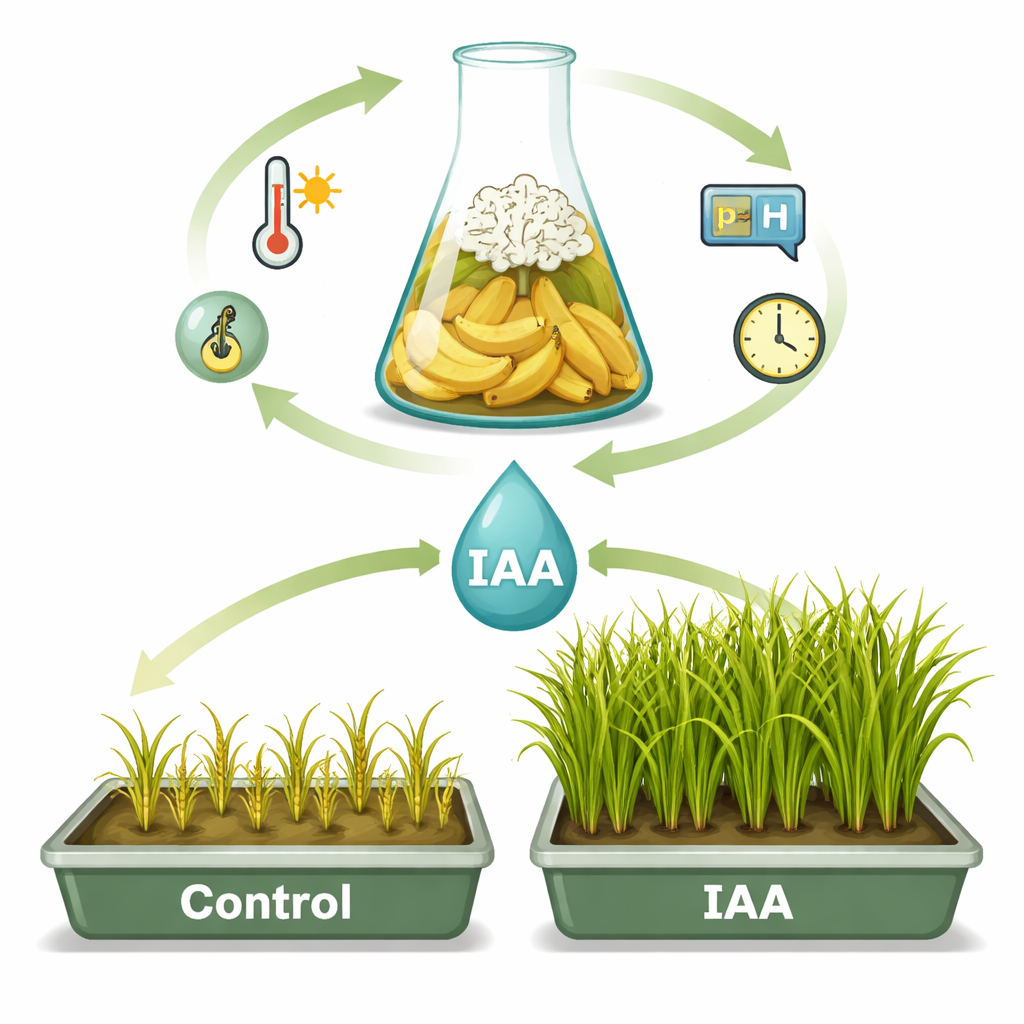
Next, the team systematically adjusted the fungus’s growing conditions to coax it into making more IAA. They changed one factor at a time—how much tryptophan was present, the temperature, the acidity of the broth, how long the cultures grew, and how much fungal material was used to start each batch. Moderate levels of tryptophan, a comfortable warmth of 30 °C, and a slightly acidic environment (around pH 6) produced the strongest results. Letting the culture grow for about 12 days and starting with a modest amount of fungus also proved best. Under these tuned conditions, the strain produced roughly 3.7 times more IAA than under the original setup, while still avoiding detectable toxin formation.
Feeding Fungi with Farm Waste
To keep costs low and recycle agricultural leftovers, the scientists tested several common residues—sweet whey, banana peels, orange peels, wheat straw, wheat bran, and sugarcane bagasse—as carbon sources. All of them supported some IAA production, but banana peels stood out, leading to the highest hormone levels and fungal growth. Banana peels are naturally rich in tryptophan and sugars, which likely explains their performance. This step shows that a waste stream that often ends up in trash heaps or animal feed can be upgraded into a valuable ingredient for biofertilizer production, fitting neatly into the idea of a circular, low-waste farm economy.
Helping Wheat Seeds Get a Head Start
Producing IAA in a flask is only useful if it actually helps crops. To test this, the team soaked wheat seeds in solutions containing the fungus-made IAA and compared them with untreated seeds. In standard germination tests, the treated seeds sprouted more reliably and grew longer roots and shoots. Germination climbed from 70% in untreated seeds to a full 100% with the fungal IAA, and the seedlings were sturdier, with greater fresh and dry weight. A widely used measure called the vigor index, which combines germination and growth, more than tripled. These improvements matched what is expected from IAA’s known role in stimulating root systems and early seedling development.
A Cleaner Boost for Future Harvests
Put simply, this study shows that a carefully chosen, non-disease-causing strain of Fusarium can turn cheap materials like banana peels into a natural plant hormone that helps wheat seeds sprout faster and stronger. By proving that the fungus can be identified, grown efficiently, checked for safety, and then tested successfully on a major food crop, the research lays groundwork for biofertilizers that could partially replace synthetic inputs. For farmers and consumers alike, that could mean healthier soils, lower costs, and crops that get a powerful but natural head start.
Citation: Maan, S.A., Abdelhamid, S.A. Molecular identification and optimization of indole acetic acid production by Fusarium oxysporum AUMC 16,438 for biofertilizer application. Sci Rep 16, 3474 (2026). https://doi.org/10.1038/s41598-026-35223-z
Keywords: biofertilizer, plant growth hormone, Fusarium oxysporum, banana peel waste, wheat seed germination