Clear Sky Science · en
Comparative impact of polystyrene, rice bag-derived high-density polyethylene nanoparticles, and polystyrene–silver nanoparticle interactions in a 28-day in vivo study in male and female Wistar rats
Invisible Plastics in Everyday Life
We now know that plastics do not simply disappear when they break down; they crumble into pieces so tiny we cannot see them, and these fragments are turning up in food, water, air, and even the human body. This study looks at what happens when lab rats are exposed for a month to three kinds of such “nanoplastics” — including particles released from real rice-cooking bags — and to a combination of plastic and silver nanoparticles that are likely to coexist in the environment. The findings help answer a key question for the public: do these nearly invisible contaminants quietly disturb our health, even when they do not cause obvious illness?
What the Researchers Set Out to Test
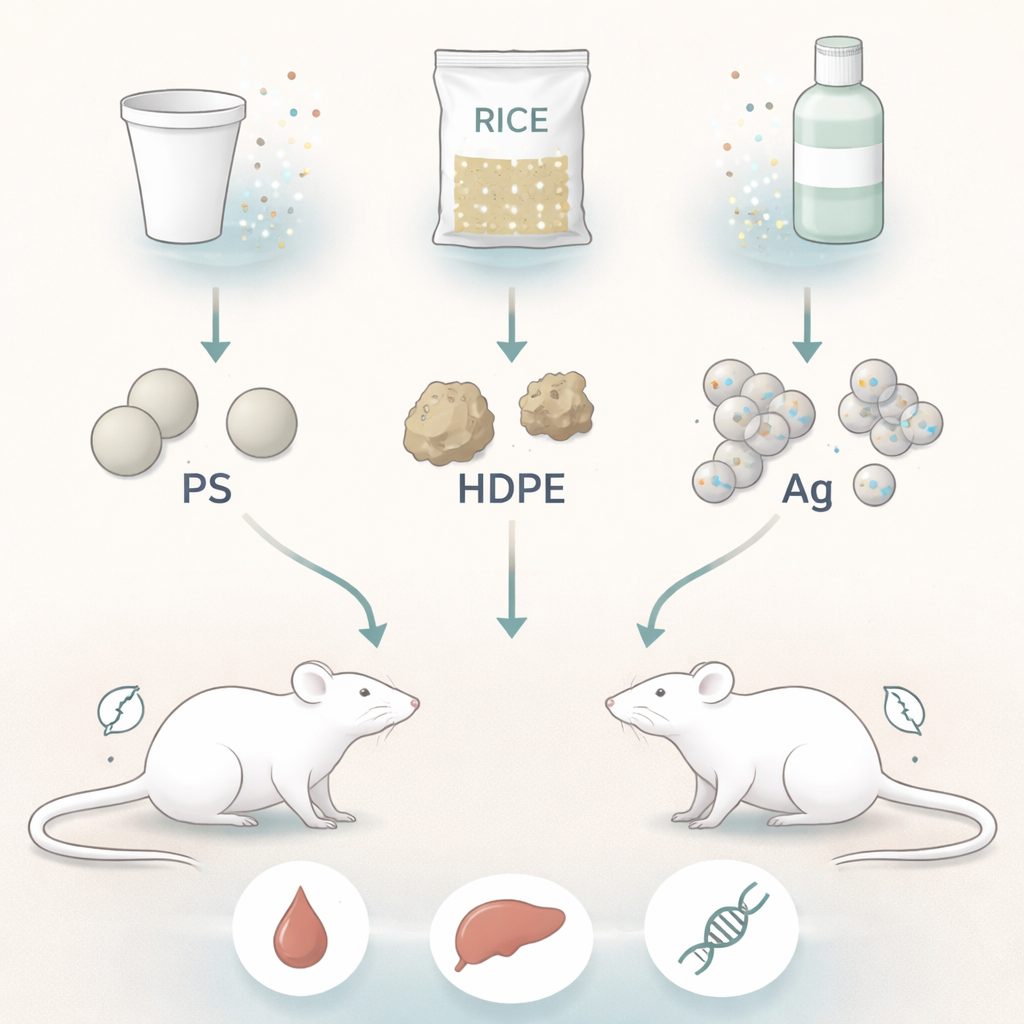
The team focused on plastic particles thousands of times smaller than a grain of sand, called nanoplastics, that can slip through biological barriers and reach internal organs. They compared lab-made polystyrene particles, tiny fragments released from commercial high-density polyethylene (HDPE) rice bags, and a mix of polystyrene with silver nanoparticles often used for their antimicrobial properties. Male and female rats received these materials by mouth every day for 28 days, mimicking ongoing exposure through food and drink. Afterward, the scientists examined body weight, blood chemistry, liver tissue, DNA damage in blood cells, and, in males, testicular weight, to see whether any subtle harm had occurred and whether males and females reacted differently.
Real-World Plastics and Mixed Exposures
Unlike many earlier experiments that used only idealized lab particles, this work included HDPE nanoparticles directly extracted from consumer rice bags, capturing the rough shapes and mixed sizes that real people might encounter. The researchers also looked at combined exposure to polystyrene and silver nanoparticles, since plastics in water and soil can bind metals and carry them into living organisms. In their test tubes, the particles were carefully characterized for size and surface charge, because these features strongly influence how easily they travel through the gut and bloodstream. The dosing was chosen so that polystyrene and silver matched common toxicology studies, while HDPE from rice bags was given at a much lower level meant to resemble an upper-range human intake estimate.
Subtle Changes Rather Than Dramatic Illness
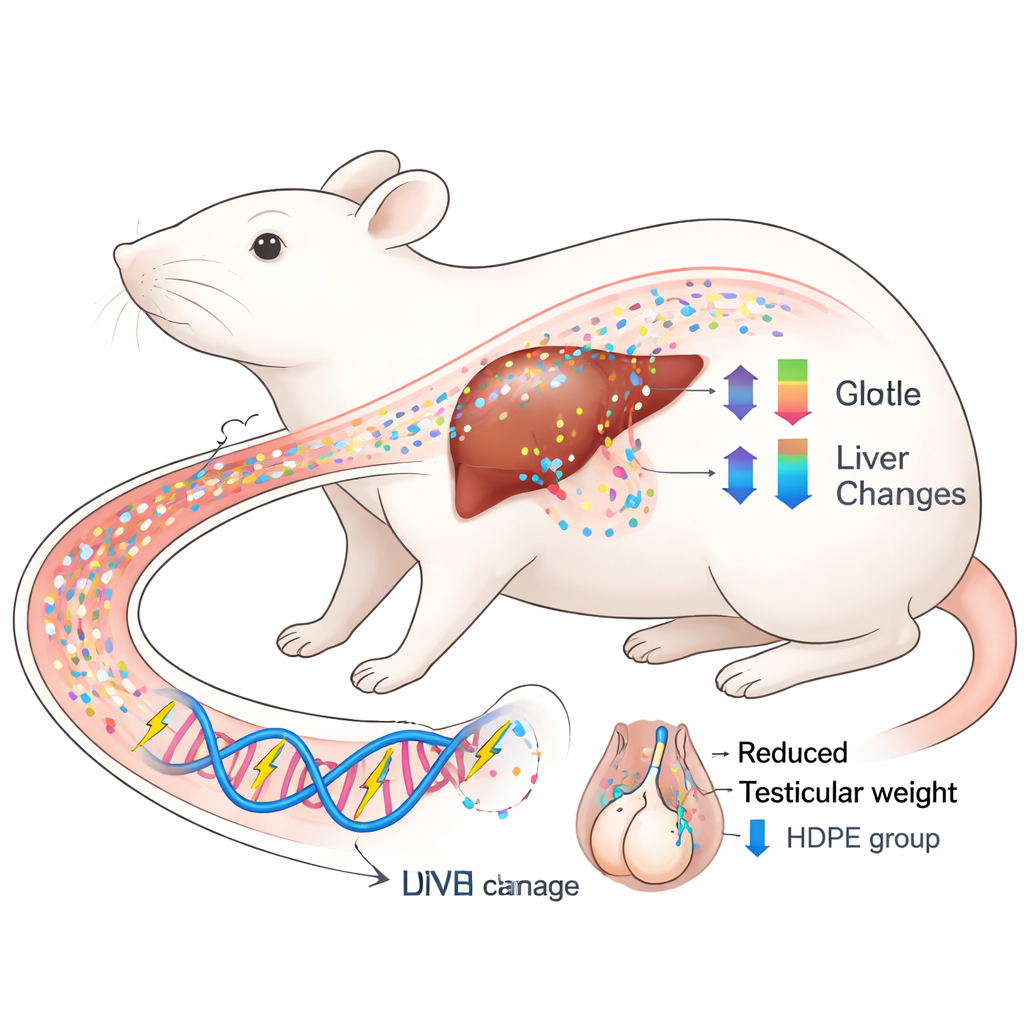
The rats did not show obvious sickness: they gained weight normally, ate and behaved as usual, and their livers looked largely normal under the microscope. However, closer measurements revealed early warning signs. In female rats, both polystyrene and silver nanoparticles raised blood cholesterol, hinting at a disturbance in fat metabolism that was not seen in males. Certain liver-related enzymes in the blood shifted in sex- and treatment-specific ways, and the combination of polystyrene with silver produced signs of added liver stress compared with polystyrene alone, suggesting that mixed exposures can be more troubling than single substances. Tests of DNA in blood cells pointed toward increased strand breaks in animals given polystyrene, silver, or their mixture compared with controls, consistent with a low level of genetic damage, even though the effect was modest and more pronounced in males.
Sex Differences and Reproductive Clues
A striking finding emerged in the male reproductive system. Males that received HDPE nanoparticles from rice bags — at an extremely low, environmentally inspired dose — had smaller testes than unexposed males, even though they showed no other clear signs of harm. This size reduction is often taken as a rough flag for possible effects on sperm production or hormonal balance, though the study did not directly measure fertility. Interestingly, this change did not occur in males given much higher doses of polystyrene or silver, underscoring that real-world plastic fragments may behave differently from smooth, uniform lab beads. Across many measures, females proved more sensitive in terms of lipid (fat) metabolism, while males showed stronger indications of DNA damage, reinforcing that biological sex shapes how bodies handle the same contaminants.
What This Means for Everyday Exposure
For lay readers, the takeaway is not that a single plastic-wrapped meal will make you acutely ill, but that chronic contact with nanoplastics — especially in combination with other particles such as silver — may quietly unsettle metabolism, stress the liver, damage DNA, and, in some cases, affect reproductive organs. These changes are subtle and do not amount to outright poisoning, yet they are exactly the kinds of early shifts that can precede disease if exposure continues over years. The study also shows why modern safety testing must include both males and females and must look at realistic plastic fragments and mixtures, not just ideal particles in isolation. As our environment fills with microscopic plastic debris, understanding and regulating these hidden risks becomes an essential part of protecting long-term public health.
Citation: Dziendzikowska, K., Czerwińska, M., Grodzicki, W. et al. Comparative impact of polystyrene, rice bag-derived high-density polyethylene nanoparticles, and polystyrene–silver nanoparticle interactions in a 28-day in vivo study in male and female Wistar rats. Sci Rep 16, 5519 (2026). https://doi.org/10.1038/s41598-026-35219-9
Keywords: nanoplastics, microplastics, silver nanoparticles, liver health, reproductive toxicity