Clear Sky Science · en
Clinical and sociodemographic determinants influencing caregiver burden in methamphetamine use disorder
When Helping Someone You Love Takes a Heavy Toll
Methamphetamine use is often portrayed as an individual problem, but this study reminds us that addiction reaches far beyond the person taking the drug. Families, especially those who provide daily care and support, can carry a quiet but tremendous burden. Understanding what makes that burden heavier is important not only for public health experts, but for anyone who has watched a relative struggle with addiction—or worries they might someday face the same challenge.
Why Families Matter in Meth Addiction
Methamphetamine use has risen sharply in Malaysia and across Southeast Asia, mirroring global trends. In 2023, stimulant drugs like meth made up more than two-thirds of all recorded drug use in Malaysia. While research has often focused on the direct harm to users—their physical health, mental health, and risk of violence or disease—this study turns the lens on the people who stand beside them: family caregivers. These are parents, spouses, siblings, and other relatives who supervise treatment, manage crises, and shoulder financial and emotional strain, often without formal recognition or support.
Who Took Part in the Study
The researchers recruited 120 people receiving treatment for methamphetamine use disorder and 120 of their main family caregivers from an addiction clinic in an urban area of Malaysia’s Klang Valley. Most patients were men in their mid-thirties, with relatively low income and unstable work, and the vast majority lived in cities. Caregivers, on average, were about 50 years old and more often women—likely reflecting many parents caring for their adult children. To measure how overwhelmed caregivers felt, the team used a standard questionnaire called the Zarit Burden Interview, which captures stress related to health, finances, social life, and family relationships.
How Heavy Is the Caregiver Load?
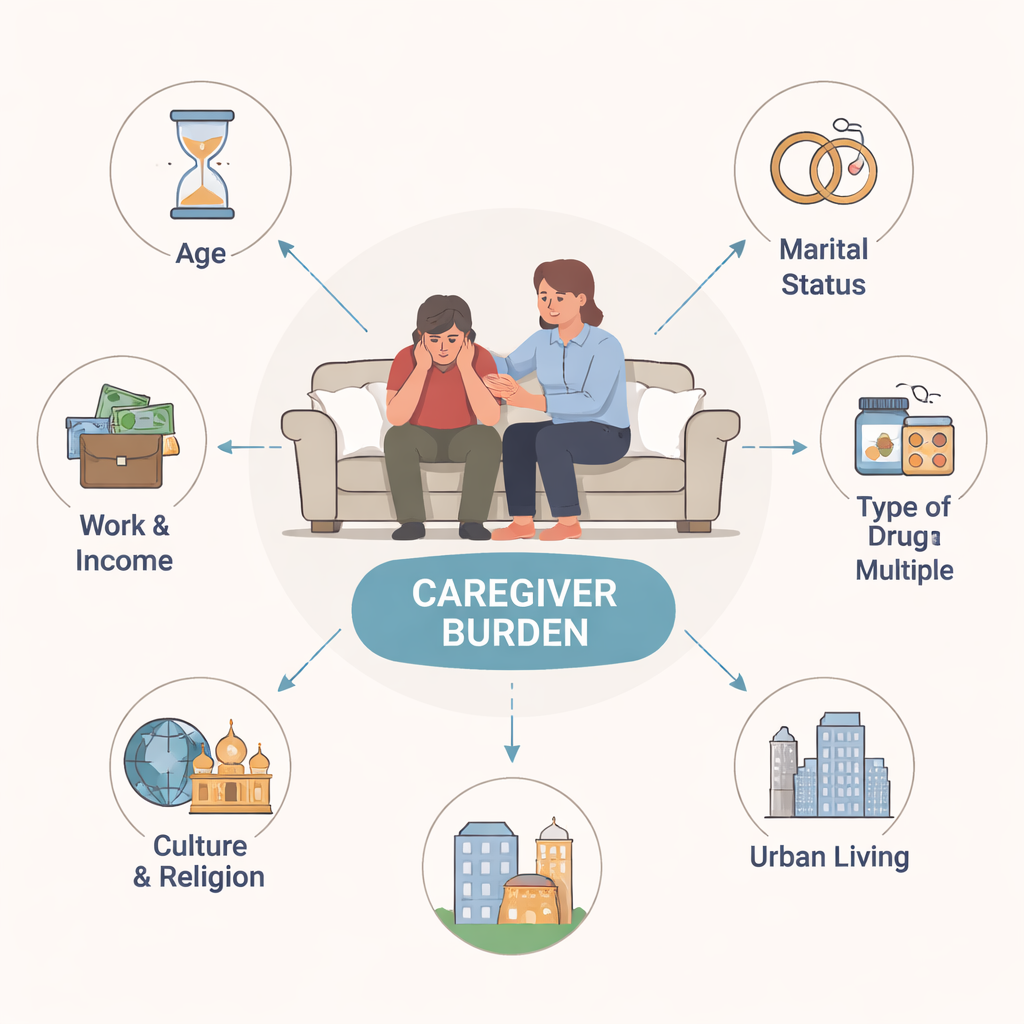
The results were striking: more than four out of five caregivers reported some level of burden, and nearly a third fell into the "severe" range. The researchers then looked at which patient and caregiver characteristics were linked with higher burden. In simple comparisons, caregiver strain was related to the patient’s age, ethnic and religious background, work status, income, and whether they used only meth or meth plus other drugs. Caregivers’ own ethnicity and religion also showed links to how burdened they felt, hinting that culture and beliefs may shape how families experience and interpret caregiving stress.
The Factors That Matter Most
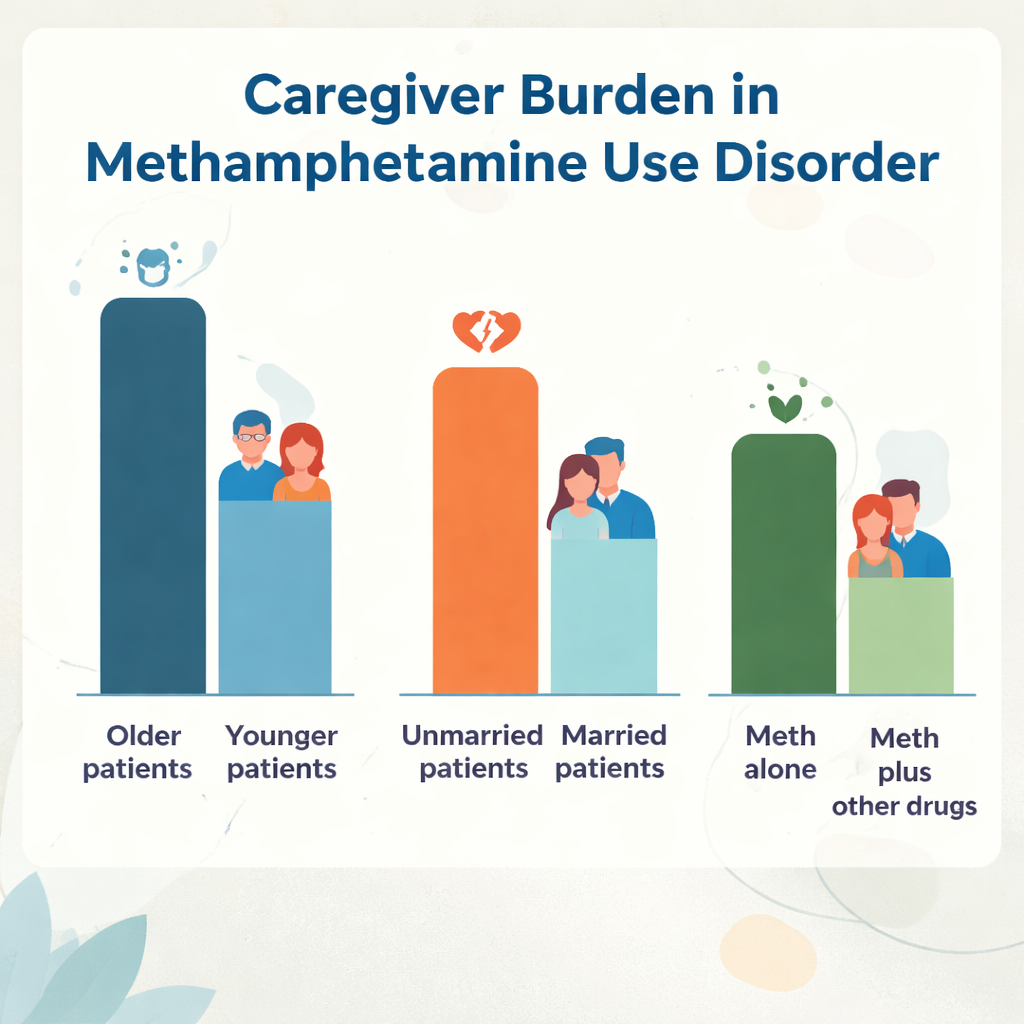
When the team ran a more detailed statistical analysis to account for several factors at once, three stood out as clear signals of heavier caregiver burden. First, older patients were linked with more strain: for each additional year of the patient’s age, the odds that a caregiver felt burdened increased. This may reflect added expectations that older adults should be supporting the family, not relying on them. Second, caregivers of unmarried patients were much more likely to feel burdened than those whose loved one was married, perhaps because single individuals have fewer emotional and practical supports beyond their family of origin. Third, caring for someone who used methamphetamine exclusively—rather than meth plus other substances—was tied to a higher sense of burden, suggesting that meth alone can be intensely disruptive to family life.
What This Means for Families and Services
Interestingly, the severity or duration of meth use itself—how often and how long people used—did not clearly track with higher caregiver burden in this group. Nor did having another diagnosed mental illness. This suggests that families may feel overloaded regardless of the finer details of the addiction, and that unmeasured pressures like long years of caregiving, financial stress, or limited social support might matter just as much. The study also notes that its findings come from a single urban clinic, with most participants from one ethnic group, so the patterns may look different in rural or more diverse settings.
Turning Insights Into Support
For non-specialists, the key message is straightforward: when an adult child or relative has methamphetamine use disorder, the people caring for them are very likely to be suffering too—especially if the patient is older, single, and using meth as their main drug. The authors argue that treatment programs should not focus only on stopping drug use. Instead, services should also screen for at-risk families and offer practical help with work, housing, childcare, and caregivers’ own mental health. Recognizing and supporting caregivers is not just an act of compassion; it may be essential to helping people with meth addiction recover and keeping families from breaking under the strain.
Citation: Mohamad Kutty, R., Wahab, S. & Mohamad Isa, M.F. Clinical and sociodemographic determinants influencing caregiver burden in methamphetamine use disorder. Sci Rep 16, 4918 (2026). https://doi.org/10.1038/s41598-026-35217-x
Keywords: methamphetamine use disorder, family caregivers, caregiver burden, addiction and families, substance use in Malaysia