Clear Sky Science · en
Sibutramine high-doses effects in cafeteria diet-induced obese rats
Why This Study Matters
As new weight-loss drugs grab headlines, scientists are still trying to understand how older, cheaper medicines affect not just body weight, but the whole body. This study looked at sibutramine, a once-popular appetite suppressant, to see how high doses influence weight, blood fat and sugar levels, liver and gut health, and the trillions of microbes living in the intestines. Using rats fed an ultra-rich “cafeteria” diet that mimics human junk-food habits, the researchers explored whether this drug can counter some of the damage caused by obesity and an unhealthy diet.
A Fat-Rich Diet and Its Consequences
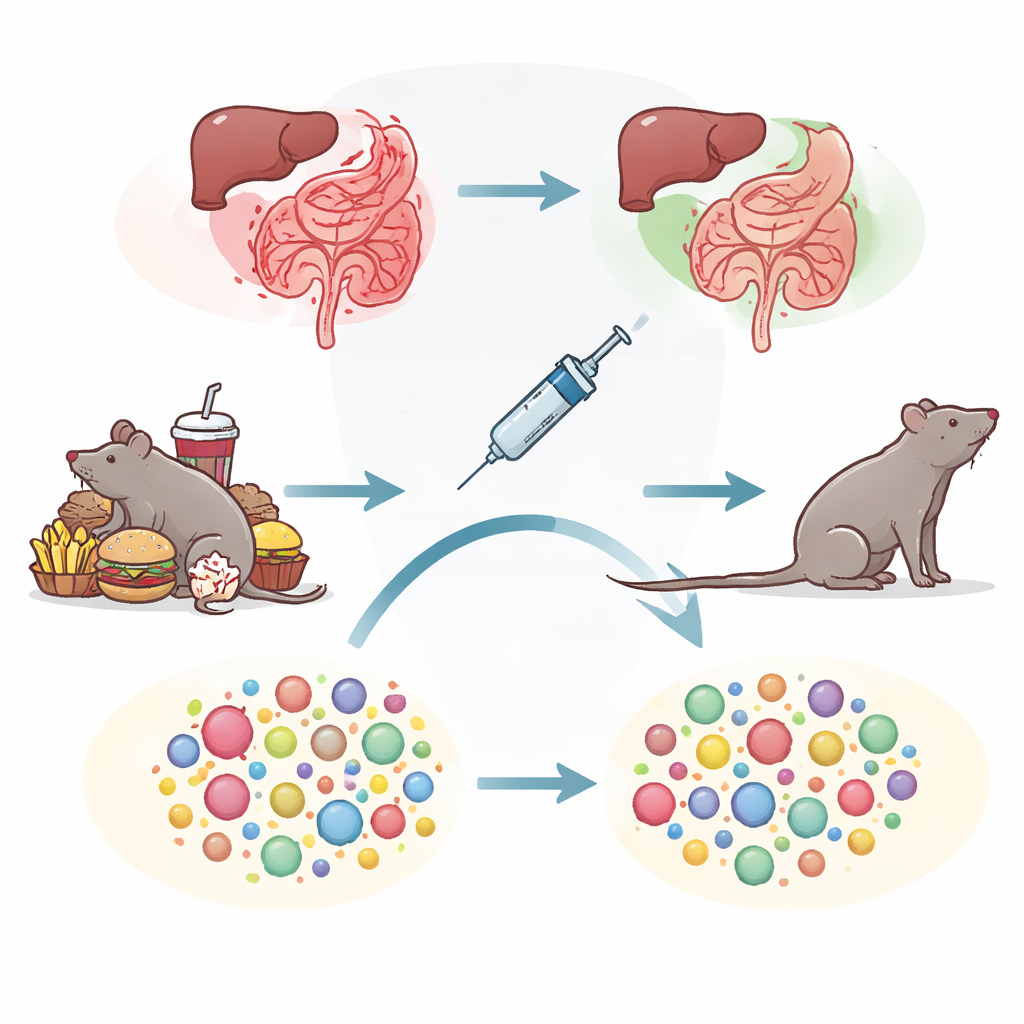
The scientists first fed female rats a cafeteria-style diet packed with energy-dense foods for 16 weeks, while another group received standard chow. As expected, the cafeteria-fed rats became heavier, ate more calories, and developed signs of metabolic trouble. Their blood sugar rose, and their cholesterol profile shifted in an unhealthy direction, with higher total and non-HDL cholesterol and lower “good” HDL cholesterol. Markers of liver strain, known as AST and ALT, also climbed, suggesting that the rich diet was beginning to injure the liver—similar to what is seen in early stages of fatty liver disease in people.
What High-Dose Sibutramine Did
After obesity was established, some rats—both on the junk-food diet and on standard chow—received high doses of sibutramine for six weeks, scaled to be comparable to the upper end of human therapeutic doses. In cafeteria-fed animals, sibutramine led to a meaningful 10.93% reduction in body weight and a modest drop in calorie intake. Blood sugar levels, which had been pushed up by the rich diet, were brought closer to normal. Cholesterol patterns improved as well: total cholesterol fell and HDL cholesterol rose in treated animals, indicating a shift toward a healthier blood fat profile. Importantly, the elevated liver enzymes caused by the cafeteria diet were partially reversed, hinting that the drug helped protect the liver from diet-induced damage.
Changes Inside the Gut
The study also probed the intestines themselves. In rats on a standard diet given sibutramine, the researchers observed deeper intestinal crypts—the small pockets where new cells are born to renew the gut lining. This structural change may signal an adaptive response that could support barrier function or nutrient handling, although the exact consequences remain uncertain. Goblet cells, which secrete protective mucus, tended to increase with both the rich diet and sibutramine, but not enough to reach clear statistical significance. When the team examined tissue slices from the liver and intestines under the microscope, cafeteria-fed rats showed classic features of early liver injury, including fat buildup and inflammation, while sibutramine-treated animals on the same diet had milder changes and more preserved tissue architecture.
Gut Microbes as Hidden Partners
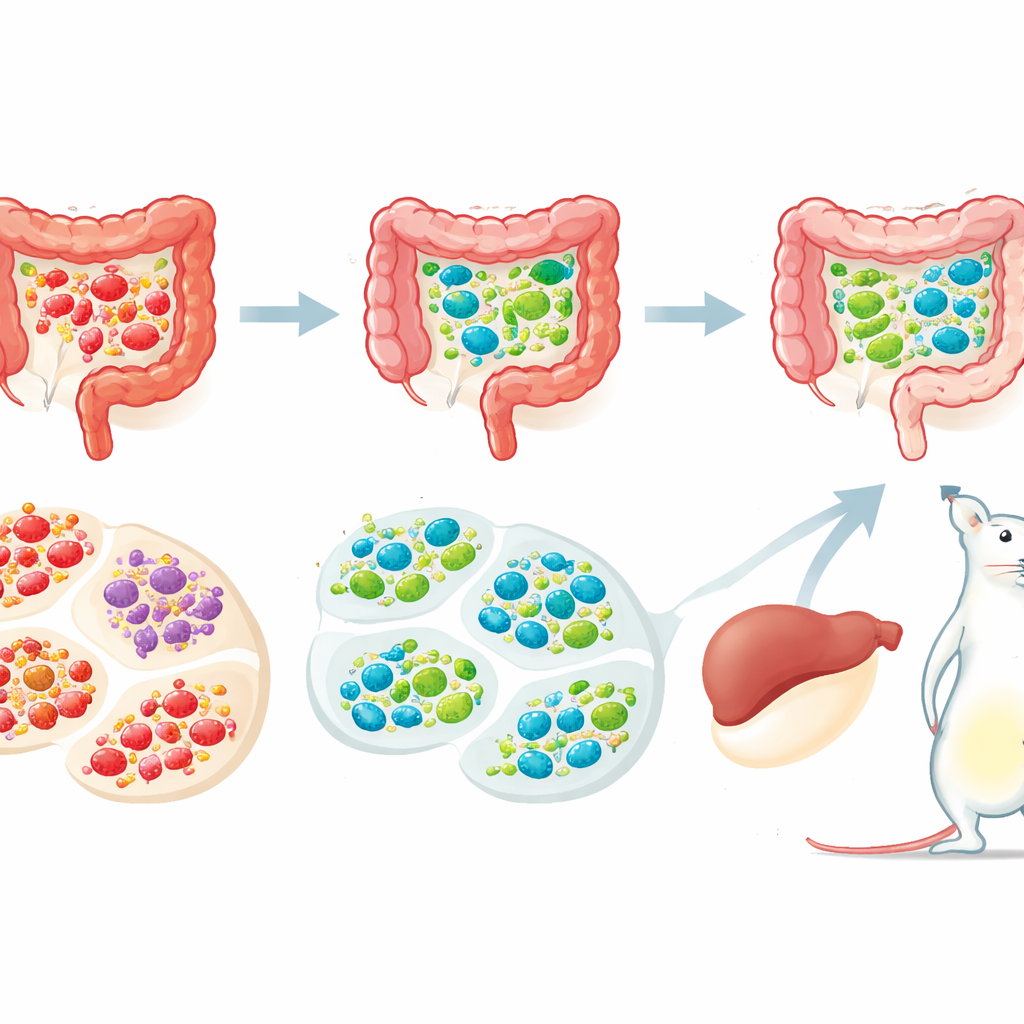
Because obesity is closely tied to the gut microbiota, the researchers sequenced bacterial DNA from the animals’ feces. The rich diet dramatically reshaped which bacterial groups were present, reducing many species that make short-chain fatty acids—beneficial molecules linked to healthier metabolism and lower inflammation. Sibutramine did not greatly change overall microbial diversity, but it did nudge the community in a distinct direction, especially at high doses. In cafeteria-fed rats, the drug increased several short-chain fatty acid–producing genera, including Bacillus, Marvinbryantia, and Bifidobacterium. These bacteria have been associated in other studies with anti-inflammatory effects and metabolic improvements. Even so, the type of diet remained the dominant force shaping the microbiota: what the animals ate had a larger impact than whether they received the drug.
What It All Means for Obesity Treatment
Taken together, the findings suggest that high-dose sibutramine does more than simply curb appetite. In obese rats eating a junk-food diet, the drug reduced body weight, improved blood sugar and cholesterol, eased early signs of liver damage, altered gut structure, and partially reversed unhealthy shifts in gut microbes by favoring bacteria that produce helpful fatty acids. At the same time, the study underscores that diet exerts a stronger influence on gut microbes than medication alone, and that results in rats cannot be assumed to translate directly to people. Still, this work highlights how weight-loss drugs can have far-reaching effects across the body and supports the idea that combining medication with better eating patterns may offer a more complete strategy for managing obesity and protecting organs such as the liver and intestine.
Citation: Ribeiro, F.M., Lima, H.K., Ribeiro, C.F.A. et al. Sibutramine high-doses effects in cafeteria diet-induced obese rats. Sci Rep 16, 8321 (2026). https://doi.org/10.1038/s41598-026-35214-0
Keywords: obesity, sibutramine, gut microbiota, cafeteria diet, liver health