Clear Sky Science · en
The role of yoga in shaping emotional intelligence and life satisfaction in the context of personal relationships
Why Your Yoga Mat Might Matter for Your Friendships
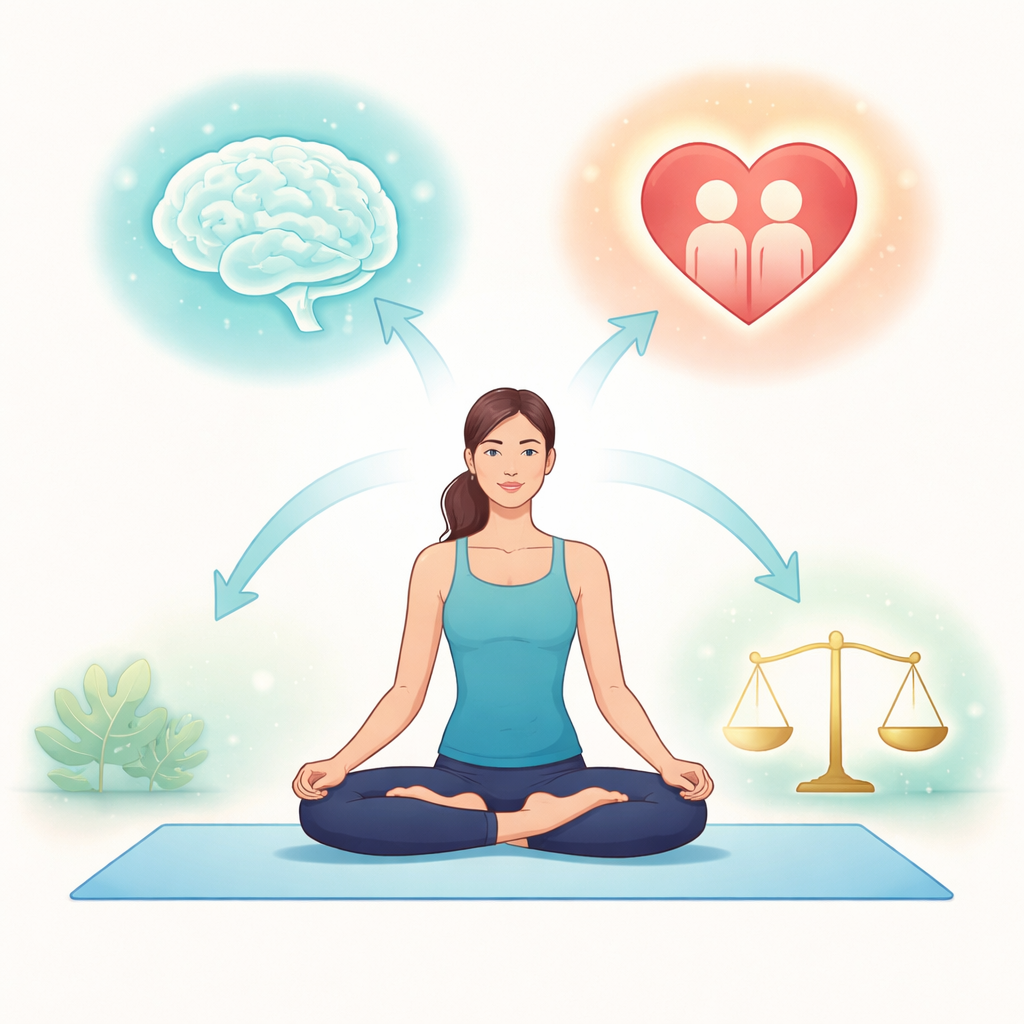
Many people turn to yoga to feel calmer, sleep better, or ease aches and pains. But this study asks a less obvious question: how might yoga change the way we handle our feelings and our closest relationships? By comparing adults who regularly practice yoga with those who don’t, the researchers explored whether time on the mat is linked to how well people understand and manage emotions, how much they support friends, and how satisfied they feel with life.
Looking at Friends, Feelings, and Well-Being
The researchers focused on friendships and romantic ties because these close relationships strongly shape both mental and physical health. Supportive bonds can lower stress hormones, protect the heart, and reduce depression, while strained connections can do the opposite. Friendships are especially interesting: unlike family, they are chosen and can vary in depth and number. Friends can buffer stress, but they can also become draining when expectations run high. Against this backdrop, yoga is often promoted as a way to build mindfulness—the ability to notice the present moment without judgment—which could, in theory, improve emotional balance and relationship quality.
How the Study Was Carried Out
The team surveyed 119 adults between 18 and 59 years old, about half of whom were regular yoga practitioners attending at least one class per week. Participants completed several questionnaires. One measured their emotional intelligence, including how easily they accept their feelings, understand complex emotions, empathize with others, and control their reactions. Another tool asked how much support they provide to a close friend, such as being there in difficult times. A third scale assessed overall life satisfaction. The researchers then compared yoga practitioners with non-practitioners and examined how the amount of yoga practice related to these emotional and social measures.
What Was Different for Yoga Practitioners
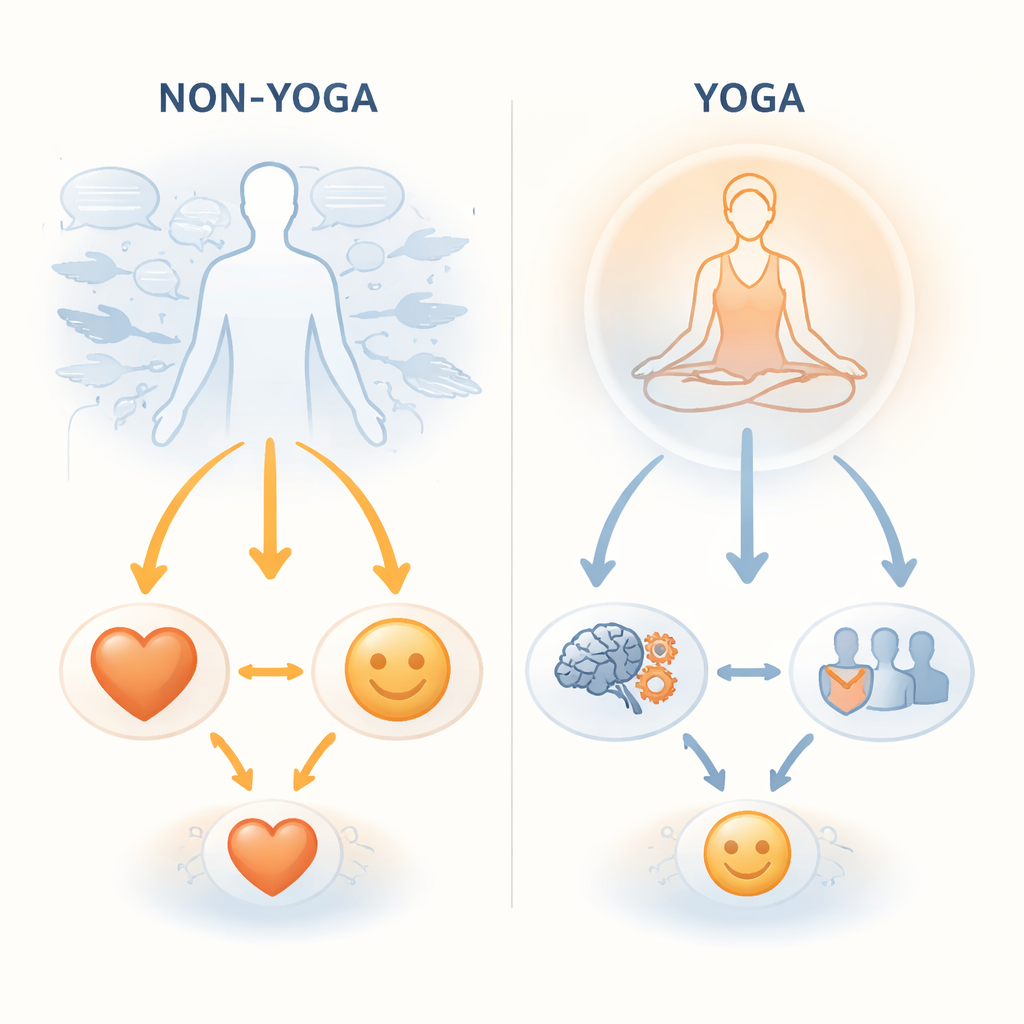
Yoga practitioners stood out in several ways. They scored higher on understanding their own and others’ emotions and on controlling their emotional reactions. Longer or more sustained yoga practice was linked to better emotional acceptance, stronger emotion control, and higher overall emotional intelligence. At the same time, however, yoga practitioners reported lower levels of cognitive empathy—imagining what others feel—and said they gave less support to friends than non-practitioners. In other words, regular practitioners appeared to be more skilled at managing their inner world, yet somewhat less intensely involved in others’ emotional needs and daily struggles.
When Caring for Others and Happiness Part Ways
A key finding concerned the link between empathy and life satisfaction. Among people who did not practice yoga, higher empathy went hand in hand with greater life satisfaction, suggesting that tuning into others’ emotions may make life feel more meaningful. For regular yoga practitioners, this pattern disappeared: their life satisfaction was not strongly tied to how empathic they were. Combined with their higher emotion control and lower reported friend support, this points to a different style of relating—one that may involve caring for others while keeping a clearer boundary around one’s own well-being. The authors caution that these results come from a single snapshot in time, so they cannot show whether yoga causes these differences or simply attracts people who are already more self-focused or emotionally controlled.
What This Means for Everyday Life
For a lay reader, the message is both intriguing and nuanced. Regular yoga practice seems to go hand in hand with stronger inner emotional skills but also with a step back from heavy involvement in friends’ problems. This could represent a healthier balance, where people are less likely to sacrifice their own well-being for others, or it could signal a cooler style of relating that has downsides in some contexts. The study cannot yet say which interpretation is right, but it highlights yoga as a possible setting where people cultivate emotional control and clearer boundaries. Future long-term research will need to track new practitioners over time to see whether and how yoga reshapes both their inner lives and their closest relationships.
Citation: Dubiel, A.E., Siembab, M. & Hartmann, K.K. The role of yoga in shaping emotional intelligence and life satisfaction in the context of personal relationships. Sci Rep 16, 5515 (2026). https://doi.org/10.1038/s41598-026-35210-4
Keywords: yoga, emotional intelligence, friendship, mindfulness, life satisfaction