Clear Sky Science · en
Climate adaptation policies in Central Asia overlook mental health
Why Climate and Minds Matter Together
As the world heats up, we usually hear about melting glaciers, failing crops, or damaged roads. Far less attention is paid to what climate change does to people’s minds. This article looks at four Central Asian countries—Kazakhstan, Kyrgyzstan, Tajikistan, and Uzbekistan—and shows that while their governments are planning for floods, droughts, and heatwaves, they are largely ignoring the anxiety, depression, and trauma that come with these events. For everyday people, this matters because mental health shapes how families cope, rebuild, and carry on after climate shocks.
Rising Heat, Failing Water, Strained Communities
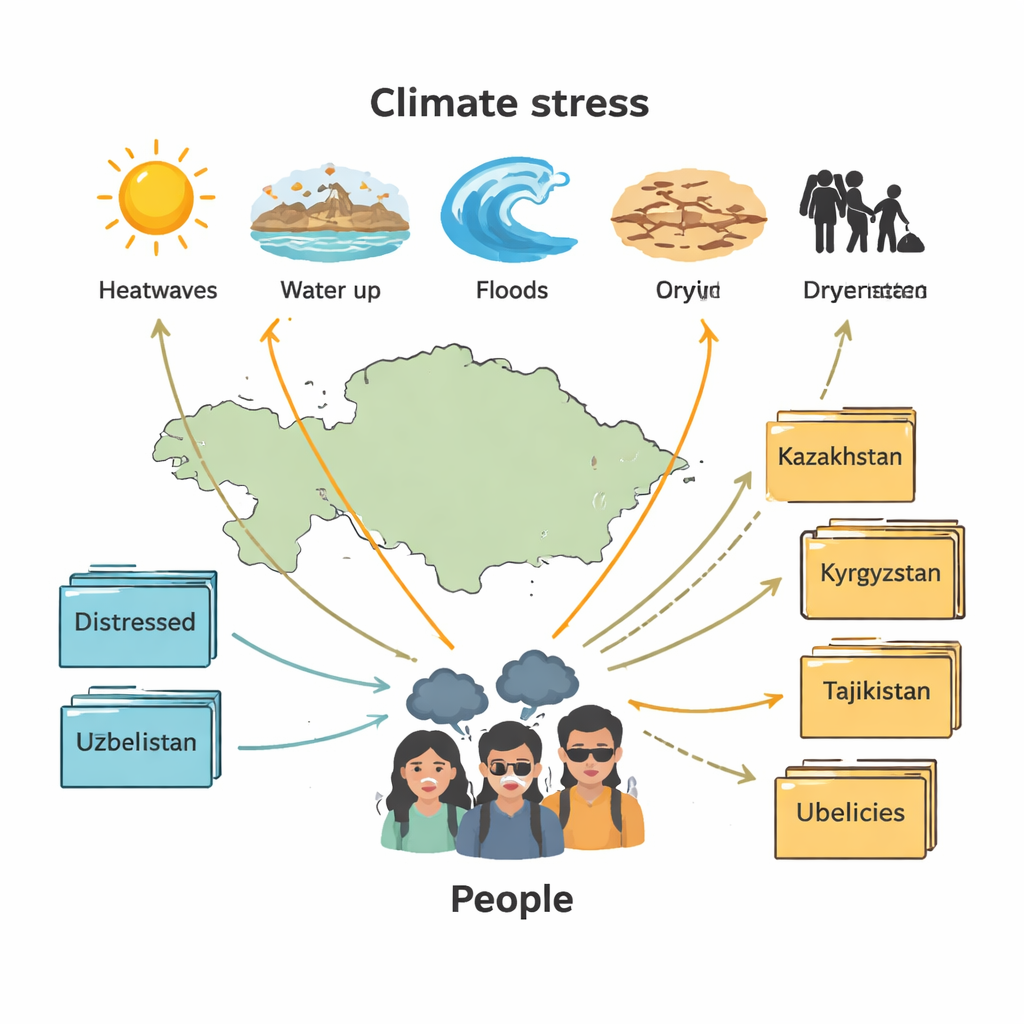
Central Asia is warming quickly. Glaciers in the Tien Shan and Pamir mountains are shrinking, rivers are under pressure, and the legacy of the Aral Sea disaster still haunts local communities. These changes bring more floods, droughts, and heatwaves, which threaten food supplies, homes, and jobs. Research from around the world shows that such stresses can trigger fear, long-lasting sadness, and post-traumatic stress, especially when people are repeatedly hit by disasters or forced to move. In Central Asia, rural households, farmers, women with caregiving duties, and young people are particularly vulnerable.
Weak Mental Health Systems Meet Growing Climate Stress
The study explains that mental health care in the region was already fragile before climate change became a major concern. Services are often concentrated in cities, funding is low, and stigma discourages many from seeking help. Primary health clinics rarely include mental health support, and there are not enough trained professionals, especially outside major urban centers. Reforms are underway—Kazakhstan and Uzbekistan, for example, are trying to expand access and reduce stigma—but overall capacity remains limited. This means that when climate shocks occur, people are left to cope largely on their own, without counseling, community support programs, or long-term follow-up.
What the Policies Say—and Don’t Say
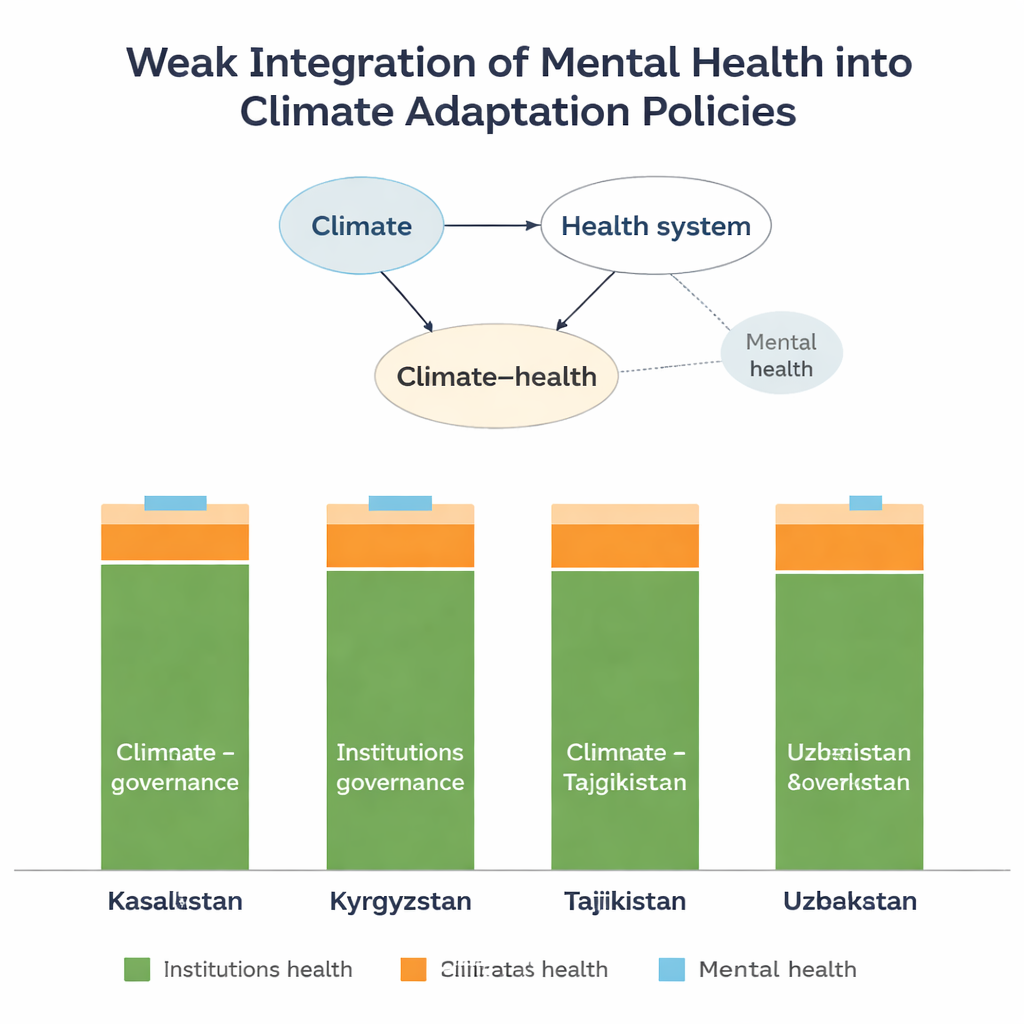
The authors examined national climate plans and related health strategies to see how clearly they recognize climate-related mental strain. Using both close reading and computer-based text analysis, they found that only a tiny fraction of policy text mentions climate and health together, and an even smaller share touches on mental health. Kazakhstan and Tajikistan briefly refer to stress or mental health, often as part of wider “social vulnerability.” Kyrgyzstan and Uzbekistan avoid the topic altogether, even when they discuss disasters in the Aral Sea region or rising non-communicable diseases. Across all four countries, far more space is devoted to institutions, laws, and general planning than to how people actually feel and cope under climate pressure.
Gaps in Action, Money, and Coordination
Beyond words on paper, the study looks at whether countries have the institutions and funding to act on climate–health risks. Kazakhstan and Kyrgyzstan appear better organized: their health ministries are involved in adaptation plans, and they use monitoring systems and international funding to strengthen hospitals and clinics. Yet even there, mental health is rarely singled out for investment or training. Tajikistan and Uzbekistan face bigger hurdles, relying heavily on outside donors, with weaker coordination across government agencies. Everywhere, emergency plans emphasize shelters, food, and basic medical care after disasters, while counseling and long-term psychological support are largely missing. Women’s added burdens—managing households, caring for children and the elderly, and often working in agriculture—are sometimes noted but not translated into concrete mental health programs.
Seeing Mental Health as Part of Climate Survival
For non-specialists, the takeaway is simple but powerful: climate change does not just wash away roads and dry up fields; it also wears down people’s minds. By treating mental health as an afterthought, Central Asian governments risk underestimating the true human cost of climate shocks and designing plans that look strong on paper but fall short in practice. The authors argue that climate adaptation must openly include emotional and psychological well-being—through better coordination between environment and health ministries, gender-sensitive planning, local support networks, and dedicated funding. Only then can communities in Central Asia become truly resilient, not just in their infrastructure, but in their everyday lives and inner resilience.
Citation: Ullah, A., Jakob, M., Bavorova, M. et al. Climate adaptation policies in Central Asia overlook mental health. Sci Rep 16, 5503 (2026). https://doi.org/10.1038/s41598-026-35198-x
Keywords: climate change, mental health, Central Asia, climate adaptation policy, public health