Clear Sky Science · en
Anti-inflammatory and cancer chemopreventive potential of essential oils from some cultivated plants in Egypt
Why everyday herbs could matter for serious diseases
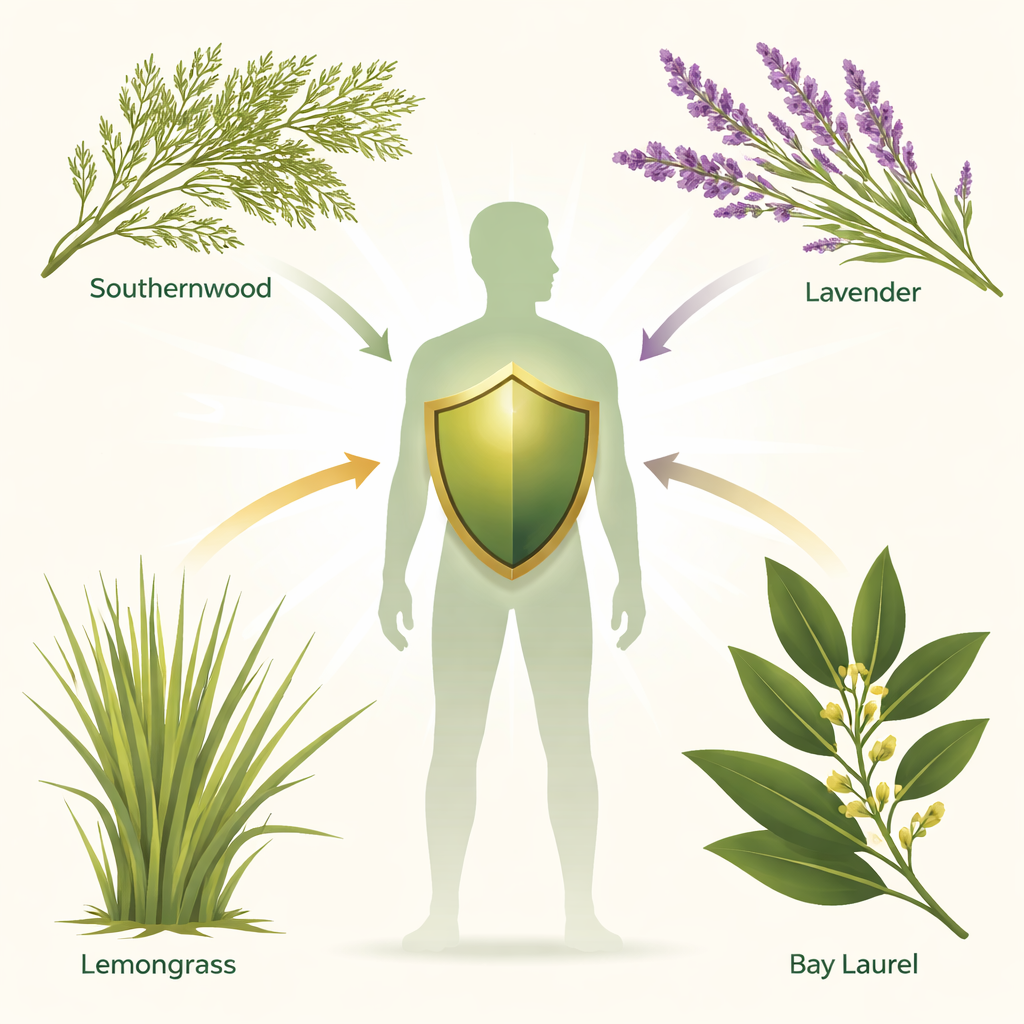
Many of us know southernwood, lavender, lemongrass and bay laurel as fragrant herbs in teas, soaps or the kitchen. This study asks a deeper question: can the concentrated aromatic oils from these plants help calm harmful inflammation and strengthen the body’s own defenses against cancer? Using living cells grown in the lab, the researchers explore whether these familiar plants produce molecules that quiet inflammatory signals and switch on protective systems inside our cells.
From helpful inflammation to harmful fire
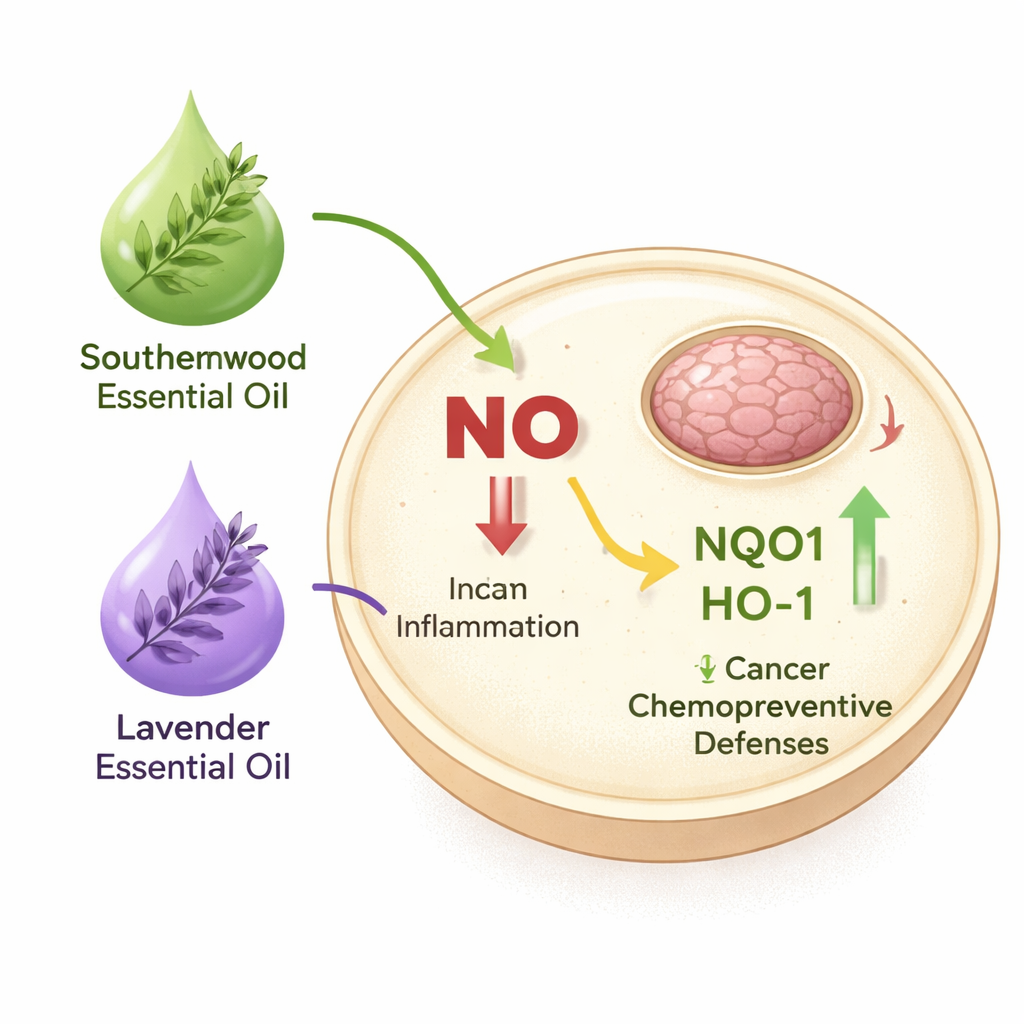
Inflammation is the body’s emergency response team, rushing to sites of injury or infection. In the short term it is lifesaving, but when this response stays switched on for too long it becomes like a fire that never goes out, slowly damaging tissues and raising the risk of cancer. One key spark in this fire is nitric oxide, a small reactive molecule made in large amounts by immune cells during infection. Another line of defense is a group of internal “cleanup” systems, controlled by a master switch called Nrf2, that boost enzymes such as NQO1 and HO-1 to limit damage from reactive molecules. The team wanted to see whether essential oils from the four plants could both reduce the overproduction of nitric oxide and nudge the Nrf2-related defenses into higher gear.
Testing plant scents on immune cells
The researchers first looked at inflammation. They exposed mouse immune cells (macrophages) to a bacterial component that strongly provokes an inflammatory response, driving up nitric oxide levels. When they added each essential oil at the same dose, the oil from southernwood stood out: it almost completely blocked nitric oxide release, performing even better than the anti-inflammatory drug indomethacin in this test. Oils from lavender and bay laurel also reduced nitric oxide, but to a lesser extent, while lemongrass oil proved too toxic for these cells at the tested level. Follow-up protein tests showed that southernwood oil sharply lowered the amount of the enzyme responsible for making nitric oxide, with lavender and bay laurel again showing weaker but noticeable effects.
Switching on the cell’s internal shields
Next, the team turned to a liver cancer–derived cell line often used to study cancer prevention. Here they asked whether the oils could turn on NQO1 and HO-1, two enzymes that are reliable signs that the Nrf2 protective pathway is active. At a screening dose, oils from lavender and southernwood moderately increased NQO1 levels, hinting that they might help cells handle damaging chemicals more safely. Lemongrass and bay laurel oils were again too toxic at that concentration to evaluate for this effect. When the researchers tested several doses of lavender and southernwood oils, they found that NQO1 stayed moderately elevated across the range, while HO-1 showed a clearer rise at higher doses, especially with southernwood, suggesting a dose-related strengthening of the cells’ antioxidant shield.
Connecting plant chemistry to health potential
The study also ties these effects to the known chemistry of the oils. Southernwood oil is rich in compounds such as artemisia ketone and eudesmol molecules, while lavender oil contains eucalyptol, camphor and alpha-pinene. Earlier work on related plants and pure compounds suggests that several of these ingredients can dampen inflammatory messengers and activate Nrf2-linked defenses in different models. Although the current experiments were limited to cells in dishes, they support the idea that mixtures of natural molecules in essential oils can act on both sides of the inflammation–protection balance: turning down signals that fuel chronic inflammation while nudging up enzymes that help cells detoxify and repair.
What this could mean for future therapies
For a non-specialist, the main takeaway is that some everyday aromatic plants may hold more than pleasant scents: their oils could form the basis of gentler treatments that both cool chronic inflammation and strengthen the body’s built-in cancer-prevention systems. In this work, southernwood oil showed strong anti-inflammatory power, and both southernwood and lavender oils modestly boosted key protective enzymes linked to the Nrf2 pathway. These findings do not mean that using these oils at home will prevent cancer or replace medical care; the tests were done only in controlled lab systems and safety at therapeutic doses remains to be proven. But they point researchers toward specific plants and molecules worth developing into future drugs or supplements designed to keep the inflammatory “fire” in check and support the body’s own cellular shields.
Citation: Ali, M.I., Hamed, A.R., Hassan, E.M. et al. Anti-inflammatory and cancer chemopreventive potential of essential oils from some cultivated plants in Egypt. Sci Rep 16, 4389 (2026). https://doi.org/10.1038/s41598-026-35195-0
Keywords: essential oils, anti-inflammatory, cancer chemoprevention, medicinal plants, Nrf2 pathway