Clear Sky Science · en
An intertwined triple-bottom-line rating system for highway sustainability in developing countries
Why better roads matter for everyone
Highways are more than strips of asphalt; they shape how we move, where we live, and how our economies grow. Yet building and maintaining roads can damage the environment, strain public budgets, and put people at risk. This study tackles a simple but powerful question: how can countries like Egypt design and run highways so they are cleaner, safer, and more cost‑effective over their entire life, rather than just fast to build today? 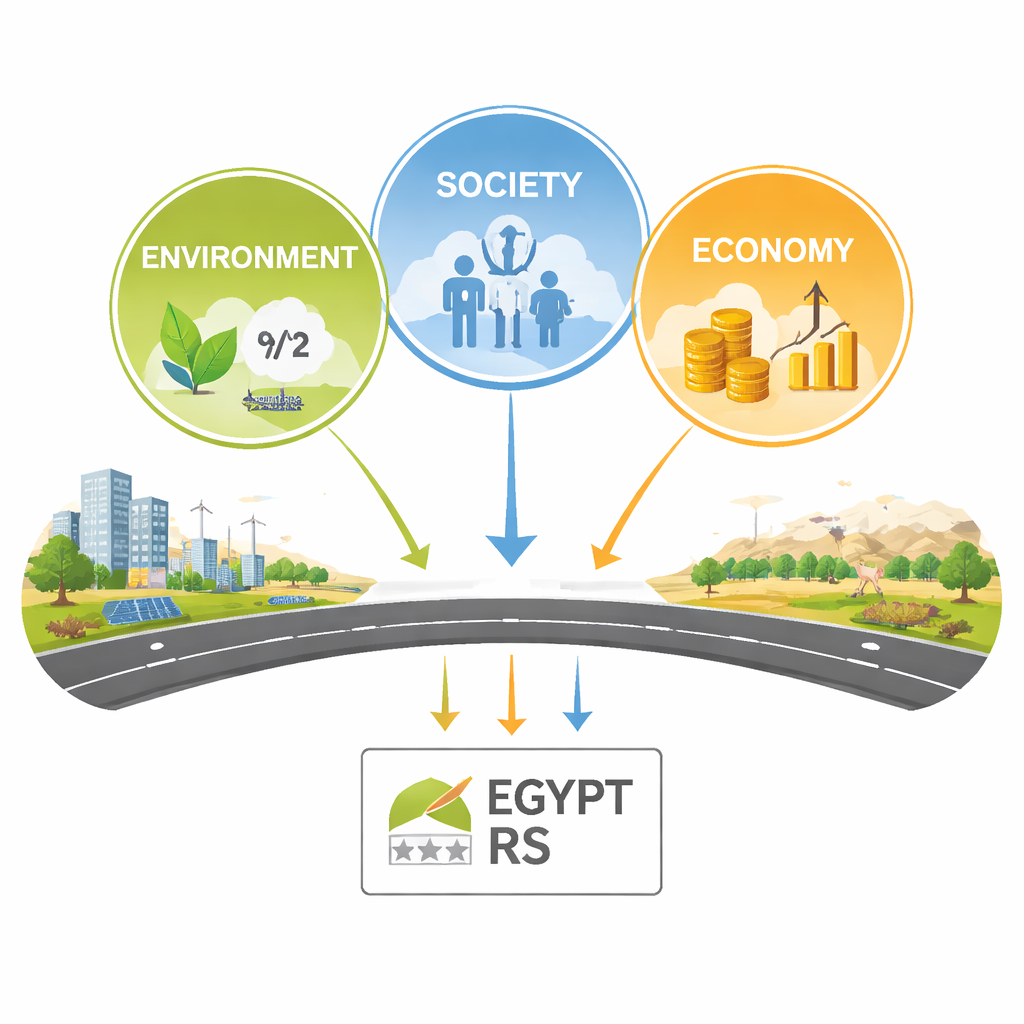
The hidden costs of conventional highways
Highway projects are often judged by how quickly they cut travel times or boost trade. But the construction and upkeep of roads consume huge amounts of raw materials and energy, and release substantial greenhouse gases—sometimes more than the vehicles that later use them. Roadworks can disturb communities, pollute air and water, and destroy habitats. At the same time, work sites in many developing countries face high accident rates, and completed highways can become deadly corridors with heavy crash tolls and economic losses. Traditional project evaluations rarely capture all these environmental, social, and economic impacts together, which makes it easy to overlook long‑term harm.
Building a three‑pillar scorecard
To address this gap, the researchers created a new sustainability rating system tailored to Egyptian highways. They began by combing through 150 scientific studies, 13 international infrastructure rating schemes, and the United Nations Sustainable Development Goals. From this they assembled a broad list of 78 factors that might influence how sustainable a road project is—from worker safety and land use to recycled materials, energy use, and life‑cycle costs. They then surveyed 100 experienced Egyptian highway professionals to judge how strongly each factor affects sustainability, and used a series of statistical tools to trim and organize the list without losing what matters most.
Narrowing down what really counts
Through techniques that rank importance, uncover patterns, and focus attention on the most influential items, the team condensed the 78 candidates to just 18 key factors. These cover the classic “triple bottom line”: social (such as improving local infrastructure and safer, more accessible transport), environmental (such as cutting pollution, saving energy, and using recycled materials), and economic (such as solid feasibility studies, durable pavement design, and life‑cycle cost analysis). Experts then compared these factors in pairs to assign weights, a method that checks for consistency and reveals which actions deliver the biggest sustainability gains. In the final model, environmental and economic aspects are weighted slightly more than social ones, reflecting how practitioners currently view their impact.
From formulas to real roads
The weighted factors were turned into a practical assessment tool, implemented in a user‑friendly spreadsheet. For each highway project, engineers answer a structured set of questions linked to the 18 factors. The tool converts those answers into scores for social, environmental, and economic performance, then combines them into a single sustainability percentage. Projects are classified into levels—declined, certified, silver, gold, or platinum—similar to well‑known international systems. 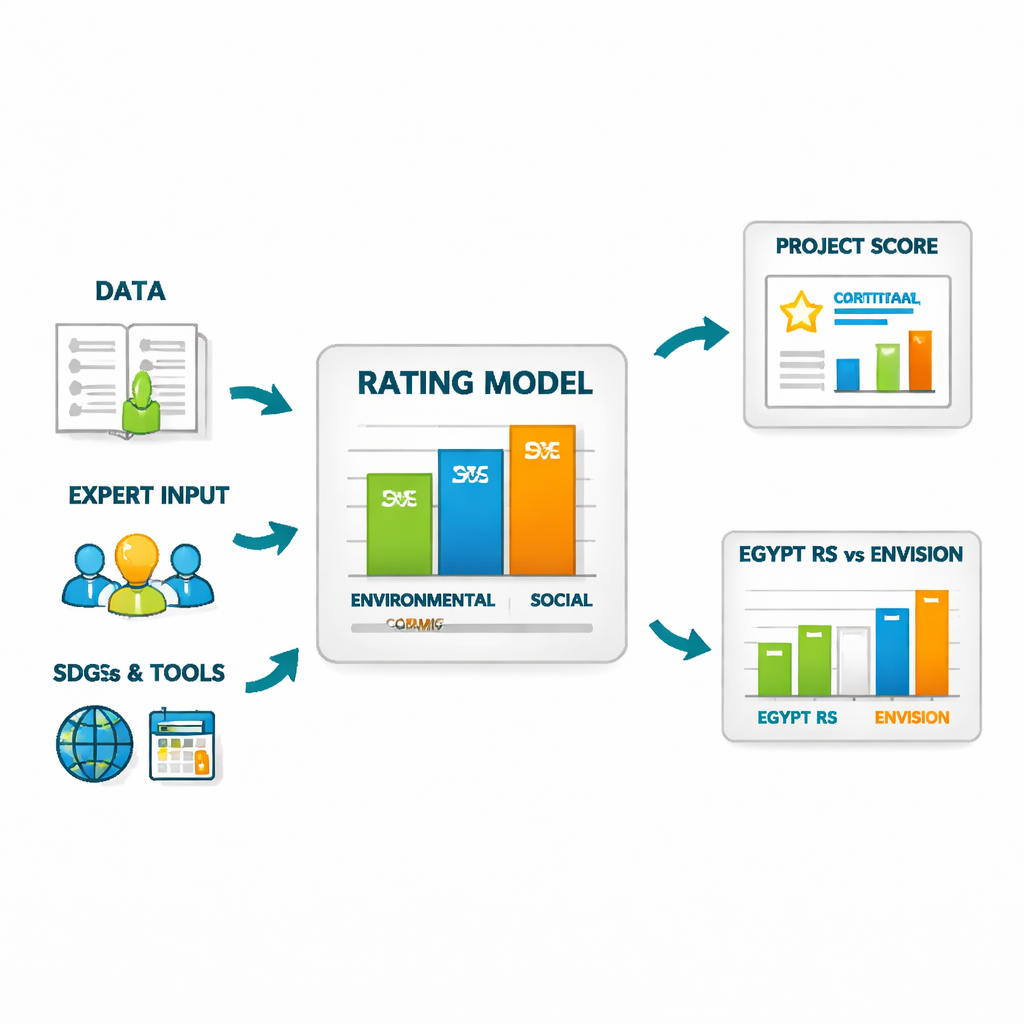
Putting the system to the test
To see how it works in practice, the team evaluated two Egyptian rural highways: one major maintenance project using techniques such as full‑depth recycling and cold‑mix asphalt, and one new dual‑carriageway construction. The maintenance project earned a “silver” rating, with especially strong environmental performance thanks to material reuse and reduced energy use. The new construction scored “gold,” driven by better safety, capacity, and long‑term service for communities. When the same projects were scored using Envision, a leading international infrastructure rating system, the results were remarkably similar—even though the new tool uses just 18 focused factors instead of dozens more. This suggests the leaner Egyptian system can offer reliable judgments while saving time and effort.
What the findings mean for everyday life
For non‑specialists, the message is clear: not all roads are created equal. By measuring how highways perform for people, the planet, and public finances at the same time, this new rating system gives governments a clearer picture of which projects truly support long‑term development. It can help officials reward contractors who invest in safer work sites, longer‑lasting pavements, and smarter use of resources, instead of those who simply offer the lowest upfront price. Over time, wider use of such tools could mean roads that are cleaner to build, safer to drive, and cheaper to maintain—benefits that travelers, nearby communities, and taxpayers will all feel.
Citation: Rageh, M.O., Elbeltagi, E.E., Gabr, A.R. et al. An intertwined triple-bottom-line rating system for highway sustainability in developing countries. Sci Rep 16, 5433 (2026). https://doi.org/10.1038/s41598-026-35183-4
Keywords: sustainable highways, infrastructure rating systems, triple bottom line, developing countries, life cycle assessment