Clear Sky Science · en
Effects of an amino acid mixture on alcohol metabolism and alcohol-related symptoms in healthy adults
Why this study matters to everyday drinkers
Many adults enjoy a drink now and then, but few enjoy the foggy head, tiredness, and general discomfort that can follow. This study asks a question with obvious real‑world appeal: can a carefully designed mix of common amino acids—the building blocks of protein—help the body clear alcohol and its toxic by‑products faster, and in turn ease alcohol‑related symptoms the next day?
A fresh look at easing the “day after”
Hangovers involve more than just a headache. As alcohol is broken down, the body produces acetaldehyde, a short‑lived but highly irritating substance linked to nausea, flushing, and feeling unwell. While many products claim to help, solid clinical evidence is scarce. The researchers tested a new capsule called “Amino Liver” (AL), which combines several amino acids chosen to support the liver’s natural cleanup systems and energy balance. Instead of relying on single ingredients, AL blends branched‑chain amino acids with L‑arginine, L‑methionine, and L‑alanine, aiming to support detoxification, antioxidant defenses, and energy restoration all at once.
How the trial was set up
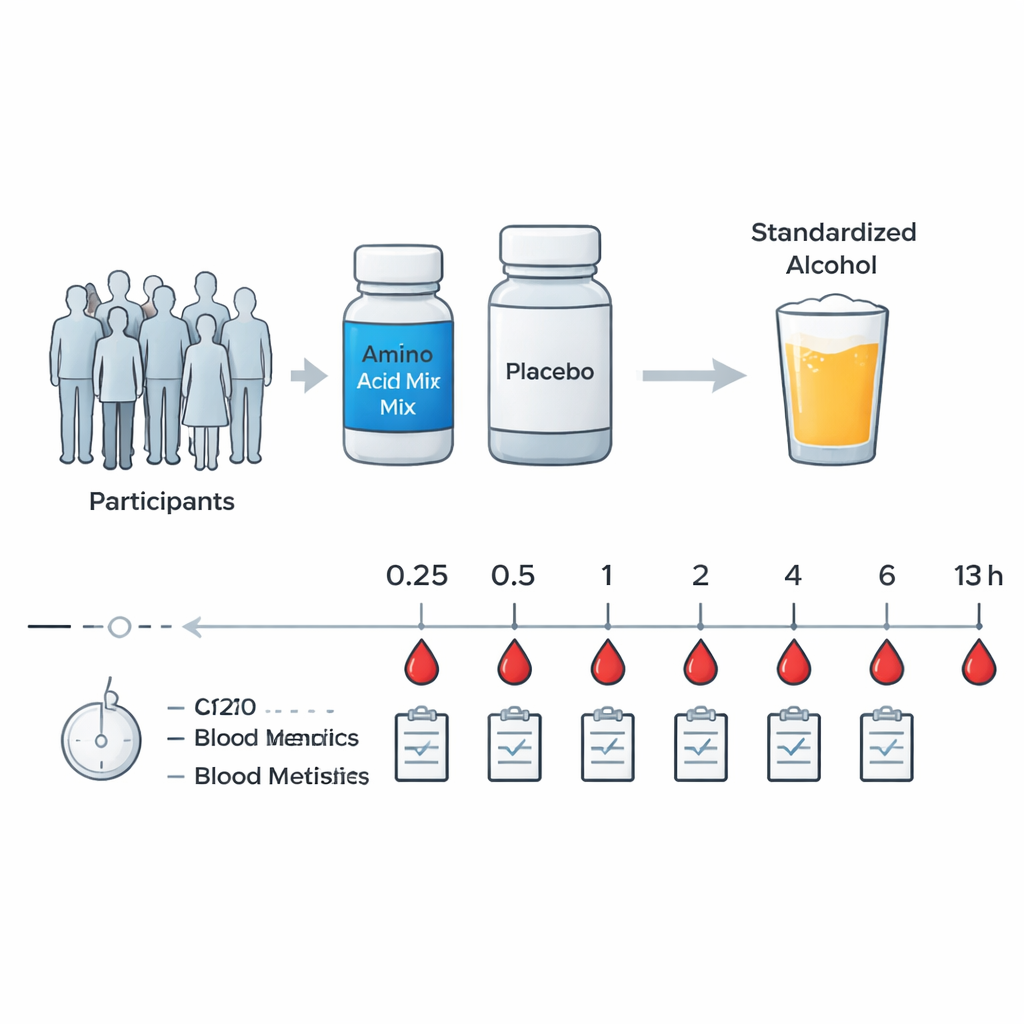
To see if this mix really made a difference, the team ran a randomized, double‑blind, placebo‑controlled crossover trial—the gold standard for testing health products. Twenty‑one healthy adults, who drank alcohol moderately but did not have liver disease, attended the lab for two all‑day sessions. On one day they took three AL capsules; on another day, they took look‑alike placebo capsules, with the order randomly assigned and separated by at least a week. In each session, participants swallowed the capsules 30 minutes before drinking a set amount of strong alcohol calculated to match their body weight, along with a light snack. Over the next 13 hours, nurses drew blood at several time points and staff tracked symptoms and safety measures such as blood pressure and liver enzyme levels.
What happened to alcohol and its toxic by‑product
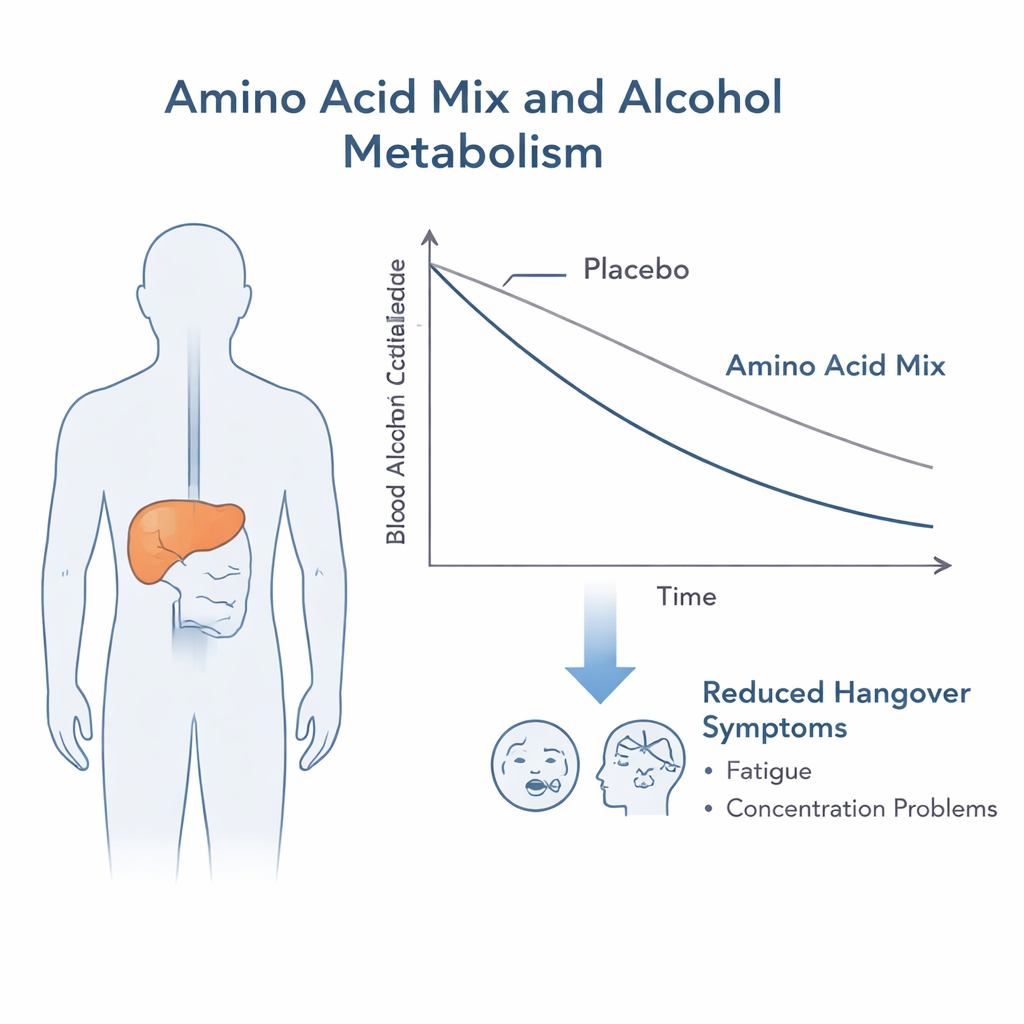
The blood tests showed a clear pattern. When participants had taken the amino acid mix, both alcohol and acetaldehyde levels in their blood dropped more quickly than when they had taken the placebo. At multiple time points—from half an hour up to several hours after drinking—alcohol levels were significantly lower with AL. Acetaldehyde levels also fell faster and stayed lower for longer. These findings suggest that the amino acid blend helped the body process and clear both alcohol and its irritating by‑product more efficiently, at least under the controlled conditions of this study.
How people felt the next morning
Numbers in the blood are important, but so is how people actually feel. Thirteen hours after drinking, participants rated 12 common alcohol‑related symptoms—such as fatigue, trouble concentrating, nausea, and dizziness—on a standard questionnaire. Overall scores were lower after taking Amino Liver than after placebo, meaning people reported milder symptoms. Two complaints stood out: fatigue and concentration problems were significantly less severe on the AL day. Other symptoms like headache and nausea tended to be lower too, although not enough to reach strict statistical significance in this small group. Importantly, standard safety checks showed no meaningful changes in blood pressure, liver enzymes, kidney markers, or blood sugar between AL and placebo.
What this could mean for the future
For everyday drinkers, these results hint that a targeted amino acid supplement might one day help the body handle alcohol more smoothly and take the edge off the “day after,” especially tiredness and mental fog. Still, the authors stress that this was a small, exploratory trial in healthy adults under carefully controlled conditions. It may not capture full next‑day hangovers after heavier drinking, and the study did not account for genetic differences that strongly affect how some people process alcohol. Larger, longer trials are needed before making firm recommendations. For now, Amino Liver looks like a promising nutritional approach that supports the body’s own cleanup systems rather than a license to drink more—and it does not replace the most reliable protections: moderating intake and knowing your own limits.
Citation: Kim, H., Suh, H.J., Han, K. et al. Effects of an amino acid mixture on alcohol metabolism and alcohol-related symptoms in healthy adults. Sci Rep 16, 4845 (2026). https://doi.org/10.1038/s41598-026-35178-1
Keywords: hangover, alcohol metabolism, amino acids, liver health, nutritional supplement